
24/7 Customer Support

Free returns

Same-day & Next-day Delivery

Quality Guaranteed

Unlock Your Welcome Offers: FREE Delivery | Up to 80% OFF | Free 30-day JoyPlus trial
Download the APP
For students, young professionals and anyone needing a quick meal, the allure of instant stir fry noodles is undeniable. They promise a hot, flavourful dish in minutes, bringing the taste of Asian street food to your kitchen. Yet, the reality can often be a let-down. Navigating the crowded supermarket aisle can lead to purchases that result in disappointment.
As a Joybuy Product Recommendation Officer, my role is to help you see past the flashy packaging and marketing claims. Here, we will break down the common pitfalls of choosing instant noodles and highlight what truly matters, ensuring your next quick noodle meal is a satisfying one.
Many products fail to deliver on their promise of an authentic, delicious experience. Here are the three most common traps to avoid:
mi goreng or Thai stir-fries is often missing, replaced by a generic "savoury" powder.instant stir fry noodles typically separate their seasonings into multiple packets—such as a seasoning oil, a sweet soy sauce and a chilli powder—allowing for a much richer and more nuanced taste.To ensure you are getting a product that delivers on taste and texture, focus on these key parameters.
The noodle itself is the foundation of the dish. Most instant noodles are deep-fried before packaging, which allows them to cook quickly. While convenient, this can sometimes result in a greasier taste. For a chewier, more substantial bite that mimics the texture of fresh noodles, look for options that are air-dried or pre-steamed. These are often found in Japanese yakisoba noodles and some premium Korean stir fry noodles. They hold up much better to stir-frying and absorb the sauce without becoming soggy.
As mentioned, a multi-sachet seasoning system is a strong indicator of quality. Before you buy, check the contents list or description. Look for kits that include:
Indomie noodles, a tangy Worcestershire-style sauce for yakisoba, or a rich gochujang-based sauce for Korean varieties.This separation prevents the flavours from becoming muddled and gives you a result that is much closer to a freshly prepared dish.
"Stir-fry" is a broad term. To find what you truly crave, identify the specific flavour profile you are after. Are you in the mood for the classic sweet and savoury Indonesian mi goreng? Or perhaps the tangy, slightly sweet taste of Japanese yakisoba noodles? Maybe you are seeking the fiery, umami-rich kick of spicy instant noodles from Korea. For something different, you could try Filipino pancit canton, which has a distinct savoury and slightly citrusy taste. Understanding these regional differences will help you select a product that meets your expectations.
Based on the criteria above, here are some recommendations tailored to different preferences and needs.

Why This Fits Their Persona: This is the go-to for an affordable, reliable and delicious meal. The noodle multipack format is perfect for stocking a pantry for late-night study sessions or quick lunches between classes, delivering consistent flavour every time.
It avoids the single-sachet trap by providing five separate seasonings: powder, seasoning oil, sweet soy sauce, chilli sauce and fried onions. This creates the authentic, layered flavour of Indonesian mi goreng.
The multi-sachet system allows for customisable flavour and spice. The noodles have a satisfyingly firm texture that holds up well after cooking.

Why This Fits Their Persona: For those tired of the same old flavours, this noodle offers a unique and trendy taste. The rich, creamy and savoury salted egg yolk sauce provides a modern Southeast Asian flavour experience that stands out from the crowd.
Instead of a generic "savoury" taste, it delivers a distinct and complex flavour profile. The inclusion of a dedicated salted egg sauce packet, seasoning oil and crispy garlic ensures a rich, multi-layered taste, avoiding the one-dimensional flavour trap.
Features a uniquely rich and umami-filled salted egg flavour. The chewy noodles provide a satisfying base for the creamy sauce.
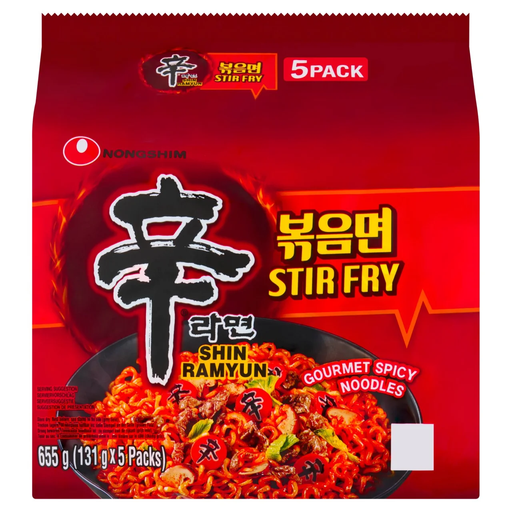
Why This Fits Their Persona: For those who seek genuine heat, this is a top contender. Leveraging the famous spice of the Shin brand, this Korean stir fry noodle delivers a robust and satisfyingly fiery kick that is balanced with savoury, umami notes.
The thick, chewy noodles are specifically designed to not go mushy, providing the perfect texture for a stir-fry. The heat is complex, not just a flat, one-note burn, thanks to a well-formulated seasoning oil and powder.
Delivers the signature deep, spicy flavour of Shin Ramyun in a stir-fry format. The noodles are thicker and chewier than many standard instant noodles.
We have compiled a complete, real-time list of products that fully satisfy these strict selection criteria and UK safety regulations.
1. How can I make my instant stir fry noodles taste better? The easiest way to elevate any quick noodle meal is by adding fresh ingredients. A fried or soft-boiled egg adds protein and richness. Finely chopped spring onions, a sprinkle of toasted sesame seeds or some fresh coriander can add brightness. You can also stir-fry some simple vegetables like sliced mushrooms, peppers or pak choi before adding the cooked noodles and sauce.
2. Are instant stir fry noodles unhealthy? As a convenience food, they are often high in sodium, saturated fats and refined carbohydrates. It is important to read the nutritional information on the packaging. They can be enjoyed in moderation as part of a balanced diet. Adding fresh vegetables and a lean protein source like chicken or tofu can help create a more well-rounded meal.
3. What is the difference between mi goreng and yakisoba? While both are stir-fried noodle dishes, their flavour profiles are distinct. Mi goreng is an Indonesian dish known for its savoury, sweet and often spicy flavour, largely thanks to the use of kecap manis (sweet soy sauce). Yakisoba is a Japanese dish that typically has a fruitier, tangier flavour, similar to a Japanese-style Worcestershire sauce.