
24/7 全天候客户支持

免费退货

当日/次日达

品质保障

开启新人专享福利: 全场免邮 | 低至 2 折 | 免费试用 30 天 JoyPlus 会员
下载 Joybuy
There's a simple satisfaction in opening a container at midday to a steaming, home-cooked meal, whether you're at a desk, on a building site or enjoying a blustery day outdoors. However, the search for the right insulated food jar can be frustrating. Many of us have been let down by a promising container, only to find a lukewarm, leaky mess in our bag just hours later.
As the Joybuy Product Recommendation Officer, my role is to help you navigate the market and identify the features that genuinely matter. Before you make a purchase, it's crucial to understand the common design flaws and marketing claims that often lead to disappointment.
A good thermal food flask should be a reliable daily companion. Unfortunately, many fall short due to a few recurring issues that are easy to overlook until it's too late.
The most common complaint is leakage. A manufacturer can claim a product is leakproof, but the reality often lies in the lid's design and material quality. A simple, hard plastic screw-top with a flimsy seal is a recipe for disaster. After a few washes or exposure to hot contents, the seal can warp or degrade, rendering the container useless for transporting anything liquid, like the very soup it was bought for.
Many products boast of keeping food hot "all day." While technically possible under ideal conditions, this often doesn't reflect real-world use. The actual performance of a vacuum insulated food pot depends heavily on its construction, the starting temperature of the food and whether the flask was pre-heated. A poorly insulated jar will leave you with a tepid, unappetising lunch in just a few hours. A realistic thermal retention of 4-6 hours is a more practical benchmark for most daily needs.
"Made from stainless steel" sounds reassuring, but not all steel is created equal. Lower-grade metals can be prone to rust, dent easily and, most noticeably, impart a metallic taste to your food. For a container that will hold your meals day after day, settling for an unspecified grade of steel is a risk to both durability and the taste of your food.
To ensure you get a reliable hot lunch container, focus on these core specifications. They are the true indicators of quality and performance.
Always check the type of steel used. Food-grade 304 stainless steel is the industry standard, offering excellent resistance to rust and corrosion. It's durable and won't leave a metallic aftertaste. For those who want an even higher level of performance, 316 stainless steel is a premium option. It contains molybdenum, which significantly enhances its resistance to corrosion from chlorides and acids, making it an excellent choice for frequently packing tomato-based soups, stews or curries.
A dependable lid is non-negotiable. Look for a design that incorporates a thick, flexible silicone gasket or ring. This creates a tight seal that can withstand temperature changes and movement. Some lids also feature a pressure-release valve, which can make opening the jar easier when it contains very hot food. This robust construction is the hallmark of a genuinely leakproof food container.
Functionality is just as important as thermal performance. A wide mouth design is essential for three reasons: it makes the jar easy to fill without spills, allows you to eat directly from it with standard cutlery and simplifies cleaning. Consider the capacity you need. A large food flask of 1.4 litres or more is ideal for a substantial adult meal, while smaller sizes around 300-500ml are better suited for children's school lunches or smaller portions.
Based on these practical criteria, here are a few options from our catalogue matched to different user needs.

Why This Fits Their Persona: This is a practical and reliable choice for office workers or tradespeople. The 1.4-litre capacity is generous enough for a hearty soup or stew, and its straightforward design focuses on the core function of keeping a meal hot and secure during a commute.
It is constructed from specified 304 stainless steel, avoiding the risk of rust or metallic taste. The design includes a tight-sealing lid intended to prevent the leaks common in lesser models.
Features a wide mouth for easy filling and cleaning. The vacuum insulation provides a realistic 4-6 hour heat retention window, perfect for lunchtime.

Why This Fits Their Persona: For those who use their food flask frequently or pack acidic foods and want maximum durability. The inclusion of a dedicated insulated lunch bag adds convenience and an extra layer of insulation, making it a complete on-the-go meal system.
This model uses premium 316 stainless steel, offering superior corrosion resistance compared to the standard 304 grade. This directly addresses the pitfall of material degradation over time.
The complete set with a matching lunch bag enhances portability. The 1.5-litre capacity and robust build make it suitable for heavy-duty, daily use.
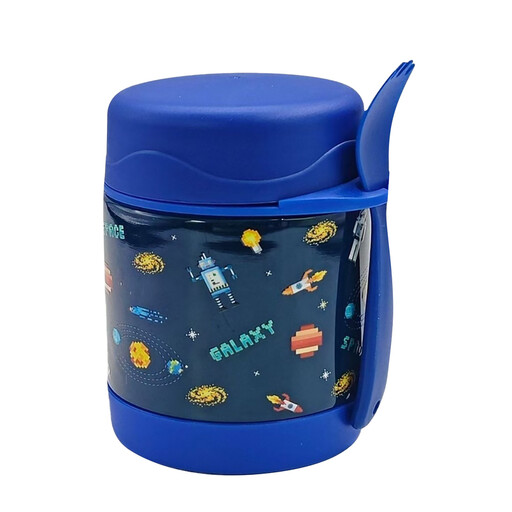
Why This Fits Their Persona: Perfect for a child's lunch bag. The 10oz (approx. 284ml) capacity is ideal for a kid-sized portion of pasta, soup or beans, ensuring a warm meal at school without the bulk of a larger flask. The engaging design adds a bit of fun to lunchtime.
Its smaller size is inherently more manageable and less prone to the leverage that can cause larger lids to leak. It is designed specifically for the use-case of a child's lunch, focusing on portion control and portability.
Compact and lightweight, it fits easily into a school bag. The thermal properties are sufficient to keep food warm from morning until the lunch bell rings.
We have compiled a complete, real-time list of products that fully satisfy these strict selection criteria and UK safety regulations.
The most effective method is to pre-heat your soup thermos. Before adding your food, fill the jar with boiling water, seal the lid and let it stand for 5-10 minutes. Pour the water out and immediately add your piping hot food. This simple step warms the stainless steel interior, so the flask doesn't draw heat away from your meal, significantly extending the time it stays warm.
As a general rule, it is not recommended. While the stainless steel body may be dishwasher safe, the high heat and harsh detergents can damage the vacuum seal between the inner and outer walls, permanently ruining its insulating properties. Furthermore, the lid's silicone gaskets can warp or degrade. Hand-washing with warm, soapy water is the safest way to ensure the longevity of your flask.
Both are high-quality, food-safe materials. The main difference is that 316 stainless steel contains molybdenum, an element that gives it superior resistance to corrosion, especially from salts and acids. If you regularly pack acidic foods like tomato soup, chili or dishes with vinegar, a 316 steel jar offers an extra layer of durability and is less likely to pit or corrode over many years of use. For general use, 304 stainless steel is perfectly sufficient.