Small-load flat dwellers
If you press only a few pillowcases at once and need to put the appliance away afterwards, a conventional iron keeps its water tank in the handheld unit rather than requiring a separate base.


For a few cotton pillowcases at a time, choose a conventional steam iron if you have a suitable surface for pressing and want one appliance to put away. A compact steam-generator iron is worth considering when pillowcases are part of larger, regular ironing loads, but its separate base needs room; a handheld steamer suits light refreshes rather than a sharply pressed finish on thicker cotton.
If you press only a few pillowcases at once and need to put the appliance away afterwards, a conventional iron keeps its water tank in the handheld unit rather than requiring a separate base.
If you press pillowcases alongside other bedding, consider the soleplate, continuous-steam specification and limescale-care routine as well as where the appliance will be stored.
If avoiding an ironing board matters more than a flat, pressed finish, a handheld steamer may suit quick touch-ups. Philips cautions that a garment steamer will not give the same results as an iron on thicker cotton or linen.
For cotton pillowcases in a small flat, decide whether you need a pressed finish and how much storage and setup space you can give the appliance.
Choose it when: You press a few pillowcases at a time and can use an ironing board or another stable, heat-safe surface.
Trade-off: Its integrated tank avoids a separate base but holds less water than the compact generator example discussed here.
Choose it when: Pillowcases are part of frequent, larger ironing loads and you can make room for the base and handpiece.
Trade-off: A small stated base footprint does not remove the need for separate storage and a stable setup.
Choose it when: You mainly want to refresh an item without setting up an ironing board.
Trade-off: Philips says its garment steamers do not produce the same results as an iron on thicker cotton or linen.
| Concern | What to check | Who this matters to |
|---|---|---|
| Storage and setup | Check stored dimensions, cord storage and space for the ironing surface. For a generator, allow room for both base and handpiece. | I need to put the iron away after a small load without finding space for another base. Around 46% of consumers put storage and setup first. |
| Pressing cotton creases | Check the continuous-steam specification, soleplate and tank capacity on the exact model; follow the pillowcase care label when selecting a setting. | When I press cotton pillowcases, a flat finish matters enough that I can accept a bulkier appliance. Around 36% of consumers prioritise that finish. |
| Simple upkeep | Read the model’s limescale-cleaning instructions and check for a UK 3-pin plug and fuse. | For occasional pressing, I want a routine I can manage between uses rather than maximum listed steam output. This is the primary need for around 18% of consumers. |
A steamer avoids board setup, but Philips says it does not give the same results as an iron on thicker cotton or linen.
Choose an iron for a flat, pressed pillowcase finish; use a handheld steamer for light refreshes.
Tefal describes the Express Optimal SV4110G0 base as having a footprint smaller than an A4 sheet, but a generator still has a separate base and handpiece.
Check the complete appliance dimensions against your storage space and allow for a stable ironing setup.
Steam irons differ in their cleaning provisions, and an anti-calc or self-clean feature does not remove the need to follow the model’s instructions.
Read the maintenance routine before choosing an iron and select one you can follow regularly.
One Braun TexStyle 7 Pro SI7160BL_BL listing states 3000 W, while a Joybuy SI7160BL listing states 2600 W. Do not assume the two listings describe an identical variant.
Check the full model identifier and the exact listing’s specifications, plug and included accessories before buying.
Its range includes conventional steam irons and handheld garment steamers relevant to different levels of pressing.
Its range includes conventional irons and compact steam generators for buyers considering a separate-base appliance.
Its Mineral Glide 26261 is a conventional steam iron with listed limescale-care features.
Its TexStyle 7 Pro line is relevant to buyers comparing conventional steam irons for crease work.
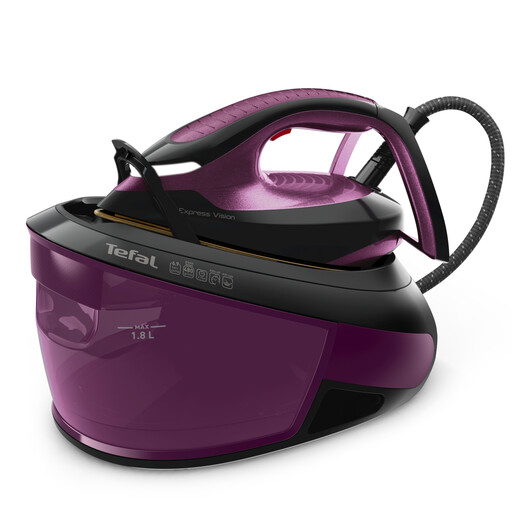
This steam-generator option is relevant if you press pillowcases alongside larger laundry loads and have space for a separate base. For just a few pillowcases, weigh that extra setup against the simpler storage of a conventional iron.
 No image available
Consider this separate-base format if pillowcases are part of a larger ironing load and you have room to store and use both parts.
The product name lists 2800 W and a 1.8 L water tank. Check that the complete appliance fits your storage space and confirm the plug and fuse details before buying.
Not if your aim is a flat, pressed finish on thicker cotton. Philips says a garment steamer does not produce the same results as an iron on thicker cotton or linen; it is more suited to light refreshes when avoiding board setup matters most.
Start by considering a conventional steam iron if you have a suitable pressing surface: its tank is integrated into the handheld appliance, making it simpler to store than a separate-base generator. Check its stored dimensions, tank capacity, soleplate and limescale-care instructions on the exact model.
No. Follow the exact iron’s instructions for its calc-clean, anti-calc or self-clean routine; the required steps vary by model, and limescale care remains relevant to steam performance.
Electrical Safety First advises checking for a UK 3-pin plug and fuse, reading the instructions and checking plugs, sockets and cables for damage. Do not leave the iron unattended, and unplug it when it is not in use.