For occasional collar touch-ups in a shared house, start with a conventional steam iron with a pointed tip and temperature settings suited to your shirts. Consider a higher-output conventional iron for regular shirt ironing, or a steam generator for frequent larger loads if you have room for its separate base. Whichever format you choose, check the plug, socket arrangement and storage space before buying.
Who is this for?
Occasional collar touch-up users
If you press a collar, cuffs or shirt front before work or an event rather than tackling a laundry basket, a conventional iron with a pointed tip is a practical starting point. Joybuy describes the tip on its Tefal Virtuo 30 listing as intended for collars, cuffs and seams; check the available heat settings against your shirts’ care labels.
Shared-house safety-first buyers
When sockets, storage and household responsibilities are shared, consider where the iron will be plugged in, used and left to cool. Electrical Safety First advises using an iron with a UK 3-pin plug and fuse and unplugging it when not in use; auto shut-off is an additional safeguard, not a reason to leave it unattended.
Regular shirt and laundry pressers
If you iron several shirts or other garments at a time, continuous-steam output, tank capacity and scale maintenance become more relevant than they are for one collar. A steam generator also needs space for its separate base: Which? describes conventional irons as more compact to store.
What matters when choosing?
Conventional steam iron
Choose it when: You mainly press collars, cuffs and a few garments, and need an iron that is compact to store.
Trade-off: Its integrated tank may mean more refills during larger ironing sessions.
Higher-output conventional iron
Choose it when: Collars are part of a regular shirt-ironing routine and you want to compare higher stated continuous-steam outputs.
Trade-off: Check the appliance’s rated load against the socket and any extension lead you intend to use.
Steam-generator iron
Choose it when: Several people regularly iron larger loads and have a stable place to use and store a separate base.
Trade-off: The base and tank take more shared storage space than a conventional iron.
| Concern | What to check | Who this matters to |
|---|
| Collar precision and fabric control |
Look for a pointed tip for collar points and seams, then check that the heat and steam settings suit each shirt’s care label. |
If I mainly press collar points or seams, I want to guide the iron accurately without using the same heat on every fabric. Around 42% of consumers put that precision and control first. |
| Shared-house safety and storage |
Check for a UK 3-pin plug and fuse, assess any extension lead’s marked rating and allow space for the iron to cool. Auto shut-off does not replace unplugging it. |
With sockets and cupboards shared, I need an iron I can use and put away responsibly. For around 33% of consumers, safe use and storage are the primary concern. |
| Steam, refills and upkeep |
Compare stated continuous steam, tank capacity and the manufacturer’s scale-cleaning instructions, rather than relying on the short steam-boost figure alone. |
When several shirts need pressing, I care about interruptions for refilling and cleaning as well as the ironing itself. That is the leading need for around 25% of consumers. |
Buying pitfalls
-
Buying a steam generator for one collar
A separate base and tank take up shared storage space that may be hard to justify for brief touch-ups. Which? identifies conventional steam irons as the more compact format.
Start with a pointed-tip conventional iron unless larger ironing loads are a regular part of your household routine.
-
Relying on auto shut-off instead of unplugging
Auto shut-off is a backup feature. Electrical Safety First advises never leaving an iron unattended and unplugging it when it is not in use.
Unplug the iron after pressing and leave it somewhere suitable to cool before storing it.
-
Using a high-wattage iron on a loaded extension lead
Electrical Safety First warns that overloaded sockets and extension leads can overheat. It gives about 3,000 W as the maximum load for a single socket; Tefal rates its Ultimate Pure FV9845 model at 3,100 W.
Check the iron’s rating and the marked rating and combined load of any extension lead before use. Do not daisy-chain extension leads.
-
Comparing steam-boost figures alone
A boost figure describes a short burst, not the stated output during continuous steaming. For repeated shirt ironing, tank size and scale-cleaning arrangements also affect the routine.
Compare continuous steam and tank capacity alongside the boost figure, then check how the manufacturer says to maintain the iron.
Brands to consider
Tefal
Tefal’s Ultimate Pure FV9845G0 is a reference point for comparing higher-output conventional irons: Tefal UK lists 3,100 W, 60 g/min continuous steam, a 260 g steam boost, a 350 ml tank and a 3 m cord for this model.
- Tefal describes a MicroScale filter and a Durilium Airglide Autoclean soleplate on this model; their claimed effects are the manufacturer’s, not an independent comparison.
- Its stated 3,100 W rating makes the intended socket and any extension-lead load an important check.
Philips
For shoppers interested in fabric-temperature convenience, Philips UK lists OptimalTEMP technology, 3,000 W and 55 g/min continuous steam for its Azur 8000 DST8020/26R1.
- OptimalTEMP is a feature Philips associates with this specific model; follow each garment’s care label rather than treating the brand’s fabric-protection claim as a guarantee.
- Consider the iron’s weight and expected water use if several people will share longer ironing sessions.
Morphy Richards
Morphy Richards UK provides examples of both formats: its Steam Flow conventional iron lists a 320 ml tank and 35 g/min steam output, while its EasySteam+ generator lists a 1.8 L tank and a precision tip.
- The Steam Flow listing includes anti-drip, anti-scale and auto shut-off features relevant to shared-house use.
- The EasySteam+ has a separate base; check where it would be used and stored rather than judging it by tank size alone.
Joybuy irons for these needs
These choices include conventional irons for collar-focused sessions and one steam generator to consider for regular larger loads. Compare the listed features with your shirts, available storage and socket arrangement.
 No image available
Braun TexStyle 7 Pro SI7160BL Steam Iron, Blue
Consider this conventional iron for precise collar work. Its named precision tip is relevant around shirt details; confirm its rated power before planning to use a shared socket or extension lead, and check for a UK 3-pin plug and fuse.
View on Joybuy
 No image available
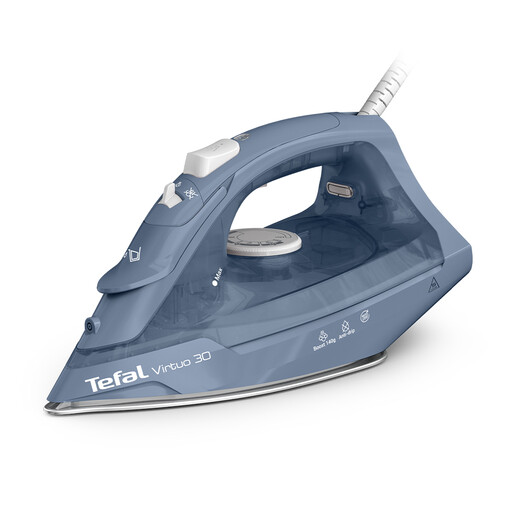
Tefal Virtuo 30 FV2C64G0 Steam Iron, Blue
A conventional option to compare for occasional collar and cuff pressing. The title lists 2,200 W, a 240 ml tank, 30 g/min continuous steam and a 130 g/min steam boost. Check its temperature settings against your shirts’ care labels and confirm a UK 3-pin plug and fuse.
View on Joybuy
 No image available
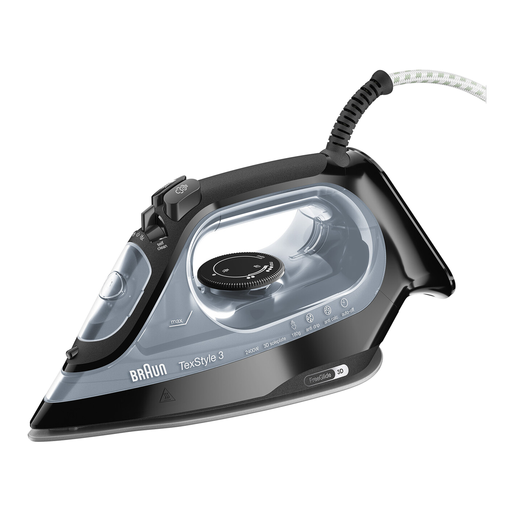
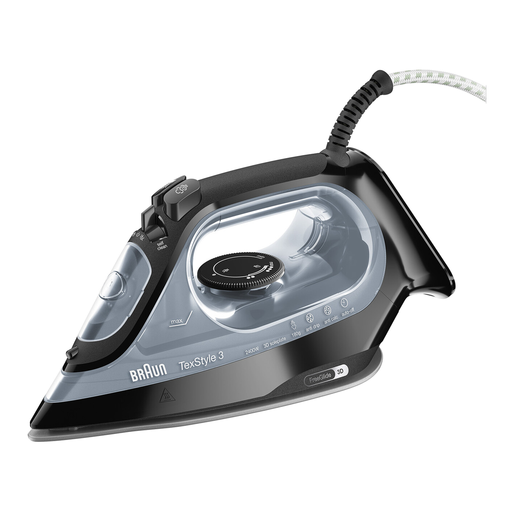
Braun TexStyle 3 SI3055BK Steam Iron, Black
Consider this conventional iron if you press collars on shirts with different care instructions. Its title specifies 2,400 W and auto-off; check the temperature choices, tank capacity and UK 3-pin plug and fuse before buying.
View on Joybuy
 No image available
Tefal Express Vision SV8154G0 Steam Generator, Black and Purple
Consider a generator format if your household regularly presses larger loads and can accommodate its separate base. The title specifies 2,800 W and a 1.8 L tank. Check the combined load of any extension lead, the space needed for use and storage, and the UK plug and fuse.
View on Joybuy
 No image available
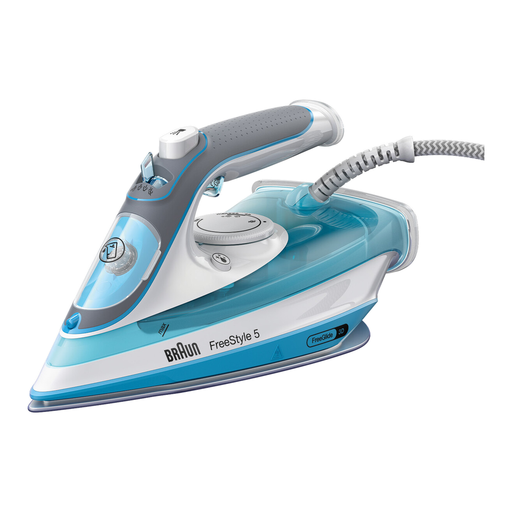
Braun TexStyle 5 SI5008BL Steam Iron, Blue
Another conventional format to consider for small shirt-ironing sessions. Its title specifies 2,600 W and an anti-drip feature; check the applicable continuous-steam rating, whether this variant has auto-off, and its UK plug and fuse if those affect your choice.
View on Joybuy
Common questions
Is a steam iron or steam generator more practical for shirt collars in a shared house?
A conventional steam iron is generally the more practical format for collar-only touch-ups because it is more compact to store, as Which? explains. Consider a generator when larger loads are frequent and there is a stable place for its separate base.
What helps when pressing collar points and seams?
Look for a pointed or precision tip described for narrow shirt details. Check the temperature and steam settings against the garment’s care label as well; the tip does not determine which heat setting the fabric can take.
Can I use a high-wattage iron with a shared extension lead?
Use one only when the lead’s marked rating accommodates the combined load of everything connected to it. Electrical Safety First warns against overloading and daisy-chaining extension leads, and gives about 3,000 W as the maximum load for a single socket; check the iron’s rating before choosing where to plug it in.
What should I do with the iron after a collar touch-up?
Unplug it and leave it in a suitable place to cool before putting it away. Electrical Safety First advises against leaving an iron unattended or plugged in when it is not in use; auto shut-off does not replace those steps.


