
24/7 Customer Support

Free returns

Same-day & Next-day Delivery

Quality Guaranteed

Unlock Your Welcome Offers: FREE Delivery | Up to 80% OFF | Free 30-day JoyPlus trial
Download the APP
Japanese curry has become a staple comfort food across the UK, from the satisfying crunch of a katsu curry to a hearty bowl of curry rice on a chilly evening. Yet, trying to replicate that distinctively sweet, savoury and mildly spicy flavour at home can be a challenge. The supermarket aisle is filled with options, but not all deliver on their promise, leading to disappointing meals and wasted money.
As a Joybuy Product Recommendation Officer, my role is to help you navigate the market and find products that genuinely deliver. Before you make your next purchase, be aware of these common pitfalls:
To avoid these issues, focus on a few key product characteristics. Understanding these will help you select a Japanese curry mix or sauce that meets your expectations for taste, convenience and texture.
The format you choose will significantly impact your cooking process and the final result.
Japanese curry has a different heat profile to Indian or Thai curries. The spice is typically a warming, background note rather than a sharp, fiery burn.
Look past the front-of-pack marketing and check the ingredients list. A quality Japanese curry mix will feature a blend of spices like turmeric, coriander and cumin, alongside flavour enhancers derived from fruit (like apple powder) or umami-rich elements (like soy sauce powder or yeast extract). Less impressive versions often rely heavily on salt, sugar and generic "spices" for their flavour. For vegetarian options, check that the fats used are vegetable oils (e.g., palm, rapeseed) rather than animal-derived ones.
Based on these practical criteria, here are a few recommendations matched to different home cooks.

Why This Fits Their Persona: This large 220g pack is perfect for batch cooking family meals. The mild, slightly sweet flavour is a proven crowd-pleaser, making it a reliable pantry staple for busy parents in the UK who need a quick and satisfying dinner solution.
It sidesteps the "Heat Level Gamble" by offering a consistently mild flavour that is suitable for all ages. As a classic S&B Golden Curry product, it avoids the "Authentic Flavour" trap with its balanced, rich and recognisably Japanese taste.
The solid Japanese curry blocks are easy to portion and dissolve smoothly for a consistently thick sauce. The 220g box contains enough roux for approximately 12 servings, offering excellent value.
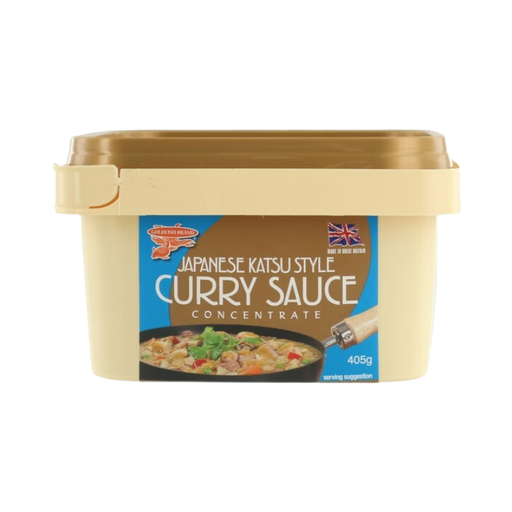
Why This Fits Their Persona: For anyone wanting to quickly recreate the Wagamama or local Japanese restaurant experience, this ready-made sauce is ideal. It's specifically formulated as a katsu curry sauce, saving the time and effort of making a roux from scratch.
This sauce directly solves the "Watery Sauce Failure." As a pre-prepared sauce, it has a guaranteed thick, smooth consistency perfect for pouring over a crispy chicken or vegetable katsu. Its mild, rich flavour profile is exactly what's expected from a katsu sauce.
Ultimate convenience. The canned format is easy to store and use—just heat and serve. It requires minimal cooking skill to achieve a restaurant-style dish at home.

Why This Fits Their Persona: For the home cook who finds standard Japanese curry too mild, this "Hot" version from S&B Golden Curry provides a satisfying and robust heat. It's for those who want a genuine spicy kick without compromising on the authentic, aromatic flavour.
This product wins the "Heat Level Gamble" by delivering a consistent and distinct spiciness that lives up to its "Hot" label. It also avoids the flavour trap by ensuring the heat is balanced with a rich, complex spice base, not just raw chilli heat.
The versatile block format allows for customisation of thickness and ingredients. The large 220g pack is economical for those who make spicy curry regularly, providing up to 12 servings.
We have compiled a complete, real-time list of products that fully satisfy these strict selection criteria and UK safety regulations.
The primary difference lies in the flavour profile and base. Japanese curry is typically sweeter, milder and thicker. Its flavour comes from a pre-made roux that includes a blend of spices, flour and fat, often with fruity undertones. Indian curries are incredibly diverse but are generally built from a base of sautéed onion, ginger and garlic, with a more complex and often spicier blend of toasted spices, resulting in a different texture and a more aromatic, pungent flavour.
Once you open a pack of Japanese curry blocks, it's important to store any unused portions correctly to maintain their flavour and prevent them from absorbing moisture or other odours. Place the remaining roux in a sealed, airtight container and keep it in the refrigerator. Generally, it should be used within a month for the best quality. Always check the product packaging for specific storage instructions.
Yes, absolutely. Many home cooks adapt Japanese curry for a vegetarian diet. The key is to check the ingredients of the Japanese curry mix, as some brands use animal-derived fats or flavourings. Products like the S&B Golden Curry Mix (No Meat Contained) are specifically suitable. You can then use ingredients like firm tofu, aubergine, mushrooms, sweet potatoes and chickpeas in place of meat.