
24/7 全天候客户支持

免费退货

当日/次日达

品质保障

开启新人专享福利: 全场免邮 | 低至 2 折 | 免费试用 30 天 JoyPlus 会员
下载 Joybuy
Putting pen to paper is a deeply personal act, whether you are organising your life in a bullet journal, sketching out a creative idea or taking meticulous notes. Yet, finding the right tool for the job can be surprisingly difficult. The market is flooded with options, and it is easy to end up with a drawer full of pens that smudge, bleed or feel uncomfortable to use. As the Joybuy Product Recommendation Officer, my role is to help you navigate the choices and find a writing instrument that truly works for you.
Before you buy another pack of pens, let’s look at a few common pitfalls that lead to disappointment and wasted money.
To avoid these issues, it helps to understand the core features that determine a pen's performance. Focusing on these three parameters will ensure you select a pen that suits your specific needs.
The type of ink is the single most important factor in a pen's behaviour.
The tip dictates the character of your line.
A pen should feel like an extension of your hand, not a source of fatigue.
Instead of a generic list, we have matched some standout options from our school and office supplies collection to specific user profiles.
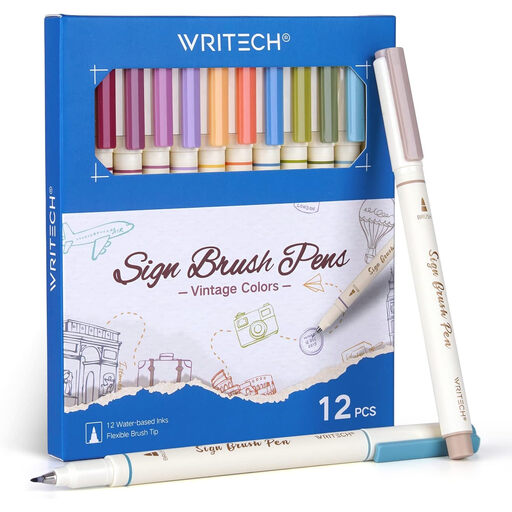
Why This Fits Their Persona: This user loves to blend art with organisation. They need versatile tools for hand-lettering, doodling and colour-coding. This set's unique vintage palette and flexible brush tips are perfect for adding artistic headers and illustrations to a journal.
Instead of making a false "no bleed" promise, this pen's water-based ink is designed to be blendable, a feature artists can control. It's an honest tool for creative work, not a standard writing pen trying to be something it's not.
The flexible soft brush tip allows for varied line widths, making it ideal for calligraphy. The water-based ink can be diluted to create watercolour effects.
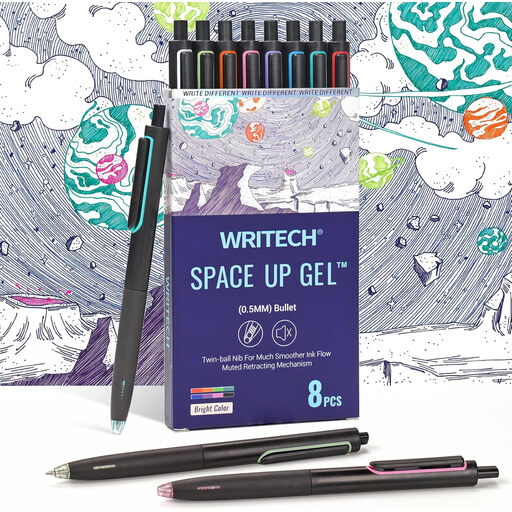
Why This Fits Their Persona: Students and professionals need reliability, speed and comfort. This user values clean, colour-coded notes and a quiet writing experience in lectures or meetings. The fine point is perfect for annotating texts and writing in margins.
This pen directly counters the "quick-drying mirage" and "lost cap" pitfalls. Its quick-dry ink is specifically noted as suitable for left-handers, and the retractable design with a silent clicker is built for convenience and discretion.
The patented silent pressing structure is a standout feature for quiet environments. The 0.5mm fine twin-ball tip delivers precise, skip-free lines for neat notes.
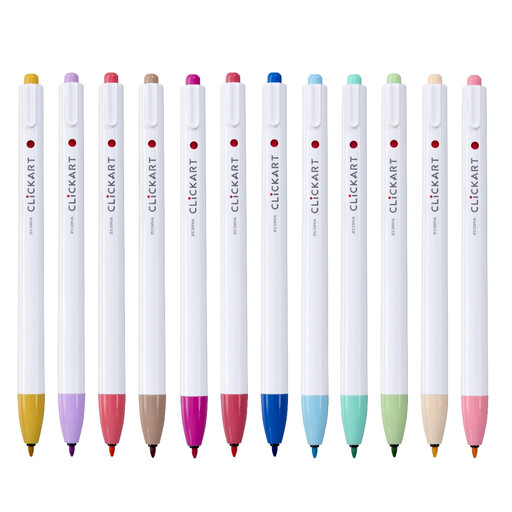
Why This Fits Their Persona: This user values efficiency and clever design. They are tired of felt tips drying out and losing caps. They want the colour of a marker with the convenience of a retractable ballpoint for planning, mind-mapping and journaling.
This pen's entire design is a solution to the "lost cap" and "drying out" pitfalls. The capless technology is a genuine innovation for felt-tip pens, making them far more practical for everyday carry and use.
The "Moist Keep Ink" technology absorbs moisture from the air to prevent the tip from drying out. The retractable push-button design offers true one-handed operation for a felt-tip pen.
Whether for journaling, gifting or professional use, find the right fit in our curated collection. We have compiled a complete, real-time list of products that satisfy these strict selection criteria.
The most effective solution is to choose your paper carefully. For journaling, look for notebooks with paper rated at 100gsm (grams per square metre) or higher, as this thickness provides a better barrier against ink. If you are using a journal with thinner paper, opt for fine point gel pens or ballpoints, as they deposit less ink than wetter fibre-tip or broad rollerball pens. Always test a new pen on an inconspicuous page at the back of your journal first.
This often comes down to personal preference, but retractable pens offer significant advantages in convenience and ink preservation. They allow for quick, one-handed use, which is ideal for fast-paced note-taking. More importantly, you can never lose the cap, which is the primary reason many traditional pens dry out. Modern retractable designs are highly reliable and a practical choice for your everyday school and office supplies.
The measurement refers to the diameter of the pen's ballpoint or tip.