
24/7 Customer Support

Free returns

Same-day & Next-day Delivery

Quality Guaranteed

Unlock Your Welcome Offers: FREE Delivery | Up to 80% OFF | Free 30-day JoyPlus trial
Download the APP
Making fresh juice at home is a rewarding way to boost your intake of fruits and vegetables. However, choosing the right electric juicer machine can feel overwhelming. The market is filled with models that promise convenience and health benefits, but many fall short, leaving you with a cumbersome appliance that gathers dust.
As a Joybuy Product Recommendation Officer, my role is to help you see past the marketing jargon. Before you invest, it’s crucial to understand the common pitfalls that lead to buyer's remorse. Many juicers that look great on the box are impractical for daily life in a busy UK household.
Here are the three most common traps to watch out for:
To find a reliable juicer that fits your lifestyle, focus on the functional specifications rather than the flashy claims. Here are the three most important factors to analyse.
The engine of your juicer determines its speed, efficiency and the types of produce it handles best. There are two main types to consider:
Centrifugal Juicer: This is the most common and often more affordable type of electric juicer machine. It uses a flat cutting blade that spins at very high speed, flinging the produce against a mesh filter to separate the juice from the pulp. They are very fast, often producing a glass of juice in under a minute. They work exceptionally well for hard fruits and vegetables like apples, carrots and beetroot. The trade-off is that the high-speed spinning can introduce heat and oxidation and they are generally less effective at juicing leafy greens like kale and spinach.
Cold Press Juicer (Slow Juicer): Also known as a masticating juicer, this type uses a slow-rotating auger (a screw-like component) to crush and squeeze produce against a screen. This process is much slower and quieter. The main advantage of a slow juicer is its high juice yield, especially from soft fruits and leafy greens. The gentle squeezing action produces less foam and separation. While they are often more expensive and take longer to produce juice, they are favoured by those looking to maximise nutrient extraction from a wide variety of ingredients.
This is a simple but critical feature. A wide mouth juicer, typically one with a feed chute of 75mm (around 3 inches) or larger, can significantly reduce your preparation time. It allows you to drop in whole small apples, peeled oranges or large chunks of cucumber without the need for extensive chopping. If convenience is a priority, the feed chute diameter should be one of the first things you check.
An easy clean juicer is not just about having dishwasher-safe parts. The most difficult component to clean is almost always the filter. Look for models that feature:
To help you find a model that aligns with your needs, we've matched a few juicers to common UK household profiles.

Why This Fits Their Persona: This centrifugal juicer is built for speed and efficiency, making it ideal for busy mornings. Its powerful motor and large capacity can serve the whole family without constant emptying and its straightforward operation means everyone can use it.
Its 3-inch wide feed chute directly tackles the prep-time nightmare, fitting whole fruits. The dishwasher-safe sieve, pulp basin and pitcher help make the 'easy clean' promise a reality.
The 800W motor with dual speed control efficiently handles both soft and hard produce, while the large 1.5L pulp basin allows for continuous juicing sessions.
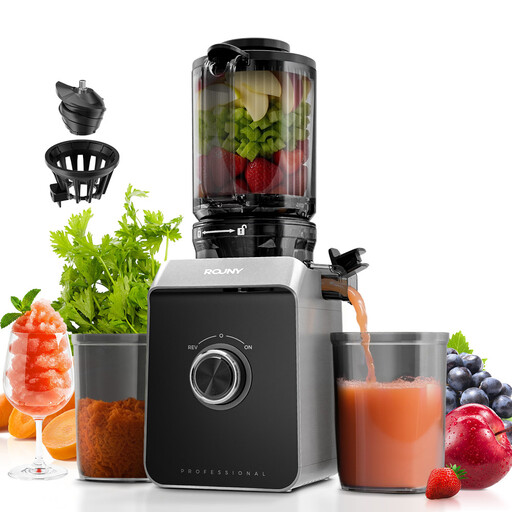
Why This Fits Their Persona: As a cold press juicer, this model is perfect for those who prioritise nutrient retention and want to juice leafy greens effectively. Its versatility extends to making fruit-based ice cream, adding extra value for a health-focused lifestyle.
The filter-free design is a direct solution to the cleaning trap, allowing for a simple rinse. Its exceptionally large 130mm feed chute eliminates almost all prep time, a rare feature in slow juicers.
The slow masticating process ensures a high juice yield, avoiding the low-yield disappointment. The pure copper motor provides stable, quiet performance for daily use.
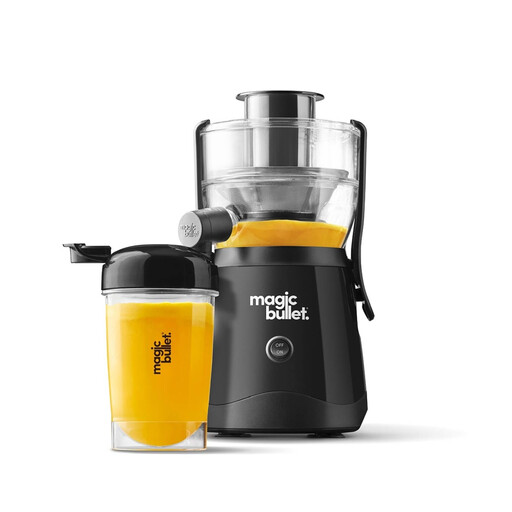
Why This Fits Their Persona: For those with limited counter space or who are just starting their juicing journey, this compact centrifugal model offers a simple, no-frills solution. It's designed for personal use and quick, straightforward juicing of common fruits and vegetables.
Its small size and simple construction inherently make it easier to handle and clean than larger, more complex machines. The dishwasher-safe components simplify the post-juicing routine.
The main advantage is its compact footprint, which is ideal for smaller UK kitchens, dorm rooms or even taking to the office. The 10-piece set provides good starting value.
We have compiled a complete, real-time list of products that fully satisfy these strict selection criteria and UK safety regulations.
"Better" depends entirely on your priorities. A slow juicer (or cold press juicer) is generally more efficient, extracting more juice from the same amount of produce, especially leafy greens. The juice may also oxidise slower. However, a centrifugal juicer is significantly faster and often more affordable, making it a great choice if you primarily juice hard fruit and vegetables like apples and carrots and value speed and convenience.
The lifespan of a juicer depends on its build quality, motor and how well you maintain it. Entry-level models may last 2-3 years with regular use. Mid-range to high-end models with robust motors (such as those made with pure copper) and durable parts can last for many years. Always check the manufacturer's warranty period, as it can be a good indicator of the brand's confidence in its product's longevity.