
24/7 Customer Support

Free returns

Same-day & Next-day Delivery

Quality Guaranteed

Unlock Your Welcome Offers: FREE Delivery | Up to 80% OFF | Free 30-day JoyPlus trial
Download the APP
A kettle is a cornerstone of the British kitchen, but choosing a new one isn't as simple as it used to be. The market is flooded with models boasting sleek designs and impressive claims. However, many of these features can be misleading, leading to a purchase that disappoints in daily use. Before you buy, it's crucial to understand the common pitfalls that can turn a stylish appliance into a countertop frustration.
As a Joybuy Product Recommendation Officer, my role is to help you see past the marketing hype. Here are the key things to watch out for.
Navigating the options is easier when you know what to look for. Focus on these core parameters to find a kettle that truly fits your needs.
A standard 1.7-litre kettle is ideal for a family, boiling enough water for about 6-7 cups. However, if you live alone or typically only make one drink at a time, repeatedly boiling this much water is inefficient.
The material of your kettle affects its durability, maintenance and sometimes even the taste of your water.
Based on these practical considerations, here are a few options tailored to different UK households.
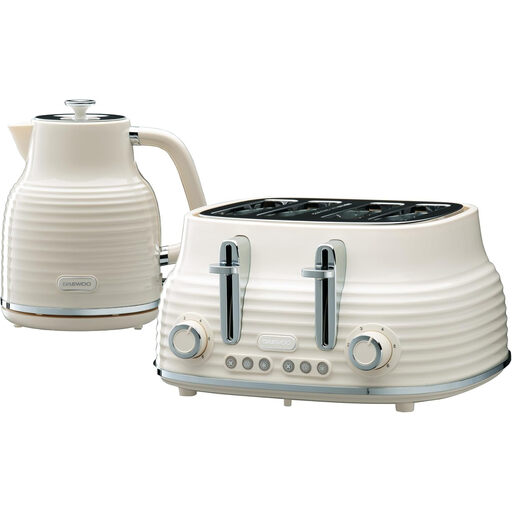
Why This Fits Their Persona: This bundle is for those who want a coordinated kitchen aesthetic without compromising on performance. The retro kettle design in a classic cream finish is a timeless choice, and getting a matching kettle and toaster set creates an instantly cohesive look on the countertop.
It sidesteps the "style over substance" pitfall by including essential functional features like a 360° swivel base, an easy-pour spout to prevent drips and automatic shut-off for safety.
The main advantage is achieving a unified look effortlessly. The kettle has a generous 1.7L capacity and rapid boil technology, while the 4-slice toaster includes wide slots for bagels and crumpets.
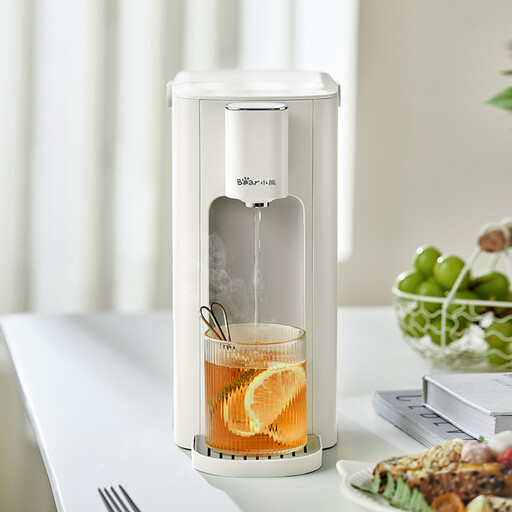
Why This Fits Their Persona: Ideal for busy professionals, small households or office environments. This hot water dispenser provides hot water on demand, eliminating waiting time and making it perfect for quick coffees between meetings or for preparing instant meals.
This dispenser directly solves the energy waste of boiling a full kettle for a single cup. It also offers more precision than a standard fast boil kettle by providing multiple temperature and volume settings.
Its key advantages are speed and efficiency. With 6 temperature settings (45-90°C) and 5 volume levels, you get precisely the right amount of water at the right temperature in seconds. The 3L tank reduces the need for constant refilling.
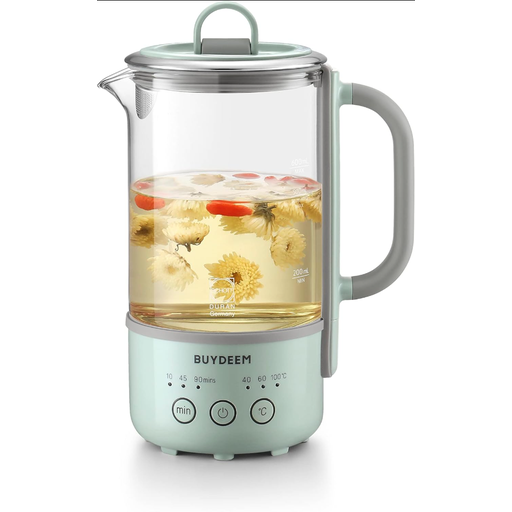
Why This Fits Their Persona: This is for the discerning user who values precision and quality, even on the go. It's perfect for office desks, travel or dorm rooms. The combination of Schott Duran glass and 18/10 stainless steel ensures water purity, which is vital for brewing high-quality tea or coffee.
It avoids the "hidden plastic" problem by using high-quality, non-reactive materials. Its compact 0.6L capacity is also highly efficient for single servings, preventing energy waste.
The one-touch temperature regulation and 8-hour warming function provide excellent control. Its lightweight, portable design means you don't have to compromise on a quality brew when away from your main kitchen.
We have compiled a complete, real-time list of products that fully satisfy these strict selection criteria and UK safety regulations.
The running cost depends on your kettle's power rating (wattage) and your electricity tariff. A typical 3kW kettle takes about 45 seconds to boil a single cup (250ml). As of mid-2026, with average electricity prices, this would cost approximately 1.5 to 2 pence per boil. Boiling a full 1.7L kettle would cost significantly more. This is why only boiling the water you need is the most effective way to save money.
In the UK, especially in hard water areas, limescale can build up quickly. It's good practice to descale your kettle every one to two months. Limescale build-up can make your kettle less efficient, meaning it takes longer and uses more energy to boil. Many kettles include a removable, washable filter in the spout to catch larger scale particles.
For making single cups of tea or coffee, a hot water dispenser is generally more energy-efficient. This is because it only heats the exact amount of water required, whereas most people boil more water than they need in a kettle. If you regularly need to boil large volumes of water (over 1.5 litres), a traditional fast boil kettle can be more efficient for that specific task.