Movement-practice players
If you repeatedly practise counter-strafing, peeking and changing direction, adjustable actuation and Rapid Trigger give you movement-key settings to experiment with. They are not substitutes for mouse-control practice.


Choose adjustable actuation and Rapid Trigger if your shooter practice involves frequent counter-strafing and changes of direction. These features let you tune keyboard movement inputs; they do not improve mouse aim by themselves. For long sessions, weigh that control against a layout that leaves enough mouse room, a comfortable desk position and settings that do not cause accidental presses.
If you repeatedly practise counter-strafing, peeking and changing direction, adjustable actuation and Rapid Trigger give you movement-key settings to experiment with. They are not substitutes for mouse-control practice.
For extended sessions, an 80% or tenkeyless keyboard may leave more room for mouse movement than a full-size board while retaining dedicated keys you use outside matches. Check the exact key arrangement before choosing a smaller size.
If shallow actuation leads to unwanted presses, look for a model whose sensitivity you can adjust and whose profiles or protective settings suit the way you practise. Check how those settings are saved on the exact model.
For long shooter sessions, decide how much movement-key tuning you want, then assess the keyboard's physical fit and controls for avoiding accidental inputs.
| Concern | What to check | Who this matters to |
|---|---|---|
| Repeatable movement inputs | Check the exact model for Rapid Trigger, adjustable actuation and the settings needed to configure them. | When I practise repeated counter-strafes, I want movement keys I can tune for changes of direction; around 33% of consumers put movement-input control first. |
| Long-session comfort | Assess front height, angle adjustment, key feel and whether wrist support suits your desk setup. | If I practise for hours, I need a keyboard position and feel I can use consistently, even if that means passing on a headline feature; roughly 27% of consumers prioritise long-session comfort. |
| Mouse room and retained keys | Compare the physical layout with the arrow, navigation, function and number-pad keys you use. | I need space for mouse movement but still use dedicated keys away from matches; about 20% of consumers make that layout balance their primary concern. |
| Setup and unintended presses | Check profile storage, software compatibility and available settings for nearby keys before using very shallow actuation. | If sensitive keys trigger unintentionally, I would rather keep a dependable setting than use the shallowest one; around 20% of consumers put setup and mispress control first. |
Rapid Trigger changes how keyboard inputs reset during repeated movement; it does not replace mouse control, crosshair placement or aim practice.
Choose it if movement-key timing is what you want to tune, and assess your settings during the directional movements you actually practise.
Razer and SteelSeries describe settings as shallow as 0.1 mm on the cited models. A setting that triggers too easily can make nearby-key presses harder to avoid.
Begin with a deliberate setting, change keys as needed and check whether the exact model offers profiles or controls for accidental presses.
A 60% layout and an 80% or tenkeyless layout make different compromises. Key placement also varies by regional version.
Before ordering, check the UK layout option, Enter and punctuation keys, and whether the arrow, navigation and function keys work the way you expect.
For UK purchases from traders, cancelling an eligible online order because you have changed your mind is different from seeking a remedy for faulty goods. A retailer's voluntary return policy is separate from statutory rights.
Check the seller's terms before ordering, inspect the delivered model and layout promptly, and keep your order confirmation if you need to contact the seller.
The wired Wooting 80HE is an 80% option for players interested in adjustable magnetic-switch actuation and Rapid Trigger.
The Huntsman V3 Pro range includes a tenkeyless analog-optical route for players who want adjustable movement-key settings.
The Apex Pro TKL Gen 3 is a magnetic-switch tenkeyless option for players who want to adjust sensitivity while managing unintended presses.
These compact keyboards offer options for practising repeated shooter movement inputs. Compare their key layouts and listed controls with the space and settings you need for a long session.
 No image available
Consider this compact option if you want to tune movement inputs without giving up a UK-labelled layout. Its name identifies an analog keyboard and UK layout; check the key arrangement, desk fit and box contents against your long-session setup.
 No image available
Consider the 60% layout if desk space for mouse movement matters more to you than dedicated arrow keys. The listed analog-optical design is distinct from the Tenkeyless model discussed above; check its function-layer keys and exact regional layout before ordering.
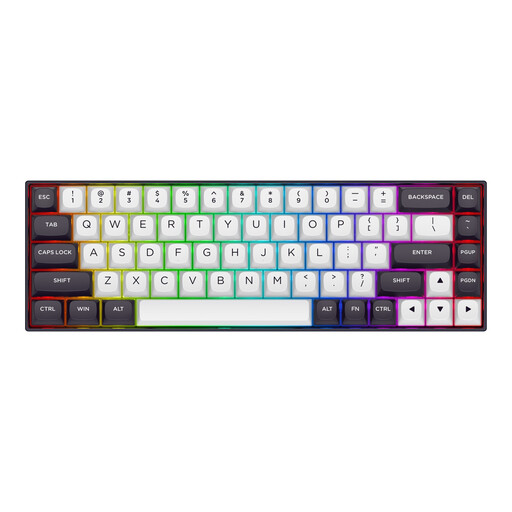 No image available
Consider its compact 68-key arrangement if mouse space matters and a US key layout works for you. The product name specifies magnetic switches, Rapid Trigger and an 8,000 Hz polling rate; check the physical key placement before choosing it for everyday typing as well as practice.
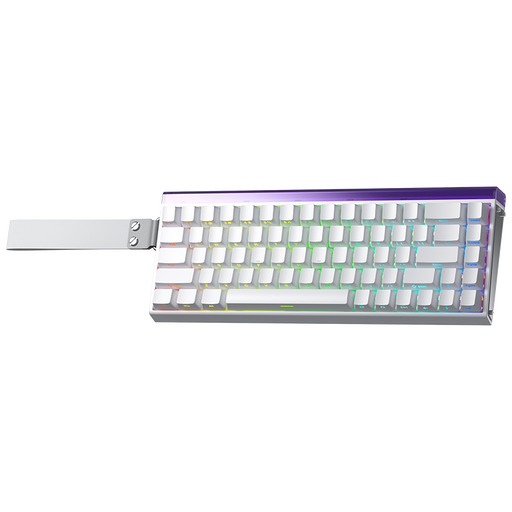 No image available
Consider this compact option if you want adjustable movement keys and can use a US layout. Its product name specifies magnetic switches, Rapid Trigger and a 60% design; confirm the exact key arrangement and sensitivity controls before ordering.
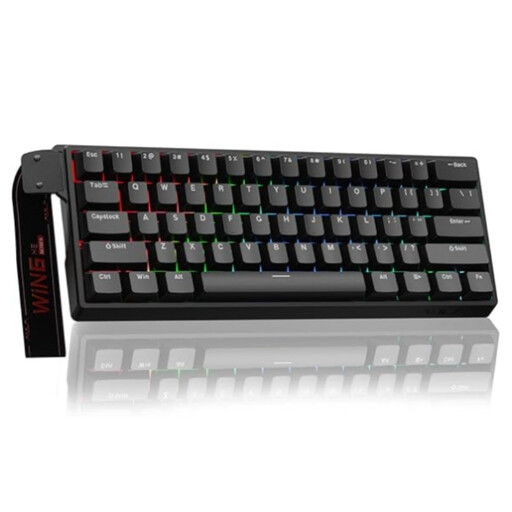 No image available
Consider this wired 60% option if a small keyboard suits your practice desk and you can work with fewer dedicated keys. Its product name specifies magnetic switches, adjustable actuation, Rapid Trigger and 8,000 Hz polling; check the regional key layout and how its settings are saved.
Adjustable actuation and Rapid Trigger are relevant when your practice includes counter-strafing and repeated movement inputs. They affect keyboard control, not mouse aim itself, so check which settings the exact model offers rather than expecting a change in aim from the keyboard alone.
No: start at a setting that lets you move deliberately without unwanted presses, then adjust it during practice. Razer and SteelSeries specify 0.1 mm as an available setting on the cited Tenkeyless models, but the right point depends on your technique and tolerance for accidental inputs.
That depends on the exact model's onboard profile behaviour. Wooting says the 80HE has default typing and gaming profiles and can store up to four profiles onboard; SteelSeries says Apex Pro TKL Gen 3 configurations can be saved onboard. Check profile controls separately for other models.
For eligible UK online purchases from a trader, GOV.UK says customers can cancel up to 14 days after delivery; a fault is a separate matter from changing your mind. Coventry City Council Trading Standards says a refund is available in most cases for faulty goods within 30 days. Check the applicable conditions, keep your order details and contact the seller about the specific issue.