
24/7 Customer Support

Free returns

Same-day & Next-day Delivery

Quality Guaranteed

Unlock Your Welcome Offers: FREE Delivery | Up to 80% OFF | Free 30-day JoyPlus trial
Download the APP
Finding a gift that is both entertaining and educational can be a challenge. You want something that will capture a child's imagination but also provide lasting value. A kids microscope is a fantastic tool for exactly that, opening up a hidden world and sparking a lifelong curiosity in science and nature.
However, the market is filled with options, from simple toy microscopes to more complex science kits. This guide is designed to help you navigate the choices. As your Joybuy Product Recommendation Officer, I'll provide practical advice and highlight a few standout options to help you find the right children's microscope for your budding scientist.
Before diving into specific models, let's cover a few key factors to consider. Thinking about these points will help you match the product to the child, ensuring it's a gift that gets used time and time again.
A microscope that is too simple can be boring, while one that is too complex can be frustrating. Age-appropriateness is crucial.
my first microscope often feature large, chunky focusing knobs, two eyepieces (so they don't have to close one eye) and low magnification. They are typically designed to view 3D objects like toys, leaves or fabrics without needing delicate glass slides.beginner microscope with adjustable focus and prepared slides. A model that comes as part of a science kit for kids can be particularly engaging, providing everything they need to start exploring straight away.microscope for 8 year old children and older can be more sophisticated. Look for higher magnification capabilities, more precise focusing mechanisms and a wider range of accessories for preparing their own specimens. These models bridge the gap between a toy and a genuine scientific instrument.It's easy to assume that more magnification is always better, but that's not necessarily the case for a children's microscope.
A microscope is only part of the experience. A good kit provides the tools needed for discovery. Look for sets that include:
Based on features, age-appropriateness and overall value, here are a few recommendations to help you start your search.
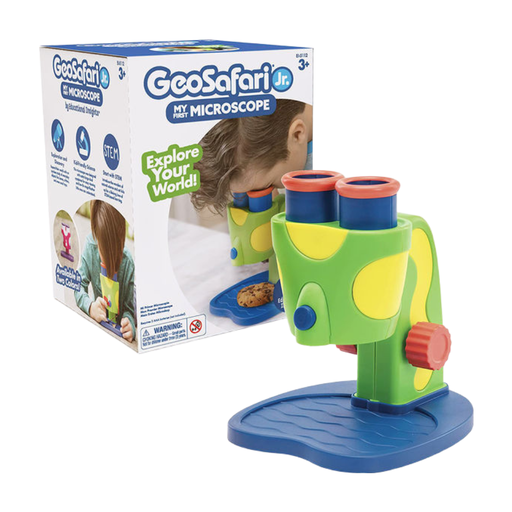
Why It Stands Out: This instrument is thoughtfully designed for the youngest scientists. It removes common frustrations by featuring two large eyepieces and a simple, oversized focusing knob. Its robust, slide-free design makes it a safe and engaging introduction to the world of magnification.
Pros:
Who is it for? This is an ideal choice for children aged 3 to 5. It's the perfect my first microscope to foster early scientific exploration without the complexity of traditional models.
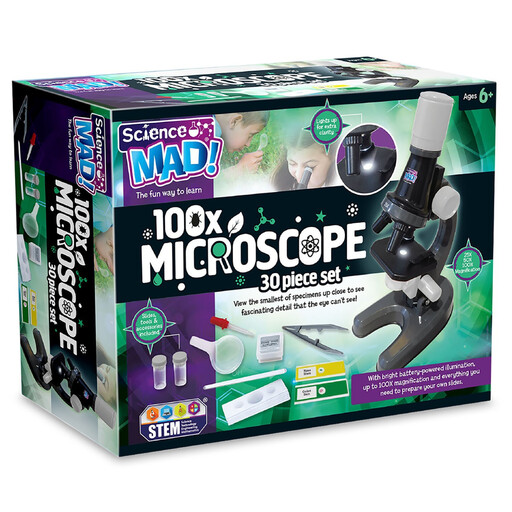
Why It Stands Out: This 30-piece set is a fantastic all-in-one science kit for kids. It provides a more traditional microscope experience with multiple magnification levels and all the tools needed to prepare and view specimens, making it a great step up from a basic toy.
Pros:
Who is it for? A great option for curious children aged 6 and up who are ready to learn how to use a real beginner microscope and conduct their own simple experiments.
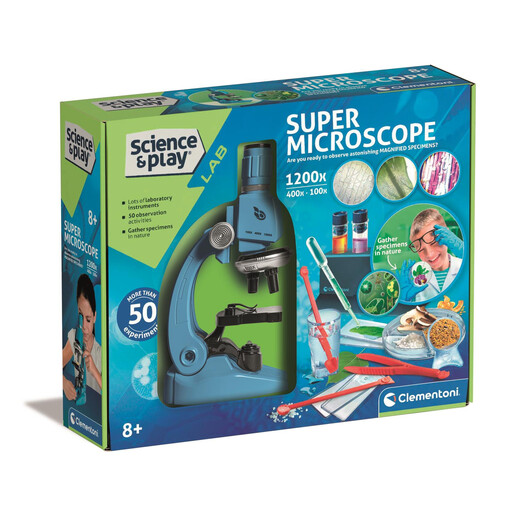
Why It Stands Out: For the older child who is serious about science, this kit offers a much more powerful and in-depth experience. With magnification up to 1200x and a booklet of 50 experiments, it provides a structured path for advanced biological exploration.
Pros:
Who is it for? This is an excellent microscope for 8 year old children and above. It's suited for those who have shown a sustained interest in science and are ready for a more challenging and rewarding STEM toy.
If your child's curiosity extends from the microscopic world beneath our feet to the vastness of space above our heads, another fantastic STEM tool is a telescope. It encourages a different kind of observation and can inspire a passion for astronomy.
Discover our collection of toy telescopes and find the perfect instrument for your young astronomer.
What can you actually see with a kids microscope? This depends on the model's magnification. With a beginner microscope, you can see fascinating textures and patterns in everyday items like salt, sugar, fabric fibres, plant leaves and insect wings. More powerful models can reveal individual plant cells in an onion skin or even tiny organisms swimming in a drop of pond water.
Are toy microscopes worth it? For very young children (ages 3-5), a good quality toy microscope is an excellent investment. They are built for safety and ease of use, with features like large knobs and dual eyepieces. They help spark interest and build foundational skills without the frustration that can come with more delicate, complex instruments.
What is a good magnification for a child's first microscope? For a child's first proper children's microscope (typically for ages 6-10), a magnification range between 100x and 400x is a great starting point. This is powerful enough to be impressive but remains manageable for a beginner to focus and use effectively, ensuring a positive and educational experience.