
24/7 Customer Support

Free returns

Same-day & Next-day Delivery

Quality Guaranteed

Unlock Your Welcome Offers: FREE Delivery | Up to 80% OFF | Free 30-day JoyPlus trial
Download the APP
Choosing a kids scooter can feel like navigating a maze of different styles, features and age ratings. You want something that will bring a smile to their face, but safety, durability and value for money are just as important. From a first three-wheeled toddler scooter to a feature-packed electric scooter for kids, the options are plentiful.
This guide is designed to help you understand the key features to look for. We will walk you through practical buying considerations and share some of our top recommendations for 2026, helping you find a scooter that’s a great fit for your child and your peace of mind.
Before diving into specific models, let's cover a few essential points. Keeping these in mind will make your decision much easier.
A scooter's safety features are paramount. For manual scooters, a rear-wheel foot brake is common and intuitive for children to use. For an electric scooter for kids, look for responsive handbrakes. Some models also include a 'kick-to-start' motor, which only engages after the child has pushed off to a certain speed. This prevents abrupt, unexpected starts and gives the rider more control.
The frame material also contributes to safety and longevity. Metal frames offer robustness, while the type of wheels—solid rubber or air-filled—can affect the smoothness of the ride. It is also vital to be aware of UK regulations. Currently, it is illegal to ride privately owned electric scooters on public roads, pavements or cycle paths; they are intended for use on private land with the owner's permission.
A scooter should match your child's developmental stage. A scooter for 3-7 year olds is often a manual model, sometimes with three wheels for added stability, and features a lower maximum weight capacity. As children grow, a scooter for 6-14 year olds becomes more suitable. These are typically two-wheeled, built to handle more weight and may be electric.
An adjustable scooter with handlebars that can be raised or lowered is an excellent choice for growing children. This feature extends the scooter's lifespan, ensuring a comfortable and correct posture as your child gets taller.
Consider how and where the scooter will be used. A foldable kids scooter is incredibly convenient for storage at home, fitting into a car boot for trips to the park or for carrying when not in use.
Features that enhance the fun factor can also improve safety. A scooter with lights, particularly a light up wheels scooter, makes the rider more visible to others, especially during evening play in the garden. Other features like built-in music can add to the enjoyment for younger children.
Here are a few standout options that cater to different age groups and preferences.
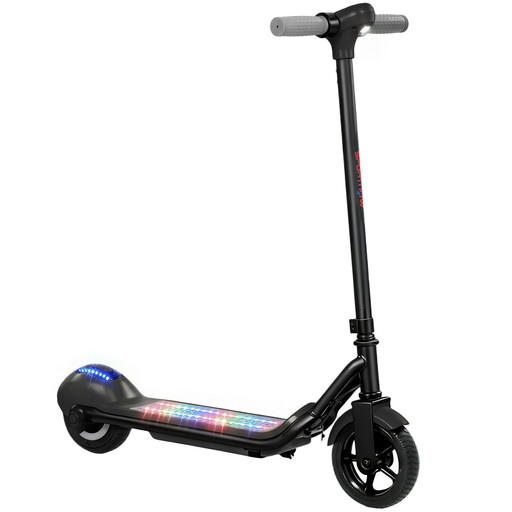
Why It Stands Out: This model offers a balanced introduction to the world of electric scooters. Its safety-oriented kick-to-start motor requires a manual push to 5 km/h before engaging, ensuring a controlled launch. The combination of vibrant RGB side lights and a bright front light significantly boosts visibility.
Pros:
Who is it for? This is a great option for parents looking for a first electric scooter for children aged 6-14. It prioritises controlled speed (up to 10 km/h) and high visibility, making it a reassuring choice for supervised rides.
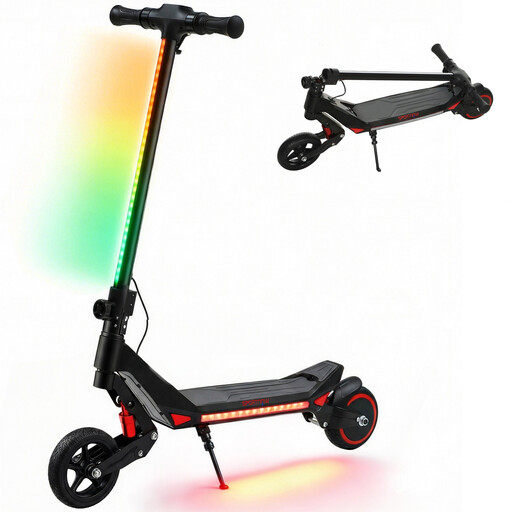
Why It Stands Out: For those seeking a bit more performance and comfort, this model delivers. It features front and rear spring suspension to smooth out bumps on park paths or uneven pavements. The more powerful 200W motor allows for a higher top speed, while the foldable design makes it exceptionally practical for families on the go.
Pros:
Who is it for? This scooter is well-suited for confident riders aged 6-14. Its enhanced suspension and higher speed make it ideal for longer adventures and the foldable frame is a significant advantage for storage and travel.
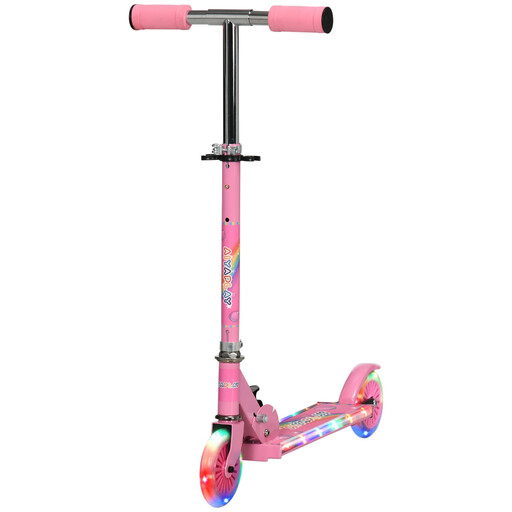
Why It Stands Out: This toddler scooter is all about combining fun with function for the youngest riders. The adjustable handlebars accommodate children as they grow, while the sensory combination of light up wheels, deck lights and built-in music makes every ride an exciting event. Its extremely lightweight and foldable frame makes it easy for parents to handle.
Pros:
Who is it for? This is an ideal first scooter for children aged 3-7. It provides the stability and engaging features needed to build confidence and make learning to ride a joyful experience.
The scooters we've highlighted use vibrant lights to improve visibility and add a touch of fun to evening rides. If you're looking to bring that same brightness and safety to your entire garden or patio, why not explore our selection of outdoor LED garden lights? They are a great way to illuminate pathways and create a welcoming atmosphere for all your family's outdoor activities.
What is the legal position on electric scooters in the UK? In the UK, it is currently illegal to use privately owned electric scooters on public roads, pavements or cycle paths. They are only permitted for use on private land with the landowner's consent. The age recommendations provided by manufacturers (e.g., scooter for 6-14 year olds) are for use in these private settings.
How do I choose the right size scooter for my child? Always check the manufacturer's recommended age and height range. An adjustable scooter is a practical choice as it can be adapted as your child grows. For comfortable control and good posture, the handlebars should sit somewhere between the child's waist and chest when they are standing on the scooter's deck.
Are three-wheel or two-wheel scooters better for young children? Three-wheel scooters, often categorised as a toddler scooter, provide much greater stability, which is ideal for young children (typically ages 3-5) who are just beginning to develop their balance and coordination. Two-wheel scooters require more balance and are generally better for children who are a bit older or have already mastered the basics of riding.