
24/7 Customer Support

Free returns

Same-day & Next-day Delivery

Quality Guaranteed

Unlock Your Welcome Offers: FREE Delivery | Up to 80% OFF | Free 30-day JoyPlus trial
Download the APP
A kitchen bin might seem like a simple purchase, but choosing the wrong one can lead to daily frustration. From flimsy pedals that snap after a few months to lids that slam shut with a startling crash, a poorly designed rubbish bin can quickly become a household nuisance. Many of us have been tempted by sleek designs only to discover hidden flaws that make them impractical for a busy UK home.
As the Joybuy Product Recommendation Officer, my role is to help you see past the marketing and focus on what truly matters. Before you buy, be aware of these common pitfalls:
To ensure your new bin is a help, not a hindrance, focus on these core features. They are the difference between a short-term fix and a long-term, reliable solution for your home.
The material of your bin affects its longevity, appearance and ease of cleaning. While plastic bins are lightweight and often more affordable, a steel bin typically offers superior durability and a more premium feel. Look for steel with a fingerprint-proof coating, which significantly reduces smudges and keeps the surface looking clean, especially in a busy family kitchen. This finish resists the oils and marks from daily contact, meaning less time spent wiping it down.
For a hands-free pedal bin, the quality of the step mechanism is non-negotiable. A well-engineered pedal should feel sturdy and responsive, not flimsy. An equally important feature is a soft close bin lid. This is usually achieved with a built-in damper that allows the lid to close slowly and silently. It prevents noise, reduces wear and tear on the hinge and helps to trap odours inside.
Choosing the right size and configuration is crucial. A single person may only need a 20-30 litre bin, while a family of four will likely require 50-60 litres to avoid constant emptying. For environmentally conscious households, a dual compartment bin is an excellent choice. It allows you to separate general waste from recyclables in one convenient unit, making it a highly efficient recycling bin.
For food scraps, a dedicated food waste caddy or compost bin is ideal. Some are designed as a compact under sink bin, while others can be hung from a cabinet door for easy access during meal prep. For smaller rooms, a dedicated bathroom bin or a small pedal bin ensures a tidy space without occupying too much floor area.
Based on these practical considerations, we've matched a few standout products to different household needs.
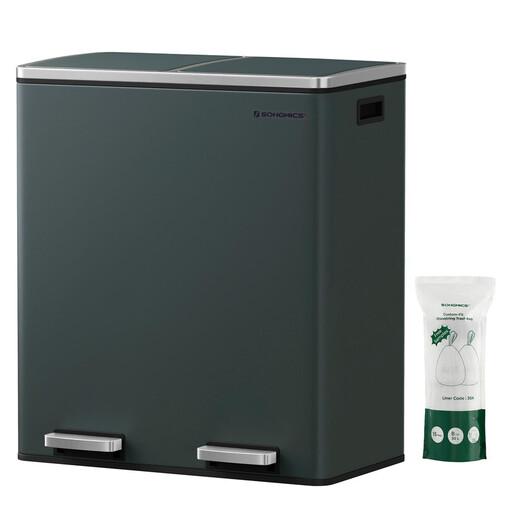
Why This Fits Their Persona: This dual compartment bin is ideal for families or shared households in the UK looking to streamline their recycling efforts. The two 30L sections provide ample space for separating general waste and recyclables without needing two separate bins.
The buffer mechanism ensures the lids close softly and silently, avoiding the common "slam-shut" issue. The two removable inner buckets have handles, making liner changes straightforward and mess-free.
Features a large 60L total capacity for less frequent emptying and a sturdy steel exterior for durability. The hands-free pedal operation promotes better hygiene in the kitchen.
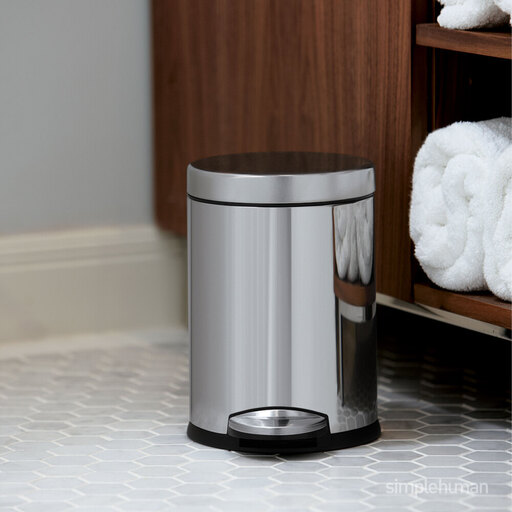
Why This Fits Their Persona: Perfect for those who need a discreet and stylish waste solution for a bathroom, home office or under a desk. Its small footprint and polished steel finish complement modern interiors without drawing attention.
This bin directly counters the fragile pedal pitfall with a strong steel pedal engineered for durability. The patented lid technology provides a smooth, silent close every time, eliminating the "slam-shut" problem.
Features a removable inner bucket for easy cleaning and liner changes. The non-skid base protects floors and keeps the bin stable during use.
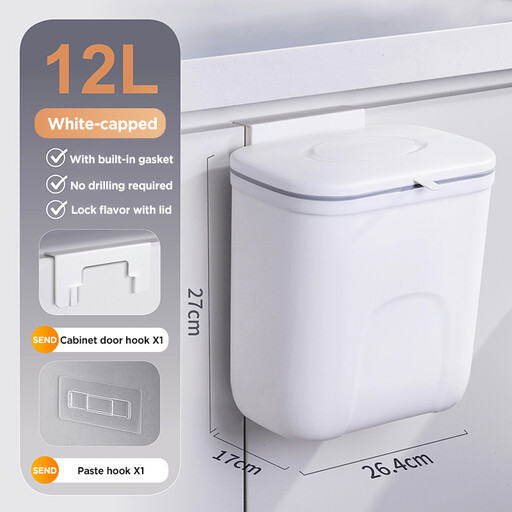
Why This Fits Their Persona: A practical solution for home cooks who want to keep their workspace tidy. This hanging food waste caddy allows for easy disposal of vegetable peelings and other scraps directly from the countertop, saving trips to the main bin.
This product solves a specific problem that larger bins create: inconvenience during food prep. Its focused design as a hanging or under-sink caddy makes it a highly practical tool rather than a flawed general-purpose bin.
It can be hung over a standard cupboard door or wall-mounted for flexibility. The foldable design allows it to be collapsed and stored away, saving valuable kitchen space when not in use.
We have compiled a complete, real-time list of products that fully satisfy these strict selection criteria and UK safety regulations.
For a typical family of four in the UK, a bin with a capacity between 50 and 60 litres is generally recommended. This size is large enough to hold several days' worth of waste without needing to be emptied constantly. If you generate a lot of recycling, consider a dual compartment bin with a total capacity in this range.
To prevent odours and bacteria build-up, it's good practice to wipe down the interior and exterior of your kitchen bin at least once a week. A more thorough clean with soap and water or a disinfectant spray is advisable every time you change the liner, or immediately after any spills. Bins with removable inner buckets make this process much easier.
Yes, pedal bins offer a significant hygiene advantage because they are hands-free. By using your foot to open the lid, you avoid transferring germs from the bin surface to your hands, which is particularly important in a kitchen environment where food is being prepared.