
24/7 Customer Support

Free returns

Same-day & Next-day Delivery

Quality Guaranteed

Unlock Your Welcome Offers: FREE Delivery | Up to 80% OFF | Free 30-day JoyPlus trial
Download the APP
From splattered hobs to greasy extractor fans, keeping a kitchen clean can feel like a constant battle. A good kitchen degreaser spray promises to cut through the grime with ease, but the reality is often a cupboard full of half-used bottles that didn't live up to their claims. As a Joybuy Product Recommendation Officer, my role is to help you navigate the market and find a product that genuinely works for your home.
Before you make another purchase, it's worth understanding the common pitfalls that lead to disappointment and wasted money.
To ensure you choose a product that is both effective and safe for your kitchen, focus on these core parameters.
Understanding the ingredients helps you match the spray to the job. Most kitchen degreasers fall into two categories:
This is a non-negotiable checkpoint. A product labelled as a food safe kitchen spray has been formulated to be safe for use on food preparation areas, provided you follow the usage directions (which usually involve rinsing with water). Always check the label for a list of approved surfaces (e.g., ceramic, stainless steel, enamel) and, more importantly, surfaces to avoid (e.g., untreated wood, aluminium, brass and painted areas). A quick patch test on an inconspicuous spot is always a sensible precaution.
While the primary function of a degreaser is to remove grease, many also offer sanitising benefits. If hygiene is a top priority, look for an antibacterial kitchen spray that explicitly states it kills 99.9% of bacteria and complies with official standards like EN 1276. This ensures the product is not just making your kitchen look clean, but making it hygienically clean too.
Instead of a one-size-fits-all approach, we've matched specific products to different household needs and cleaning challenges.
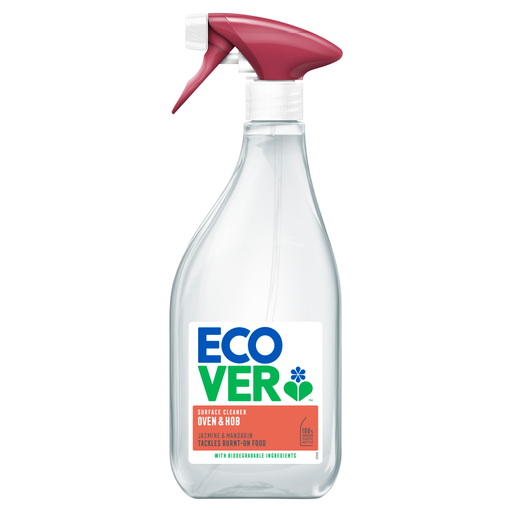
Why This Fits Their Persona: This is for the home that prioritises environmental responsibility without compromising on cleaning power. It's ideal for those with septic tanks or who are actively trying to reduce the chemical footprint of their household cleaning routine.
It avoids the "vague eco promise" by providing clear credentials: biodegradable ingredients, production in a certified Zero Waste factory and Cruelty-Free International certification.
Effectively tackles tough, burnt-on food residues while using plant-based ingredients. The jasmine and mandarin fragrance leaves a pleasant, natural scent.
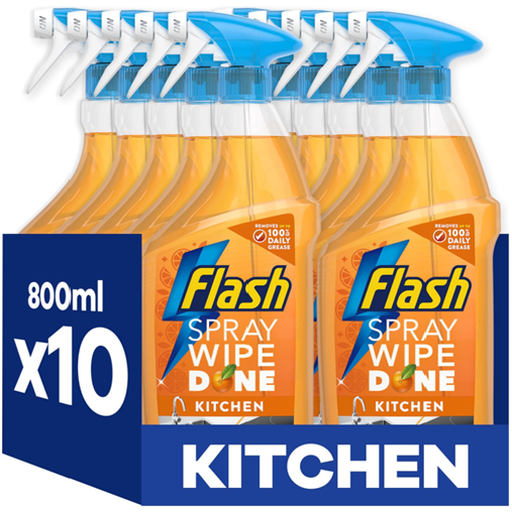
Why This Fits Their Persona: For households where time is precious, this spray simplifies the daily clean-up. It's designed for speed, tackling everyday grease on worktops, hobs and sinks without extra steps.
It sidesteps the "do-it-all" trap by focusing on a specific benefit: speed and convenience for daily grease. It doesn't over-promise on deep-cleaning burnt-on food, making it an honest choice for its intended use.
Its "Spray, Wipe, Done" process requires no scrubbing or rinsing, saving significant time. It's also formulated to be safe on food contact surfaces, providing peace of mind.
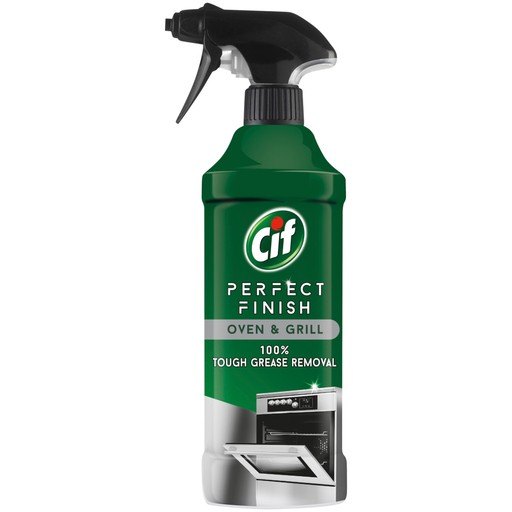
Why This Fits Their Persona: This is the right tool for the toughest jobs. It's for the person who needs to tackle the aftermath of a Sunday roast, deep-clean an oven after moving into a new flat or restore a barbecue grill at the start of summer.
This is a specialist product, not a generalist. It avoids the "do-it-all" pitfall by being scientifically formulated specifically for burnt-on grease, making its purpose and power clear from the outset.
Its powerful degreasing formula is designed to cut through the toughest oven, grill and hob stains. It restores the sparkle to ceramic and stainless-steel surfaces without damaging them.
We have compiled a complete, real-time list of products that fully satisfy these strict selection criteria and UK safety regulations.
1. Can I use a kitchen degreaser spray on my wooden worktops? Generally, it is not advisable to use a standard grease remover for kitchen surfaces on untreated or oiled wood. The formulations can be too harsh and may strip the wood's natural oils or finish. Always check the product label for surface compatibility. For wooden surfaces, it is better to use a cleaner specifically designed for wood.
2. What is the difference between an antibacterial spray and a degreaser? A degreaser's main purpose is to dissolve and lift oil and grease. An antibacterial kitchen spray is formulated specifically to kill germs and bacteria. While some products offer both functions, their effectiveness can vary. If your primary concern is sanitising food preparation areas, look for a product that explicitly states it kills 99.9% of bacteria and meets official disinfection standards.
3. How long should I leave a heavy duty kitchen cleaner on to work? The required time varies significantly by product and task. For a daily cooker top cleaner, a minute or two before wiping is often sufficient. For a powerful oven and hob cleaner tackling baked-on grime, the instructions may require you to leave the product on for 30 minutes or longer. Always follow the manufacturer's directions precisely, as leaving a strong cleaner on for too long could potentially damage the surface.