
24/7 Customer Support

Free returns

Same-day & Next-day Delivery

Quality Guaranteed

Unlock Your Welcome Offers: FREE Delivery | Up to 80% OFF | Free 30-day JoyPlus trial
Download the APP
As a Joybuy Product Recommendation Officer, my role is to help you navigate the crowded market of kitchen gadgets. It’s easy to be tempted by clever marketing, but many promising tools end up gathering dust in a drawer. This guide will help you identify genuinely useful food preparation equipment and avoid the common pitfalls that lead to wasted money and kitchen clutter.
Before adding another item to your basket, be aware of these frequent issues that catch out even savvy UK shoppers:
To find reliable kitchen essentials for home cooks, focus on these core parameters instead of marketing hype.
The longevity and safety of any kitchen tool depend on its materials. For metal items like knives and scissors, look for clear specifications. High-carbon stainless steel, such as 420 or 50Cr15Mov, offers a good balance of sharpness, durability and rust resistance. For small kitchen appliances or containers, ensure plastics are explicitly listed as BPA-free to guarantee they are safe for food contact. A solid build, such as a full tang construction in a knife (where the metal extends fully into the handle), indicates a more durable and balanced tool.
The most valuable kitchen gadgets are the ones that solve multiple problems. Look for multi-purpose kitchen tools that consolidate functions. For example, some heavy-duty kitchen scissors can also crack nuts or open bottles. When considering a knife, a Santoku knife is a versatile Japanese-style blade excellent for slicing, dicing and mincing, making it a great all-rounder for UK kitchens. For appliances, consider if a single device can perform several functions, such as steaming, boiling and slow cooking, which is ideal for saving counter space.
A practical gadget must be easy to clean. Features to look for include detachable blades on scissors, non-stick surfaces on cookers and simple, single-body construction. Dishwasher-safe components are a significant advantage for busy households, but always check the manufacturer's guidance, as some high-performance materials require hand washing to maintain their integrity.
Here are a few kitchen gadgets that align with these practical principles, matched to different needs and lifestyles.
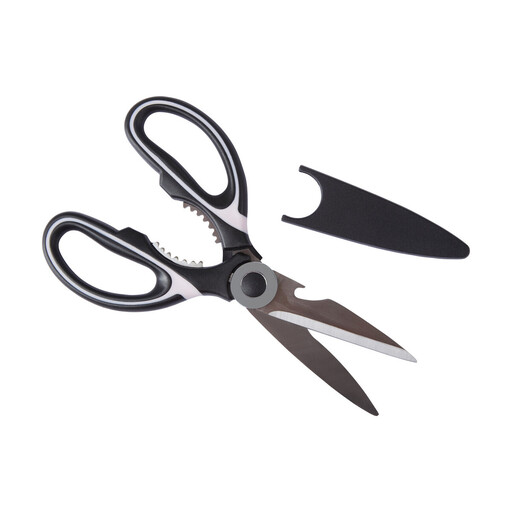
Why This Fits Their Persona: Perfect for students or those in their first flat, this tool combines five functions into one, saving both money and precious drawer space. It handles everyday tasks without needing a whole block of tools.
This is the opposite of a "unitasker." It integrates a parer, nut cracker and bottle opener into a pair of robust scissors, ensuring it gets used daily.
Made from rust-resistant 420 stainless steel with an ergonomic grip. Comes with a safety sheath for secure storage.
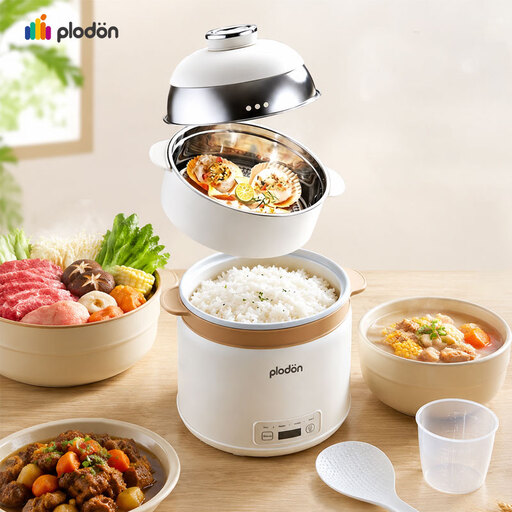
Why This Fits Their Persona: This compact appliance is designed for efficiency. It's ideal for busy people who want to prepare healthy meals with minimal effort, from steaming vegetables to cooking rice or soup for 1-3 people.
It avoids being overly complex. The one-touch controls and food-grade non-stick pot make it simple to use and very easy to clean, tackling the maintenance pitfall head-on.
Features a "steam above, cook below" design with a stainless steel steamer basket, saving time. Includes auto keep-warm and overheat protection for safety.
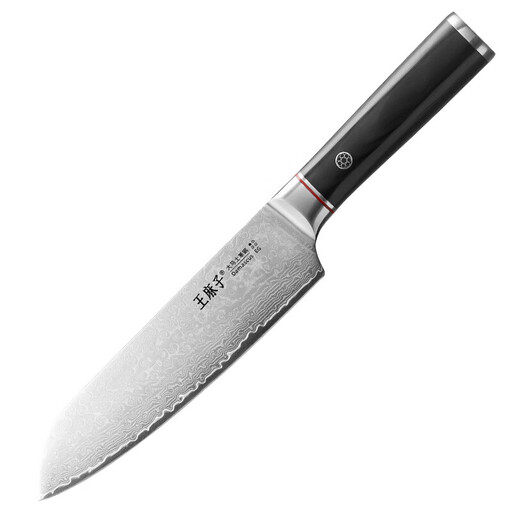
Why This Fits Their Persona: For the home cook who values precision and quality materials, this Santoku knife offers a significant step up. It's designed for performance in slicing, dicing and chopping, making food prep more enjoyable.
It avoids the flimsy construction trap by using Damascus steel, known for its durability and edge retention. This is a purpose-driven tool built to last, not a gimmick.
The Santoku knife UK design is highly versatile for meat and vegetables. The patterned steel provides both an aesthetic appeal and a high-performance cutting edge.
We have compiled a complete, real-time list of products that fully satisfy these strict selection criteria and UK safety regulations.
1. Are multi-purpose kitchen tools actually worth it? Yes, provided they are well-designed. A good multi-tool, like a pair of shears that also opens bottles, genuinely reduces clutter and offers convenience. The key is to choose one that combines tasks you perform regularly, rather than niche functions. Avoid those that try to do too much and end up doing nothing well.
2. How do I properly clean and maintain kitchen gadgets to make them last? Always check the product's specific instructions. As a general rule, hand-wash sharp items like quality knives and scissors to protect the blades. For tools with multiple parts, disassemble them for cleaning if the design allows. Dry everything thoroughly before storing to prevent rust or mould, especially with tools made of wood or certain metals.
3. What is the difference between a Santoku knife and a regular chef's knife? The main differences are in the blade shape and cutting motion. A classic Western chef's knife has a curved belly, designed for a "rocking" chop. A Santoku knife has a straighter edge with a curved spine, making it suited for clean, downward slices and quick chopping. Many UK home cooks find the Santoku's shorter, lighter blade very manageable for a wide range of daily tasks.