
24/7 Customer Support

Free returns

Same-day & Next-day Delivery

Quality Guaranteed

Unlock Your Welcome Offers: FREE Delivery | Up to 80% OFF | Free 30-day JoyPlus trial
Download the APP
Finding a reliable kitchen recycling bin can feel more complicated than it should. You want something that simplifies recycling, contains odours and doesn't become an eyesore. Yet, many of us have been let down by a purchase that looked good online but failed in practice. Before you invest in a new waste separation bin, it’s worth knowing about the common design flaws that often lead to disappointment.
Many bins suffer from a few recurring issues. First is the flimsy pedal mechanism that snaps after a few months of daily use, forcing you to lift the lid by hand. Second is the so-called "soft-close" lid that works for a week before it starts slamming shut with a startling clatter. Finally, there are the poorly designed inner buckets—awkward to lift out, difficult to clean and a constant struggle to fit standard bin liners into, turning a simple chore into a frustrating task.
This guide cuts through the marketing clutter to focus on the practical features that define a durable and functional kitchen recycling bin, helping you make a choice that serves your household well for years to come.
To avoid the common pitfalls, focus on three core aspects: capacity, material and the mechanism. Getting these right is crucial for long-term satisfaction.
The total volume of a bin, measured in litres (L), determines how often you’ll need to empty it. For a family of three or four, a 60L recycling bin is often a suitable size, typically split into two 30L sections. This provides ample space for both general waste and mixed recycling, aligning with many local council collection schedules. For smaller households, couples, or kitchens with limited space, a 40L model (often 2 x 20L) offers a more compact solution.
A dual compartment bin is essential for efficient recycling. This double kitchen bin design allows you to separate waste at the point of disposal, keeping your kitchen tidy and making recycling day much simpler. Check that the compartments are of a practical size for your needs; some households produce more recycling than general waste, or vice versa.
The material of your bin affects its durability, ease of cleaning and appearance. While plastic bins are lightweight and affordable, a stainless steel rubbish bin or a powder-coated steel model offers superior longevity and hygiene.
Regardless of the exterior, look for inner buckets made from sturdy, smooth PP plastic. They should have integrated handles for easy removal.
The hands-free convenience of a pedal bin is a key feature for maintaining kitchen hygiene. A well-engineered pedal should feel solid and responsive, not flimsy.
Equally important is a reliable soft close bin lid. A quality mechanism uses a damper to gently and silently lower the lid, preventing noise and containing odours effectively. Some models also feature a stay-open function, where the lid can be locked at a 90-degree angle, which is incredibly useful when you're peeling vegetables or clearing plates after a meal.
We've filtered through various models to identify options that address the common pitfalls and match different household needs.
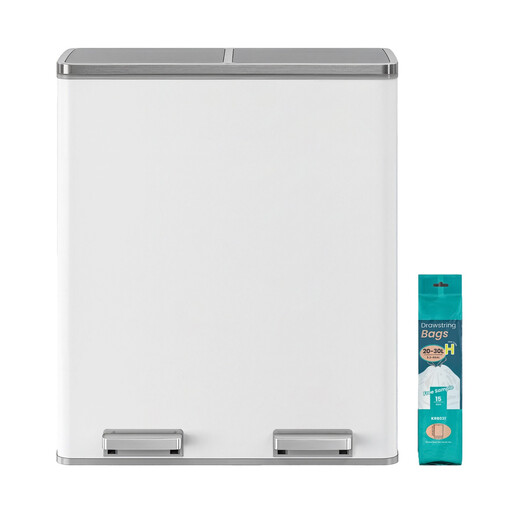
Why This Fits Their Persona: With a total capacity of 60 litres, this bin is built for the demands of a busy family. The generous 2 x 30L compartments mean fewer trips to the outside bins and the durable stainless steel body can withstand the daily wear and tear of a high-traffic kitchen.
It features a sturdy steel pedal mechanism designed for frequent use. The two PP plastic inner buckets have strong metal handles, making them easy to lift out without fuss, even when full.
The reliable soft-close lid prevents slamming, maintaining a quieter home environment. Its stainless steel construction is hygienic and easy to wipe clean.
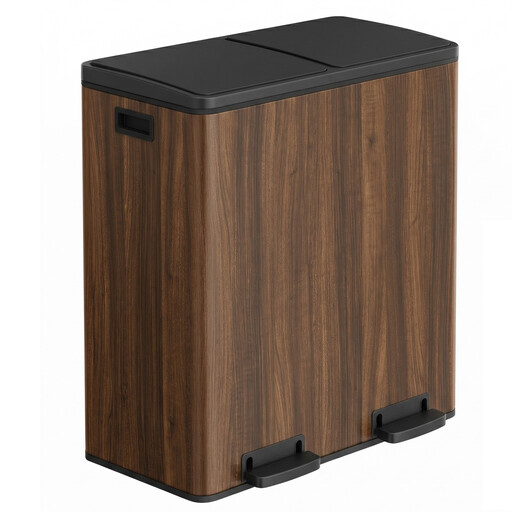
Why This Fits Their Persona: For those who see every kitchen item as part of the overall decor, this bin's dark walnut finish offers a warm, sophisticated alternative to standard metal. It integrates beautifully into kitchens with wooden elements or modern, dark colour schemes.
It combines aesthetics with function. The soft-close lid ensures it operates as elegantly as it looks, preventing the jarring noise of a slamming lid that would disrupt a carefully designed space.
The unique walnut-effect finish on a durable steel body provides a high-end look without sacrificing practicality. It features two 30L compartments for ample waste separation.
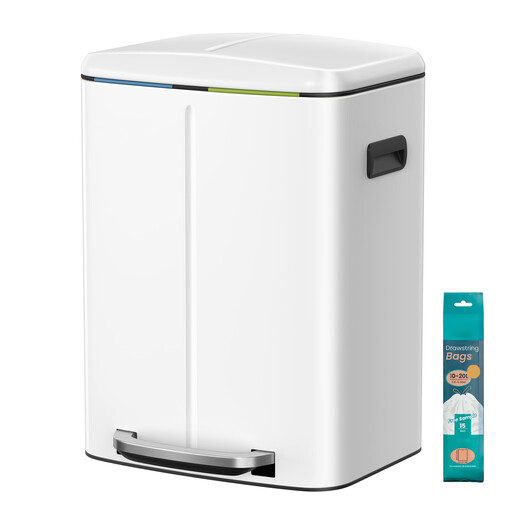
Why This Fits Their Persona: This 40L (2 x 20L) bin is ideal for smaller kitchens, flats or households with one to two people. Its more compact footprint saves valuable floor space without compromising on the convenience of a dual-compartment system.
Unlike some smaller bins that skimp on features, this model retains a robust pedal, a soft-close lid and easily removable inner buckets. A rear bag hole helps secure liners, preventing them from slipping inside.
It provides a complete waste separation solution in a space-efficient design. The stay-open lid function is a practical bonus for longer food prep tasks.
We have compiled a complete, real-time list of products that fully satisfy these strict selection criteria and UK safety regulations.
For a typical family of four in the UK, a bin with a total capacity of 50-60 litres is generally recommended. A 60L recycling bin, split into two 30-litre compartments, usually provides enough space to last several days between emptying, accommodating both general waste and the volume of recycling generated by a family.
Regular cleaning is the most effective method. Wash the inner buckets with warm, soapy water weekly. Ensure food waste is bagged securely and consider sprinkling a small amount of bicarbonate of soda at the bottom of the bin to absorb odours. A bin with a well-fitting, sealed lid is also crucial for odour containment.
To clean a stainless steel rubbish bin, wipe it down with a soft, damp microfibre cloth. For stubborn marks, use a small amount of mild washing-up liquid and water. Always wipe in the direction of the steel's grain to avoid streaks. Dry it immediately with a clean, dry cloth to prevent water spots. Avoid using abrasive cleaners or steel wool, as these will scratch the surface.