
24/7 Customer Support

Free returns

Same-day & Next-day Delivery

Quality Guaranteed

Unlock Your Welcome Offers: FREE Delivery | Up to 80% OFF | Free 30-day JoyPlus trial
Download the APP
Finding the right kitchen recycling bin can feel like a chore. With council recycling rules becoming more specific and kitchen space often at a premium, a simple waste bin no longer suffices. Many of us are looking for a solution that is not only practical and hygienic but also complements our kitchen's aesthetic. The challenge is navigating the vast market of options, from multi-compartment systems to sleek, space-saving designs.
This guide is designed to simplify your search. As the Joybuy Product Recommendation Officer, my role is to help you identify the features that matter most. We will explore key considerations for choosing a bin and highlight a few standout models that balance form and function, helping you manage your household waste with ease.
Before you decide, consider these practical points to ensure your new bin meets the demands of a modern UK household.
The first step is to think about your household's waste output. A single person or a couple might find a 30L kitchen bin perfectly adequate. However, a larger family will likely need a total capacity of 50-60 litres to avoid constant trips outside.
More importantly, consider your local council's recycling requirements. A dual compartment bin is excellent for separating general waste from mixed recyclables. For areas that require food waste or glass to be separated, a 3 compartment recycling bin offers an all-in-one waste separation bin solution, keeping your kitchen tidy and organised.
The material of your bin affects its durability, appearance and ease of cleaning. A stainless steel kitchen bin is a popular choice for its robust construction and modern look. Many now come with fingerprint-resistant coatings to keep them looking smart. Plastic bins, on the other hand, are lightweight and often more affordable, but may not offer the same longevity or premium feel. Whichever you choose, look for a sturdy build that can withstand the rigours of daily use.
Small features can make a big difference in daily use. A pedal bin for kitchen use allows for hands-free operation, which is more hygienic when you are handling food scraps. Another highly sought-after feature is a soft close bin lid. This mechanism prevents the lid from slamming shut, reducing noise and wear and tear. For those with smaller kitchens or narrow gaps, a slim kitchen bin can provide ample capacity without taking up valuable floor space.
Here are a few recommendations that address common household needs, from comprehensive recycling to space-saving designs.
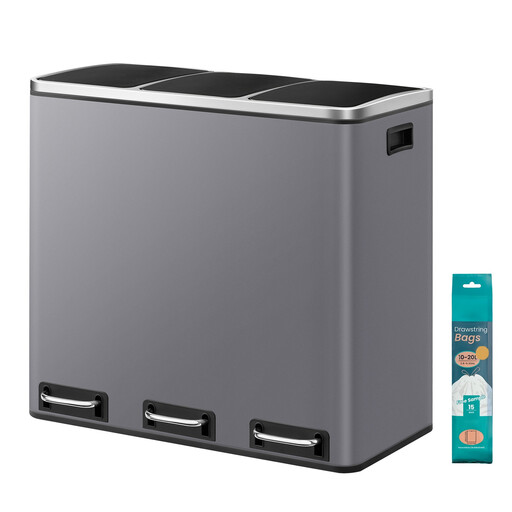
Why It Stands Out: This bin is a complete waste management station. With three separate 18-litre compartments, it makes sorting general waste, recycling and food scraps incredibly straightforward. The durable steel body is built to last, while the independent pedals and soft-close lids for each section add a layer of convenience and hygiene.
Pros:
Who is it for?: Eco-conscious households and families who need to separate multiple waste streams in one organised, space-efficient unit.
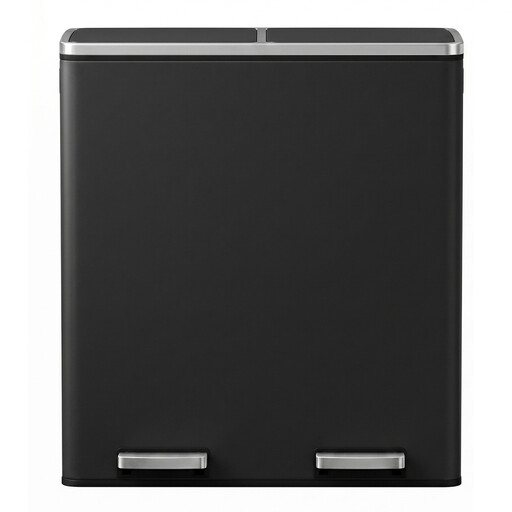
Why It Stands Out: This dual-compartment bin offers a generous 60-litre capacity, split into two 30-litre sections, making it ideal for managing household recycling and general waste. Its sleek black steel finish fits well in contemporary kitchens. The pedal-operated, soft-close lids help contain odours, and the removable inner buckets with handles make emptying a simple task.
Pros:
Who is it for?: Families or shared homes that generate a balanced amount of general waste and recyclables and need a high-capacity, stylish solution.
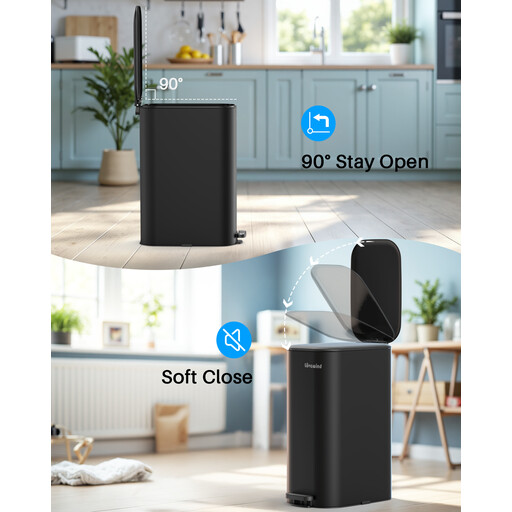
Why It Stands Out: This bin proves that you don't need to sacrifice style or function in a compact space. Its slim profile is designed to fit into tight corners, while the 30L capacity is ample for smaller households or office kitchens. The premium black stainless steel body features a fingerprint-proof coating, keeping it looking clean. The soft-close lid and a handy stay-open feature make it practical for food prep.
Pros:
Who is it for?: Those living in flats, smaller homes or anyone needing a smart, compact waste solution for an office or utility room.
If these options aren't quite what you're looking for, or if you need a model with different features such as wheels for mobility, there are many other choices available.
For a wider selection, we invite you to explore our full range of Wheeled domestic bin.
1. What is the best way to stop my kitchen bin from smelling? Regular cleaning of the bin and inner buckets with warm, soapy water is key. Using a bin with a well-fitting or airtight lid, like some of the models mentioned, can significantly help contain odours. For food waste, using a dedicated compartment with compostable liners can also make a big difference.
2. What size kitchen bin do I need for a family of 4? A family of four typically generates enough waste to warrant a bin with a total capacity between 50 and 60 litres. A dual compartment bin with two 30L sections is often a practical choice, as it provides ample space for both general waste and recycling without needing to be emptied daily.
3. Is a stainless steel bin a better choice than a plastic one? This depends on your priorities. A stainless steel kitchen bin generally offers superior durability and a more premium aesthetic that is easy to wipe clean. Many modern steel bins also have fingerprint-resistant coatings. Plastic bins are usually lighter and more affordable but may be more prone to staining or retaining odours over time.