
24/7 Customer Support

Free returns

Same-day & Next-day Delivery

Quality Guaranteed

Unlock Your Welcome Offers: FREE Delivery | Up to 80% OFF | Free 30-day JoyPlus trial
Download the APP
Bringing a new kitten home is an exciting time, but navigating the aisles of kitten food can be overwhelming. The packaging is filled with appealing images and bold claims, making it difficult to know what’s genuinely important for your new companion’s health. As a new or experienced cat owner in the UK, you want to provide the very best start in life, but it's easy to fall into common purchasing traps.
My role as a Joybuy Product Recommendation Officer is to help you see past the marketing jargon. This guide will break down the essential factors in choosing kitten food and highlight the pitfalls that can lead to poor choices and wasted money.
Before you even look at a specific brand, be aware of these common marketing tactics and misconceptions:
To ensure you're selecting a suitable food, focus on these three non-negotiable parameters.
Kittens are not just small cats; they have unique nutritional requirements to support rapid growth and development. A formula specifically designed for food for kittens 2-12 months will have:
Adult cat food lacks these elevated levels and will not adequately support a growing kitten.
There is no single right answer here, and many owners choose to feed a mix of both.
Beyond the basics, look for a complete kitten food that is fortified with key nutrients. Check the 'Analytical Constituents' or 'Nutrition Information' on the packaging for:
Here are a few options that align with our selection criteria, matched to different owner priorities and kitten needs.

Why This Fits Their Persona: For new kitten owners in the UK seeking a reliable and affordable starting point, this widely available option provides a balanced diet without a premium price tag. The mixed selection helps you discover your kitten's flavour preferences early on.
It is clearly labelled as a 100% complete and balanced food, ensuring you don't accidentally purchase a complementary treat as a main meal. It provides all the necessary nutrients for a kitten's first year.
Formulated with high protein (13.5%) and essential vitamins (A, D3, E) to support healthy growth. The tender pieces in jelly are easy for young kittens to eat.

Why This Fits Their Persona: For the owner who prioritises transparent, high-quality ingredients. This food is ideal for those concerned about fillers and who want to provide a diet with a high, specified meat content, which may be beneficial for kittens with sensitive digestion.
This product directly counters the "vague meat" trap by specifying high percentages of named meats, such as 58.5% UK Chicken Breast Slices in its Pure Chicken formula. It is also a grain free kitten food, suiting those who specifically seek this attribute.
Features a very high protein content (14.5%) for wet food and includes 4% salmon oil for essential fatty acids. The bulk pack of 40 pouches offers good value for a premium product.
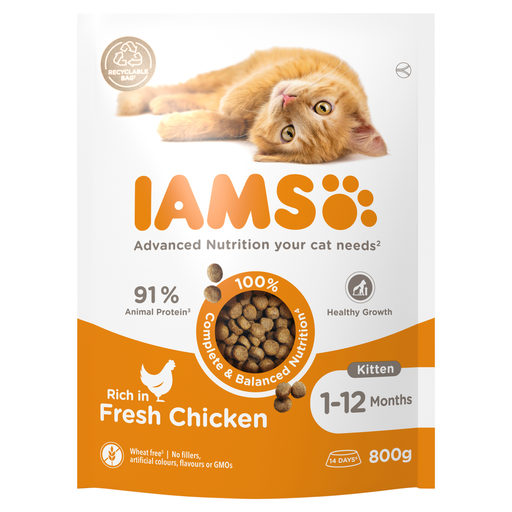
Why This Fits Their Persona: Perfect for owners who prefer the convenience and dental benefits of dry kibble but refuse to compromise on nutritional quality. This formula is designed for those who want a high-protein, meat-first dry food.
It avoids the pitfall of low-quality protein by stating that 91% of its total protein is from animal sources, with fresh chicken as a key ingredient. It is also wheat-free, catering to common sensitivities without unnecessary "grain-free" hype.
This food is packed with a very high protein level (37%) and is enriched with DHA for brain development and Taurine (2100 mg/kg). The crunchy kibbles also help reduce tartar build-up.
We have compiled a complete, real-time list of products that fully satisfy these strict selection criteria and UK safety regulations.
The correct amount varies based on the kitten's age, weight, activity level and the specific food you are using. Always start by following the feeding guide on the packaging. These guides usually provide a daily amount, which should be split into several small meals (3-4 per day for young kittens). Monitor your kitten’s body condition and adjust portions as needed to ensure they maintain a healthy, lean weight.
No, kittens should not be fed adult cat food. As explained earlier, their nutritional needs are very different. Adult cat food lacks the higher levels of protein, fat and specific nutrients like DHA that are essential for a kitten's rapid growth phase. Feeding them adult food can lead to developmental problems.