
24/7 Customer Support

Free returns

Same-day & Next-day Delivery

Quality Guaranteed

Unlock Your Welcome Offers: FREE Delivery | Up to 80% OFF | Free 30-day JoyPlus trial
Download the APP
The dreaded low-battery warning on your laptop always seems to appear at the worst possible moment: halfway through a critical report on the train, during a client video call from a café or just as you've settled in for a study session at the library. In an age where work and life depend on portable technology, being tethered to a wall socket is no longer a viable option.
A high-performance laptop power bank is the solution, but navigating the market can be confusing. With a dizzying array of technical specifications like mAh, wattage and charging protocols, it’s easy to feel overwhelmed. This guide is designed to cut through the clutter, helping you understand the key features to look for and providing clear, practical recommendations to keep your devices powered up, wherever you are.
Before diving into specific models, it’s important to understand what separates a simple phone charger from a true laptop-capable power source. Here are the three most important factors to consider.
Capacity is often the headline feature, measured in milliamp-hours (mAh). A 20000mAh power bank is a common and practical size, typically holding enough energy to fully charge a modern laptop like a MacBook Air at least once or a smartphone multiple times. For more demanding users, a high capacity power bank of 25,000mAh or more offers extended off-grid time.
However, the most critical figure, especially for air travel, is Watt-hours (Wh). UK and international aviation regulations generally restrict batteries in carry-on luggage to 100Wh. Most power banks up to 27,000mAh fall comfortably below this limit, but it is always wise to check the specific Wh rating printed on the device before you fly.
This is arguably the most crucial specification. A power bank’s wattage (W) determines how quickly it can charge your devices—and whether it can charge a laptop at all. While a standard 15W charger is fine for a phone, a laptop requires significantly more power.
A good USB C power bank should offer flexibility. The ideal setup includes at least one high-wattage USB-C port for your laptop and one or two additional ports (either USB-C or USB-A) for charging your phone, tablet or wireless earbuds simultaneously. This turns your power bank into a complete mobile charging hub.
Based on the criteria of power, capacity and modern features, here are our recommendations for keeping your tech charged in 2026.
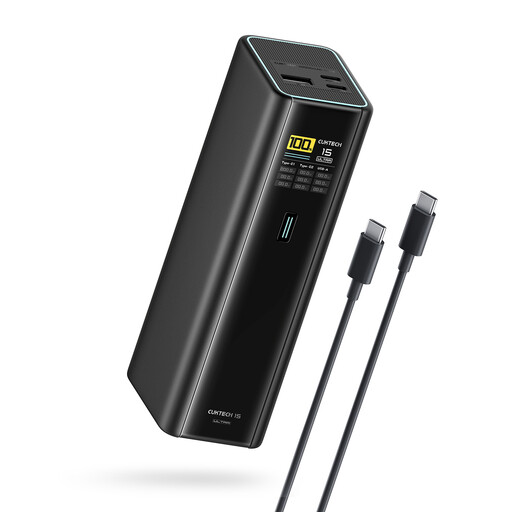
Why It Stands Out: This model strikes an excellent balance between extreme power and portability. It delivers a massive 140W of power from a single USB-C port, fully leveraging the PD 3.1 standard to fast-charge the most demanding laptops. The integrated digital display is a standout feature, providing real-time data on power output, input and remaining battery life, removing all guesswork.
Pros:
Who is it for? The tech-savvy professional or student with a modern, power-hungry laptop who needs top-tier charging performance in a compact and manageable form factor.
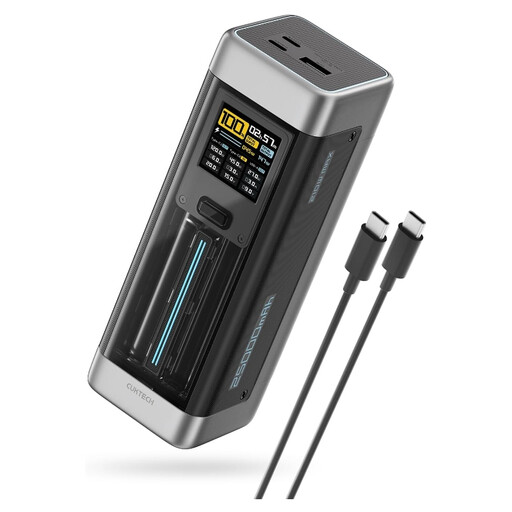
Why It Stands Out: For those who need maximum endurance, the CUKTECH NO.20 is a true workhorse. It combines the same powerful 140W PD 3.1 output with an enormous 25,000mAh capacity. This is the choice for multi-day trips, long-haul flights or digital nomads who work for extended periods away from a power source. Its transparent design also offers a unique glimpse into the technology within.
Pros:
Who is it for? Digital nomads, frequent travellers and power users who prioritise battery longevity above all else and need to sustain multiple devices for days at a time.
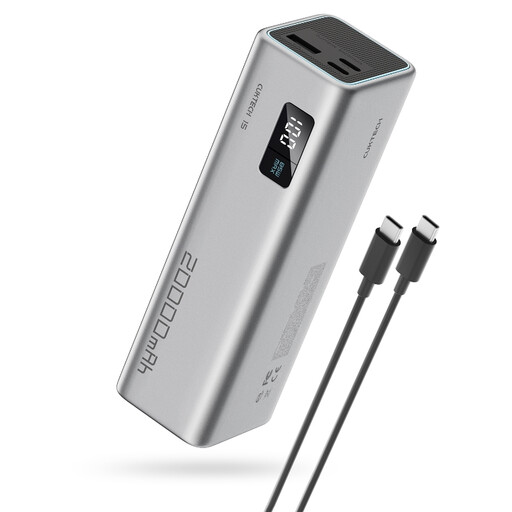
Why It Stands Out: Not everyone needs 140W of power. The CUKTECH 15 SE offers a highly practical and efficient solution for a wider range of users. Its 65W output is more than sufficient for charging the majority of USB-C laptops, including MacBook Airs, Chromebooks and many Windows ultrabooks. Paired with a solid 20000mAh capacity, it represents excellent value.
Pros:
Who is it for? Students, daily commuters and professionals whose laptops don't require extreme wattage. It’s a dependable and cost-effective choice for everyday peace of mind.
The models highlighted here represent some of the most capable options available, but every user's needs are different. You may require a different capacity, form factor or power level. To find the perfect match for your specific devices and lifestyle, it's worth exploring a broader selection.
Explore our full range of Type-C laptop chargers to compare different models and find the ideal portable power solution for you.
Yes, a 20000mAh power bank can typically provide around one full charge for most standard laptops. However, the critical factor is the power bank's wattage output. You need a model with at least 45W-65W output to charge a laptop effectively. For high-performance models, a 100W+ output is recommended.
PD 3.1 (Power Delivery 3.1) is a USB-C charging standard that allows for power transfer up to 240W. You only need a power bank with PD 3.1 support if you own a device that can accept such high power, like the 16-inch MacBook Pro (which charges at 140W). For most other laptops, a power bank with a 65W PD 3.0 output is perfectly sufficient.
Yes, but with restrictions. The key limit set by the Civil Aviation Authority (CAA) and most airlines is 100 Watt-hours (Wh) per battery, which must be carried in your hand luggage, not checked in. Most power banks with capacities up to 27,000mAh (like the 25,000mAh CUKTECH NO.20 at 90Wh) fall below this limit. Always check the Wh rating printed on your power bank and your airline's specific policy before travelling.