Library eBook borrowers
You want to borrow science-fiction titles through your local library, so its lending app and catalogue matter more than a device’s display specifications alone.


Check your library’s lending service and science-fiction catalogue before choosing a device: Libby and BorrowBox support several tablet families, but access to a particular loan depends on your library. A compact tablet suits readers who prioritise carrying and holding it, while a larger Android tablet gives more room for reading alongside notes. Consider a Fire tablet only after checking the Amazon Appstore for your essential apps, or a Kobo e-reader if your library supports direct Libby reading on it.
You want to borrow science-fiction titles through your local library, so its lending app and catalogue matter more than a device’s display specifications alone.
You carry a device to the library and mainly read novels, making its size and weight more important to you than split-screen features.
You also use notes, a browser or other apps while reading, so additional screen space and multitasking may justify a larger device.
For library loans, establish which service and titles you can access before comparing device sizes. Then decide whether you mainly want to read a novel, carry the device easily or keep notes open alongside it.
Consider it when: You want a compact full tablet and your library’s lending service works on iPad.
Trade-off: A smaller display offers less room for notes alongside a novel than a larger tablet.
Consider it when: Reading alongside notes or browser research is part of your routine.
Trade-off: An 11-inch device takes up more space when carried or held for reading.
Consider it when: Your library uses a supported lending service and your essential apps are available through the Amazon Appstore.
Trade-off: Amazon states that Fire tablets do not support Google Play.
Consider it when: You want a reading-first device and your library confirms direct Libby reading on Kobo.
Trade-off: It does not replace a general-purpose tablet for broader app use.
| Concern | What to check | Who this matters to |
|---|---|---|
| Library loans | Ask your library which app it uses, check device support and search its catalogue for titles you want. | If I borrow my novels, I need the device to work with my library’s service and give me access to the titles I want. Around 33% of consumers put library compatibility first. |
| Portability | Compare the exact variant’s size and stated weight; try your preferred font settings on its screen. | I want to bring a novel to the library without carrying more device than I need. For around 25% of consumers, portability is the primary concern. |
| Reading with notes | Check screen size and whether your reading and note-taking apps work together as intended. | If I look up references or write notes while reading, I need enough room to work with both. A larger reading-and-notes setup comes first for around 25% of consumers. |
| App-store choice | Check the exact device’s app store for every essential reading or note-taking app. | I do not want to choose a device and then find that an essential app is unavailable through its store. Around 17% of consumers make app-store practicality their main priority. |
A compatible app does not establish that your library offers that service or has the science-fiction titles you want. The City of London lists Libby and BorrowBox among its eLibrary apps, but your local service may differ.
Ask your library which app it uses and search its catalogue before settling on a device.
OverDrive distinguishes newer Fire tablets that can run Libby from sending Libby loans to a Kindle, which it identifies as a US-library feature. Direct reading on Kobo is another separate route.
Check your library’s instructions against the exact device family you intend to buy.
Amazon states that Google Play is not supported on Fire tablets. That matters if a reading, accessibility or note-taking app you rely on is available only through another store.
Look up each essential app in the Amazon Appstore before choosing a Fire tablet.
An 11-inch tablet offers room for other tasks, but that extra space may not be useful if you only read one novel at a time and prefer a compact device.
Decide whether notes or split-screen work are part of your routine; if possible, handle both compact and larger sizes before choosing.
The iPad mini is a compact full-tablet option for readers whose library service works on iPad.
The Galaxy Tab A9+ is a larger Android-tablet option for reading alongside notes or browser research.
The Fire HD 8 is an 8-inch tablet family to consider when its app-store route fits your library reading.
Kobo is a reading-first e-reader alternative when the local library supports the appropriate lending workflow.
These choices span compact tablets, larger devices for reading with notes and reading-focused E Ink devices. Check your own library’s lending app and catalogue before choosing among them.
 No image available
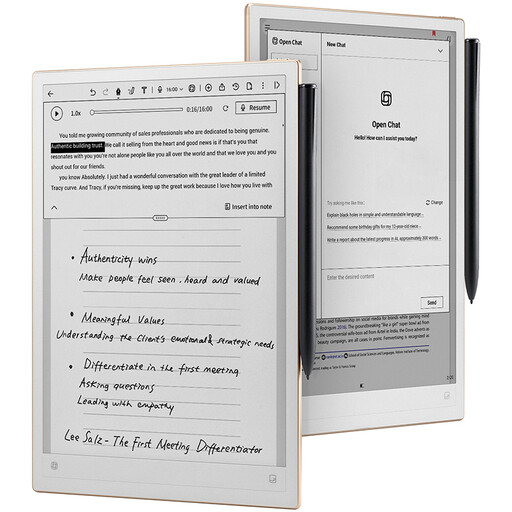
Consider this E Ink tablet if you want to read and take notes on the same device.
Its listing names a 10.65-inch display and a protective case. Check that your library’s required app works as you need on the device before relying on it for loans.
 No image available
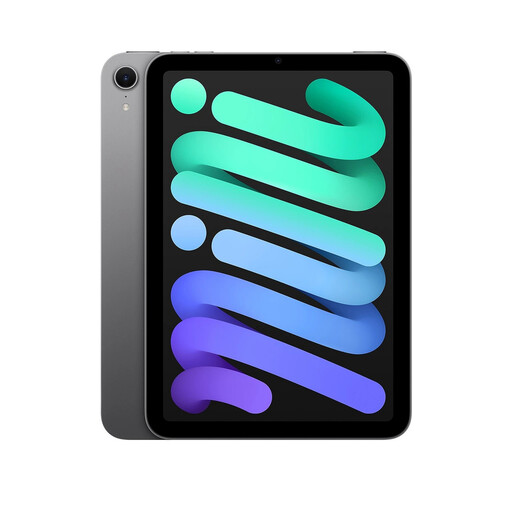
This compact iPad is worth considering if carrying a full tablet to the library matters more than having a large reading-and-notes screen.
Apple lists an 8.3-inch display and a 293 g weight for the current Wi-Fi iPad mini. Libby and BorrowBox support applicable iPad devices, but check your library’s service and catalogue for the loans you want.
 No image available
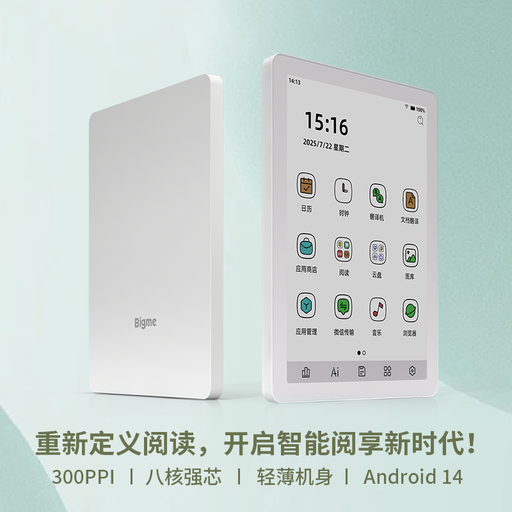
Consider this reading-focused device if you want a smaller screen rather than a conventional tablet.
The listing names a 36-level front light, Android 14, Google Play and 4+64 GB storage. Check that your library app installs and works as intended on this particular e-reader.
 No image available
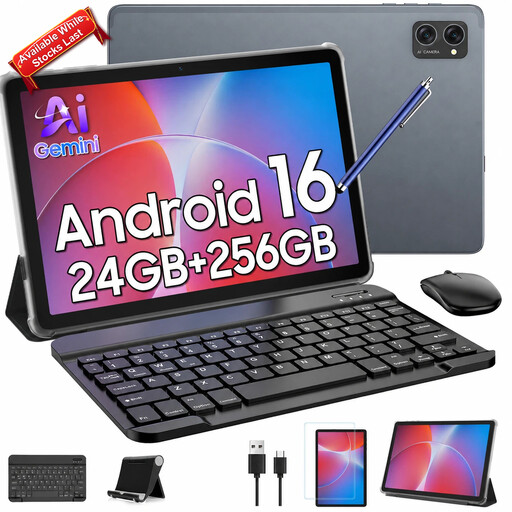
This mid-sized tablet is a choice for readers who also want to type or take notes.
The listing names a 10.1-inch display, 256 GB storage and a keyboard, mouse and stylus bundle. Confirm the exact Android version and your required library app before choosing it.
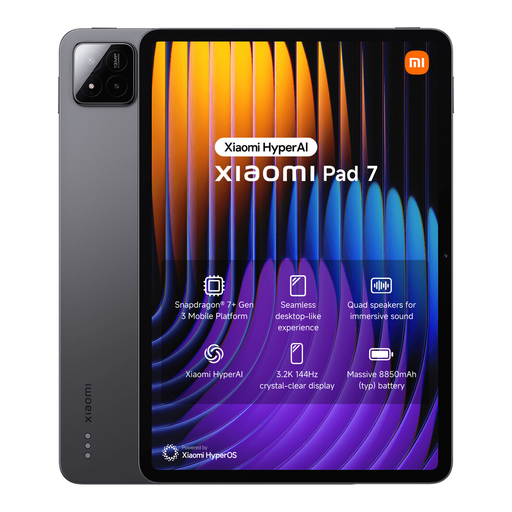 No image available
This larger tablet is an option if handwritten notes are as important to you as reading.
The product name specifies a Focus Pen in the bundle. Check your library’s app and catalogue, and compare the device’s size and weight with what you are comfortable carrying.
Yes: find out which lending service your library uses and whether it has the science-fiction titles you want. Libby supports applicable iOS, Android and newer Fire tablets, while BorrowBox lists iPad, Android tablets and Kindle Fire; those device lists do not establish what your library offers.
Yes, if you download the loan beforehand. OverDrive says Libby supports offline reading; open the downloaded title while connected to check that it is ready for your visit.
No, they are different lending routes. OverDrive identifies sending Libby loans to Kindle as a US-library feature, while Libby lists newer Fire tablets as devices that can run its app. Check your library’s instructions for the exact device you intend to use.
A Kobo can serve as a reading-first alternative if your library supports direct Libby reading on it, as described by OverDrive. Confirm your library’s lending workflow first, and choose a conventional tablet if you also need broader app use.