
24/7 全天候客户支持

免费退货

当日/次日达

品质保障

开启新人专享福利: 全场免邮 | 低至 2 折 | 免费试用 30 天 JoyPlus 会员
下载 Joybuy
As a Joybuy Product Recommendation Officer, my role is to help you navigate the crowded market of everyday items. A good lunch box seems simple, but choosing the wrong one can lead to frustrating leaks, stained containers and wasted money. Many of us have experienced the disappointment of a "leak-proof" container that isn't, or a plastic box that's permanently orange after one bolognese.
This guide cuts through the marketing clutter to focus on what truly matters. We will look at the common pitfalls to avoid and the key features that define a durable and practical food container for your daily needs, whether it's for the office, school or meal prepping at home.
Before you buy, be aware of these frequent design flaws that often go unnoticed until it's too late:
To ensure your next purchase is a lasting one, focus on these three non-negotiable parameters.
The material of your food storage containers dictates their durability, weight and how you can use them.
A genuinely leakproof lunch box depends entirely on its sealing mechanism. Don't just look at the clips; inspect the lid itself. A reliable seal consists of two key components: a flexible silicone gasket fitted snugly inside the lid's rim and a snap-lock system with sturdy clips on all four sides. This combination creates even pressure and a tight seal that can confidently contain liquids.
Consider how you plan to use your container.
Based on these practical criteria, here are a few options from our catalogue, matched to different user needs.

Why This Fits Their Persona: This 10-piece set is ideal for anyone who batch-cooks for the week. The two different sizes (1040ml and 370ml) provide flexibility for mains and sides, and the glass construction is perfect for reheating in an office microwave.
The high borosilicate glass body resists stains and odours from sauces, while the four-sided snap-lock lids with seals provide a secure closure to prevent spills during the commute.
A comprehensive set offering excellent value. The glass is dishwasher, freezer and microwave safe (body only), covering all aspects of meal prep from storage to consumption.

Why This Fits Their Persona: For those who crave a hot meal at their desk without relying on a microwave, this food thermos for hot food is the perfect solution. It's designed specifically for temperature retention, making it ideal for soups, chilli or pasta.
This is not a standard container; its vacuum insulation technology is built for the job. The secure, screw-on lid is engineered to be leak-proof, providing peace of mind when transporting liquids.
Made from premium 316 stainless steel for durability and hygiene. The included insulated lunch bag adds another layer of temperature control and makes it easy to carry.
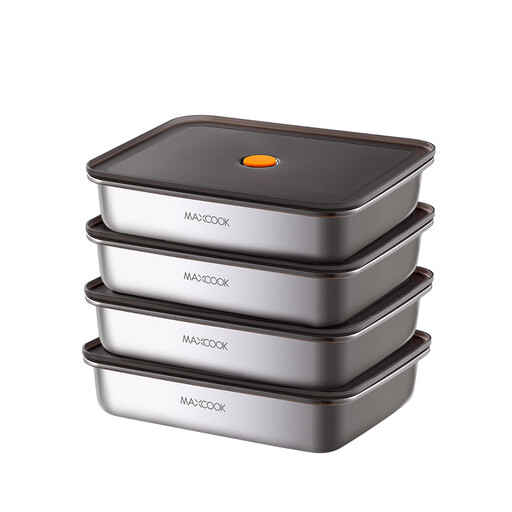
Why This Fits Their Persona: For those who prioritise longevity and material safety above all else, this set is a sound investment. It's for the person who is tired of replacing stained plastic and wants a durable, non-toxic solution for their office lunch box and home storage.
The use of 316L stainless steel, a premium grade known for its superior corrosion resistance, directly counters the problem of material degradation, staining and odour retention found in lesser materials.
Extremely durable, non-toxic and resistant to stains and smells. This set is freezer and dishwasher safe, making it a versatile and low-maintenance choice for long-term use.
We have compiled a complete, real-time list of products that fully satisfy these strict selection criteria and UK safety regulations.
Most high-quality stainless steel lunch box bodies are dishwasher safe. However, it is often recommended to hand-wash the lids, especially those with silicone seals or complex locking mechanisms. High heat in a dishwasher can degrade the seal over time, compromising its leak-proof ability. Always check the manufacturer's care instructions.
Both are food-grade and safe, but 316 stainless steel (or 316L) contains an element called molybdenum. This gives it enhanced resistance to corrosion, particularly from salts and acids. While 304 is perfectly adequate for most uses, 316 offers an extra level of durability and is considered a more premium material for food containers.
While borosilicate glass is tough, it's not indestructible. To maximise its lifespan, avoid sudden and extreme temperature changes. For example, do not take a container directly from a hot dishwasher and fill it with frozen food or pour boiling water into a container straight from the freezer. Also, handle them with care and inspect for any chips or cracks before use, as these can be weak points.