
24/7 Customer Support

Free returns

Same-day & Next-day Delivery

Quality Guaranteed

Unlock Your Welcome Offers: FREE Delivery | Up to 80% OFF | Free 30-day JoyPlus trial
Download the APP
Choosing a new MacBook can feel like a significant decision. With Apple's latest lineup featuring powerful new chips and even a brand-new model, it's easy to feel overwhelmed. Whether you're a student heading to university, a creative professional needing a powerful workstation or simply looking for a reliable laptop for everyday use, the 2026 range has something to offer.
This guide is designed to help you navigate the options. We'll break down the key differences between the latest Apple laptops, helping you understand which features matter most for your needs. Our goal is to provide clear, practical advice so you can confidently decide which MacBook is the right fit for you.
Before diving into specific models, let's cover a few key considerations. Thinking about these points will help you narrow down your search when you're looking to buy a MacBook in the UK.
The "engine" of any new MacBook is its Apple silicon chip. For 2026, the main options are the M5, M5 Pro and the new A18 Pro.
Your lifestyle will heavily influence your choice between a compact or a larger screen.
Apple's unified memory (RAM) and SSD storage are built-in and cannot be upgraded later, so it's important to choose the right configuration from the start.
Here are our recommendations from the latest lineup, selected to meet a range of different needs and budgets.

Why It Stands Out: The MacBook Pro 14-inch is engineered for those who demand uncompromising performance. The M5 Pro chip delivers incredible processing power for the most intensive tasks, while the Liquid Retina XDR display is one of the most impressive screens on any laptop, offering exceptional brightness and colour accuracy for creative work.
Pros:
Who is it for? Creative professionals, including video editors, photographers, 3D artists and software developers who need a portable machine that doesn't sacrifice power.

Why It Stands Out: The all-new MacBook Neo is the ultimate in portability and style. Powered by the efficient A18 Pro chip, it delivers snappy performance for all your daily needs in an incredibly lightweight design. Available in a range of fresh colours, it's an Apple laptop for students and everyday users who want performance with personality.
Pros:
Who is it for? Students, writers, commuters and anyone needing a reliable and stylish laptop for everyday tasks, web browsing and entertainment.
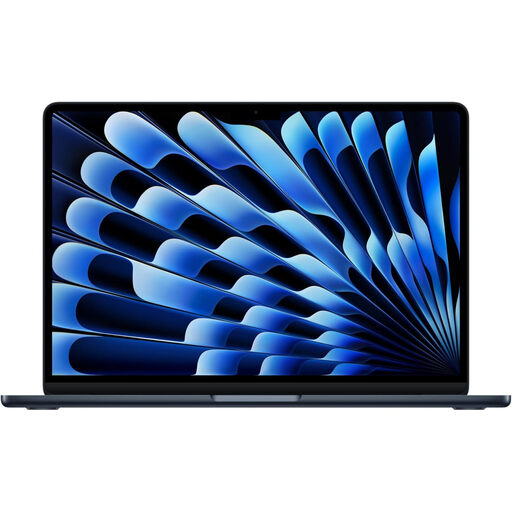
Why It Stands Out: The 15-inch MacBook Air offers the best of both worlds: a large, immersive screen in the famously thin and light Air design. The M5 chip provides a serious performance boost, making it a highly capable machine for multitasking and creative hobbies, all while remaining completely silent thanks to its fanless design.
Pros:
Who is it for? Users who want a larger screen for productivity and entertainment but don't need the peak performance (and cost) of a MacBook Pro. It's an excellent choice for professionals, students and home users who value screen real estate.
While the models above cover the needs of most users, some workflows, like high-end gaming or intensive 3D modelling, can benefit from a dedicated graphics processing unit (GPU). If your work or hobbies fall into that category, you may want to explore other powerful configurations.
For a wider selection of laptops with powerful dedicated graphics, explore our full range of GPU laptops.
Yes, a MacBook is a popular choice for students due to its reliability, long-term software support and robust security features. The macOS operating system is user-friendly, and the hardware is built to last through several years of study. The MacBook Neo and MacBook Air are particularly well-suited for student life, offering a great balance of portability and performance for lectures, research and assignments.
The primary difference comes down to performance and features. The MacBook Pro is designed for professionals who need maximum, sustained power for demanding tasks like video editing or coding. It typically has a more advanced display, more ports and a more powerful chip (like the M5 Pro). The MacBook Air (and the new MacBook Neo) is focused on portability and efficiency for everyday tasks, offering excellent performance in a lighter, more compact and often more affordable package.
For general use like web browsing, streaming video and using office applications, 8GB of unified memory is sufficient. However, for smoother multitasking or more demanding applications like photo editing, 16GB is a highly recommended starting point. If you are a professional working with large files, 4K video or complex software, opting for 24GB or more will ensure your workflow remains fast and fluid.