
24/7 全天候客户支持

免费退货

当日/次日达

品质保障

开启新人专享福利: 全场免邮 | 低至 2 折 | 免费试用 30 天 JoyPlus 会员
下载 Joybuy
Choosing markers and pens is rarely as simple as picking a colour. A felt-tip pen for school notes, a construction marker for timber and a paint marker for steel have different requirements. The wrong ink or tip can lead to faint lines, smudging, premature drying and marks that cannot be removed when you need them gone.
This guide explains what to check before buying, highlights common purchasing traps and matches selected products to practical UK user profiles.
Product descriptions often use broad terms such as “all-surface” or “multi-purpose”. In practice, ink behaviour varies considerably between paper, wood, metal, plastic, concrete, glass and fabric.
A water-based fibre-tip pen may be suitable for paper and creative work but may not adhere well to dusty timber or smooth metal. Conversely, an oil-based paint marker may leave a durable mark where a standard permanent marker pens would fade, but it may not be appropriate for temporary notes or surfaces that must remain clean.
Always check the stated surface compatibility and test the marker on an inconspicuous area first.
Assorted colour marker packs can be useful for classrooms, journalling and craft projects. However, trade users often need only a few high-contrast colours. A large pack may offer poor value if most shades remain unused.
For construction and workshop work, choose colours that stand out against the material. Black may be clear on light timber, while white, yellow or red can be more visible on dark metal or painted surfaces.
A low-priced marker is not necessarily economical if it dries quickly or uses a difficult-to-source refill. Check whether the product is refillable, whether replacement leads are available and how the pen should be stored.
Dry marker refills and pencil marking refills can extend the useful life of a compatible tool. Recapping fibre-tip pens, paint markers and fineliners promptly also helps prevent ink loss. Storage instructions matter: some products should be kept horizontally, while others are best protected in a cool, dry place.
Tip design determines how precisely you can mark. Fibre-tip pens usually provide a consistent line for writing and colouring. Brush pens offer pressure-sensitive strokes, making them suitable for lettering, calligraphy and illustration. A chisel tip can create both broad and narrow lines; some highlighters provide approximately 1 mm and 4 mm line widths.
For layout work, look for construction markers with a narrow or extended tip. Deep-hole markers are designed to reach recessed holes, narrow gaps and other difficult areas where a standard pen may not fit.
Ink type should match the intended task:
Check whether the ink is quick-drying, waterproof, fade-resistant or wet-erase. These terms describe different characteristics and should not be treated as interchangeable.
A refill must match the marker body and mechanism. Hultafors and Markal refill systems, for example, are designed for their corresponding tools. Before ordering, confirm the product name and model compatibility.
Also consider pack quantity. A 10-pack of blue Hultafors dry marker refills may suit a busy trade user, while a six-pack of black pencil marking refills may be more appropriate for occasional DIY jobs. Keep caps secured, follow ventilation guidance for spirit- or oil-based products and keep all markers away from young children.
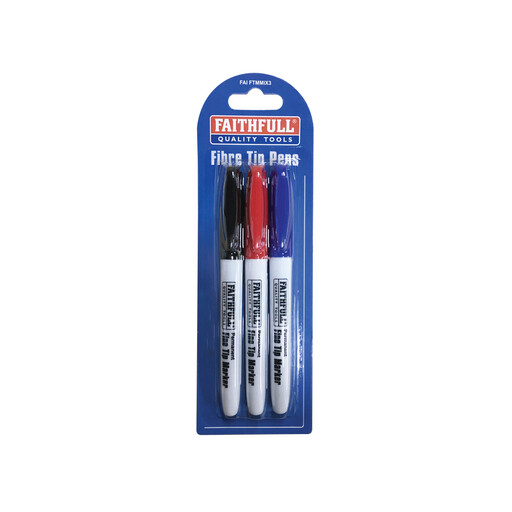
Why This Fits Their Persona: A compact three-colour option for students, home offices, teachers and DIY users who need straightforward writing and marking without buying a large pack.
The smaller pack avoids paying for unused shades, while the fibre tips are intended for controlled lines rather than broad, imprecise strokes.
Three assorted colours, fine fibre tips and quick-drying ink. Recap after use and store as directed to protect the ink.
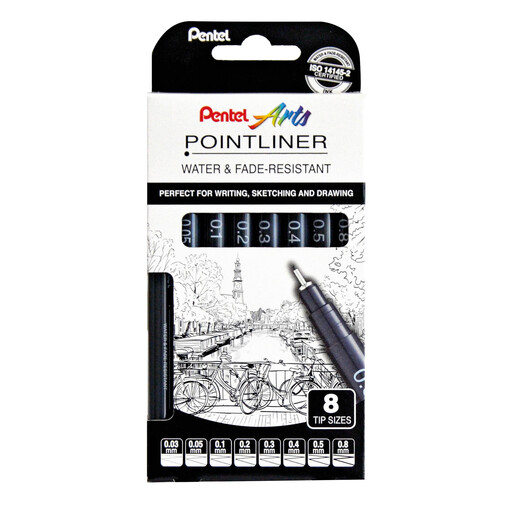
Why This Fits Their Persona: Suitable for artists, designers and technical sketchers who want a selection of tip sizes for fine details, outlines, shading and written notes.
The range of tip sizes makes line control easier than relying on one general-purpose point for every drawing task.
Water- and fade-resistant pigment ink is specified, with robust tips designed to retain their shape.
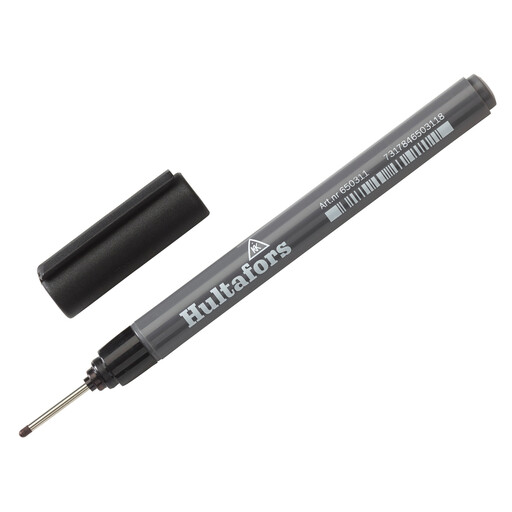
Why This Fits Their Persona: Designed for carpenters, builders and DIY users marking inside deep holes, narrow gaps and recessed areas.
Its narrow, deep-reach format addresses the access problem that makes standard markers awkward in recessed spaces.
Black marking ink and a comfortable grip are specified for use on wood, metal, plastic and other construction materials.
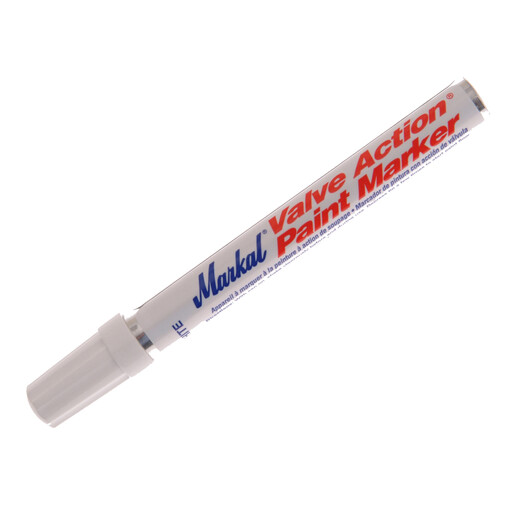
Why This Fits Their Persona: A practical choice for workshop, fabrication and maintenance tasks where white contrast is needed on darker components.
The valve-action mechanism is intended to control paint release, helping reduce excess flow compared with uncontrolled application.
Metal barrel, spirit-based xylene-free paint and suitability for listed surfaces including steel, iron, plastic, glass and rubber.
For regular trade work, buying the marker and replacement supply together can prevent avoidable interruptions. The Hultafors Dry Marker Refill Blue 10 Pack is designed for compatible Hultafors dry markers and contains blue marking leads. For Faithful tools, options include the Faithful Pencil Marking Refill 6 Pack, the black-only six-pack and the Long Reach Pencil & Marking Set with black, red and yellow refills.
Markal users can also consider the TRADES-MARKER DRY Graphite Refills 6 Pack, provided the refill matches the corresponding marker system. Check the product listing before ordering, as similar-looking refills are not automatically interchangeable.
For broader stationery, craft and workshop choices, browse the full range of marking tools.
We have compiled a complete, real-time list of products that fully satisfy these strict selection criteria and UK safety regulations.
They can be suitable for some construction materials, but suitability depends on the surface, ink formula and required durability. For dusty timber, metal or recessed areas, a dedicated construction marker or deep-hole marker may provide more practical access and visibility.
Lifespan depends on ink type, frequency of use, exposure to heat and whether the cap is replaced securely. Store products according to the manufacturer’s instructions. Refills can reduce waste and running costs when the marker body remains in good condition.
Use a chalkboard marker or liquid glass marker specifically intended for non-porous surfaces. The Pentel Liquid Glass & Chalkboard Marker set uses wet-erase ink and is designed for surfaces such as glass, slate, ceramic and metal. Follow the instructions, shake and prime the nib before use, and erase with a damp cloth where specified.