
24/7 Customer Support

Free returns

Same-day & Next-day Delivery

Quality Guaranteed

Unlock Your Welcome Offers: FREE Delivery | Up to 80% OFF | Free 30-day JoyPlus trial
Download the APP
Whether you're recovering from an intense workout or trying to ease the stiffness from a day spent at your desk, muscle aches and tension are a common complaint. A massage gun, also known as a percussion massager, has become a popular tool for at-home muscle relief. These devices deliver rapid pulses deep into muscle tissue, aiming to ease soreness and improve mobility.
However, the market is filled with options, each with different features, power levels and price points. This guide is designed to help you understand the key factors to consider, making it easier to choose a device that suits your specific needs, from post-exercise recovery to daily relaxation.
Before looking at specific models, it's helpful to understand the features that differentiate them. Here are a few key considerations to keep in mind during your search.
The effectiveness of a deep tissue massage gun is largely determined by two factors: amplitude and stall force.
For general relaxation, a lower amplitude and stall force may be sufficient. For serious athletic recovery, look for a model with higher specifications in both areas.
Consider where and when you plan to use your electric muscle massager. If you need a device to take to the gym or use while travelling, a compact and lightweight portable massage gun is an excellent choice. Check the battery life and charging method (USB-C is becoming a convenient standard).
Noise is another important factor. If you plan to use your device while watching television or in a shared space, a quiet massage gun with a brushless motor will provide a much more pleasant experience.
Most massage guns come with a set of interchangeable heads, each designed for different muscle groups. Common attachments include a large ball for big muscles, a flat head for general use, a "bullet" for targeting specific knots and a "fork" for working around the spine.
Some models also offer advanced features. For instance, a heated massage gun can help to warm up muscles before treatment, potentially enhancing relaxation and blood flow. App connectivity is another modern feature, offering guided routines and personalised programmes to help you get the most out of your muscle recovery tool.
Here are a few models that stand out for their distinct features and intended uses, helping you find a suitable match for your lifestyle.
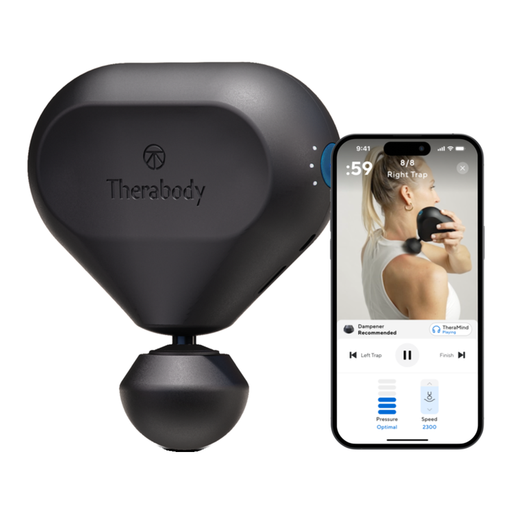
Why It Stands Out: The Theragun Mini 2nd Gen is all about delivering power in a compact form. It is significantly smaller and lighter than its predecessor, making it exceptionally portable without a major compromise on performance. Its app connectivity provides access to guided routines, which is a great feature for those new to percussive therapy.
Pros:
Who is it for?: This is an excellent choice for athletes, frequent travellers and anyone who needs a reliable and portable massage gun to carry in their gym bag or luggage.
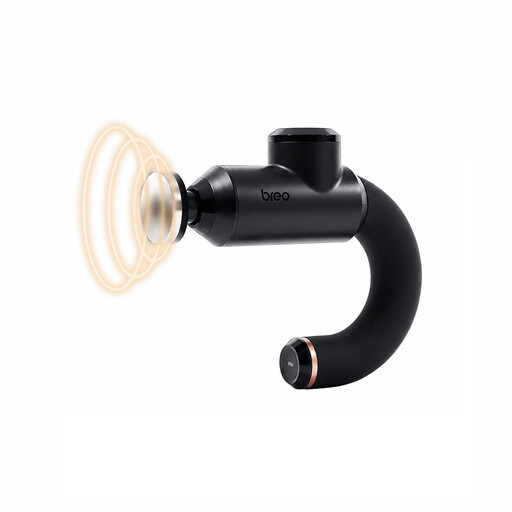
Why It Stands Out: The Breo Sport-M0500 combines two popular recovery methods: percussion and heat. Its head can heat up in just five seconds, providing warmth directly to the muscle while the device works. With a high stall force and deep amplitude, it's built for powerful, intensive treatment.
Pros:
Who is it for?: This model is well-suited for individuals who find heat therapy beneficial for muscle stiffness and soreness. Its power also makes it a strong contender for those seeking a true deep tissue massage experience.
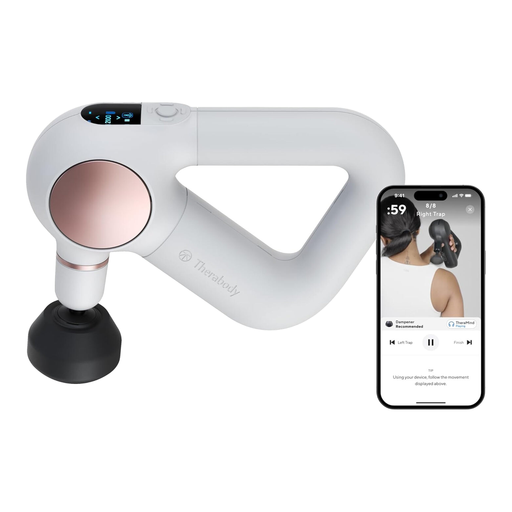
Why It Stands Out: The Theragun Sense shifts the focus from pure power to overall wellness. It integrates percussive therapy with guided breathwork routines and calming sound therapy via its companion app. The on-device LCD screen provides visual guidance, making it incredibly user-friendly for those who want a device that helps reduce stress as well as muscle aches.
Pros:
Who is it for?: This is an ideal handheld massager for back pain and general tension, especially for users who prioritise stress relief and a guided, calming experience over maximum intensity.
The models highlighted here represent just a fraction of the available choices. If you're looking for different features, power levels or designs, there are many other devices to consider.
Explore our full range of the best hand held body massager options to find the perfect fit for your recovery and relaxation needs.
For post-workout recovery, a common recommendation is to use the device for 1-2 minutes on each muscle group. For general tension relief, shorter sessions throughout the day can be effective. It is important to listen to your body and avoid overuse. Always refer to the manufacturer's instructions for specific guidance.
A massage gun can be a useful tool for relieving muscular aches in the back, such as in the trapezius, rhomboids and lower back muscles. However, it is crucial to avoid direct contact with the spine and other bony areas. For chronic or severe back pain, it is always advisable to consult a doctor or physiotherapist before using any new device.
The main difference is the depth of treatment. A percussion massager, like the massage guns discussed here, uses a forceful, deep-reaching motion (amplitude) to penetrate muscle tissue. A vibration massager typically provides a more surface-level sensation with a much lower amplitude. For targeting deep knots and aiding muscle recovery, a percussion massager is generally considered more effective.