
24/7 Customer Support

Free returns

Same-day & Next-day Delivery

Quality Guaranteed

Unlock Your Welcome Offers: FREE Delivery | Up to 80% OFF | Free 30-day JoyPlus trial
Download the APP
A tidy workspace is the foundation of a productive day. Yet, for many of us working from home, in a busy office or studying, the relentless build-up of paper can quickly lead to a cluttered desk and a distracted mind. From invoices and reports to mail and study notes, keeping A4 documents in order is a constant challenge.
A well-chosen mesh file organiser can transform your desk from a source of stress into a hub of efficiency. This article will guide you through the key considerations when selecting an organiser and present our top recommendations to help you reclaim your workspace.
Before you decide, consider these points to ensure you find a solution that fits your space and workflow.
The first decision is where your organiser will live. A desktop paper tray is ideal if you have sufficient surface area and need immediate access to active documents. These often come in a tiered, vertical file rack format to make good use of height.
Conversely, if your desk space is limited, a wall mounted file holder is an excellent choice. It frees up your entire work surface by moving your paper storage onto the wall, making it a cornerstone of effective home office organisation.
Mesh organisers are typically made from metal, which offers a good balance of durability and a modern aesthetic. Look for models with a powder-coated finish, as this provides resistance to rust and scratches, ensuring the unit maintains its appearance over time. A sturdy metal letter tray should feel solid, without flexing under the weight of paper. Features like reinforced supports and anti-slip feet for desktop models are indicators of a well-made product.
Consider how much paper you need to manage. A simple three-tier organiser might suffice for daily mail, but a multi-level A4 document sorter with five or six compartments is better for sorting complex projects or archiving different subjects. Some models also include handy features like label plates for clear categorisation or a bottom tray to serve as an office desk tidy for pens, staples and other small items.
As a Joybuy Product Recommendation Officer, I've filtered through various options to highlight models that offer practical solutions for common organisational challenges.
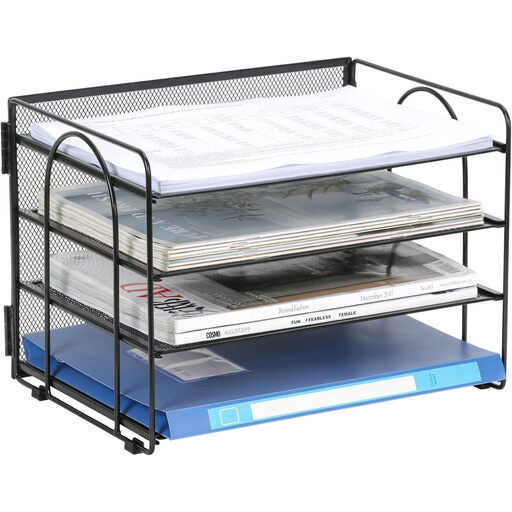
Why It Stands Out: This organiser focuses on stability and ease of use. The design incorporates L-shaped metal supports at the back of each tier, which helps prevent sagging when fully loaded with A4 documents. Its screwless assembly means you can have it set up and ready to use in minutes.
Pros:
Who is it for? This is a great fit for professionals and students who need a reliable desktop solution for organising active files and want a product that is both sturdy and simple to put together.
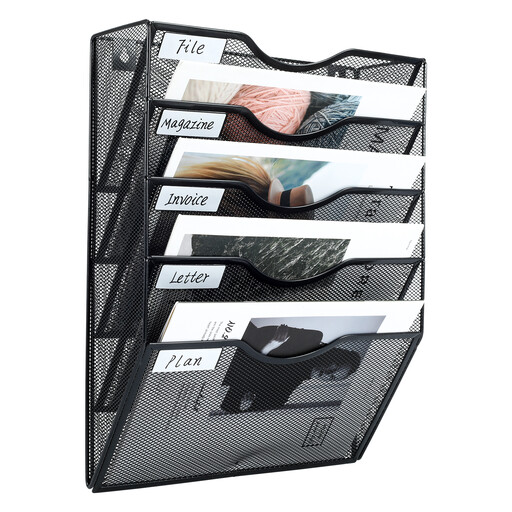
Why It Stands Out: This model is designed specifically to maximise your workspace by moving storage vertically onto the wall. Each of the five tiers includes a label plate, allowing for a highly organised system where every document has its designated place. It’s an ideal solution for creating a command centre for household bills, incoming mail or project-specific paperwork.
Pros:
Who is it for? Anyone with a small desk or who wants to create a permanent, organised filing system away from their main work surface. It's particularly useful for managing mail in an entryway or sorting documents in a busy home office.
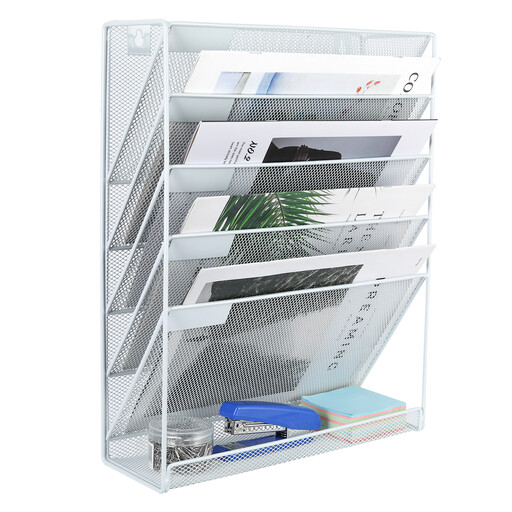
Why It Stands Out: Versatility is the key feature of this organiser. It can be mounted on the wall or used as a freestanding vertical file rack on a desk or shelf. It offers six tiers for ample document storage and includes a built-in bottom tray for small stationery, making it a complete desk organisation solution. The white finish also provides a clean, bright alternative to standard black.
Pros:
Who is it for? This is for the user who values flexibility. It’s perfect if you might rearrange your office in the future or if you need a single unit that can handle both paper and small office supplies.
If these specific models don't quite match what you're looking for, or if you'd like to browse different sizes, colours and configurations, we have a wider selection available.
? Explore our full range of Mesh File Organisers here
For maximum efficiency, assign a purpose to each tier. A common method is to use a top-to-bottom workflow: the top tray for incoming documents ('inbox'), middle trays for ongoing projects and the bottom tray for items ready to be filed away or actioned. Using the label plates, where available, is key to maintaining the system.
Metal and plastic organisers each have their place. Metal, particularly powder-coated steel mesh, generally offers superior durability and a more professional aesthetic. It is less likely to crack or bend under the weight of heavy files. Plastic organisers can be a lighter and more affordable option, often available in a wider variety of bright colours, but may not offer the same long-term sturdiness.
The primary benefit of a vertical file rack is space efficiency. By stacking documents upwards instead of spreading them across your desk, you reclaim valuable horizontal surface area for tasks like writing, using your keyboard or placing other essential tools. This vertical approach keeps documents visible and accessible without contributing to clutter.