
24/7 全天候客户支持

免费退货

当日/次日达

品质保障

开启新人专享福利: 全场免邮 | 低至 2 折 | 免费试用 30 天 JoyPlus 会员
下载 Joybuy
Recording in 4K resolution offers stunning detail, but it places significant demands on your storage. Choosing the wrong memory card can lead to stuttering footage, dropped frames or even corrupted files, turning a creative project into a frustrating ordeal. Whether you're capturing family moments on your smartphone, aerial shots with a drone or action sequences on a GoPro, the right microSD card for 4K video is essential for smooth, reliable performance.
This guide is designed to help you navigate the technical specifications and find a card that matches your device and your needs. We'll break down the key features to look for and present some of our top recommendations for 2026, ensuring you can capture and transfer your high-resolution content without a hitch.
Before choosing a card, it's helpful to understand the labels and numbers printed on them. These aren't just for decoration; they indicate the card's performance capabilities.
For smooth 4K video recording, the most important specification is the sustained write speed. This is where speed classes come in.
4K video files are large. A single minute of 4K footage can consume several hundred megabytes of space. This makes capacity a critical factor.
For those who are always at the forefront of technology, the microSD Express card is a new standard to watch. It uses a PCIe/NVMe interface—the same technology found in high-speed solid-state drives (SSDs)—to deliver dramatically faster read and write speeds. While it requires a compatible device to reach its full potential, it is backward-compatible with current UHS-I slots, making it a future-proof investment for professionals and tech enthusiasts.
Here are a few standout options that cater to different needs, from everyday use to professional workflows.
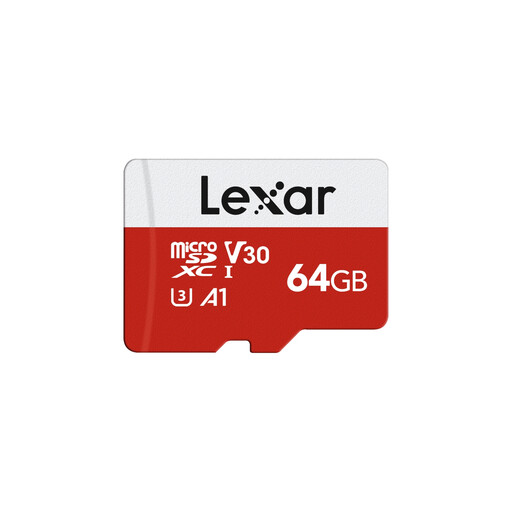
Why It Stands Out: This card from Lexar is a practical and affordable entry point into 4K video recording. It meets the essential specifications without unnecessary frills, offering reliable performance for everyday devices.
With UHS Speed Class 3 (U3) and Video Speed Class 30 (V30) ratings, it is fully equipped to handle 4K UHD video capture on smartphones, tablets and entry-level drones. The A1 rating also ensures decent app performance on Android devices.
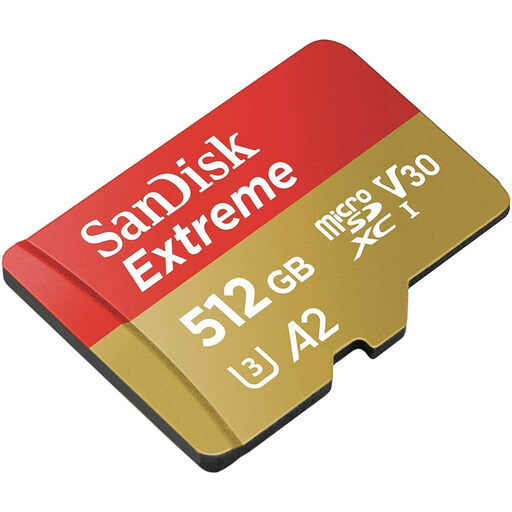
Why It Stands Out: The SanDisk Extreme is a high-performance workhorse, balancing speed, capacity and durability. It's an ideal GoPro memory card or memory card for a drone, built to withstand challenging environments.
It boasts impressive write speeds of up to 130MB/s for capturing fast-action shots and burst photography, while its V30 rating ensures flawless 4K video. The A2 specification provides a significant boost for app performance on Android devices. Its rugged construction makes it shockproof, waterproof and temperature-proof, offering peace of mind during any adventure.
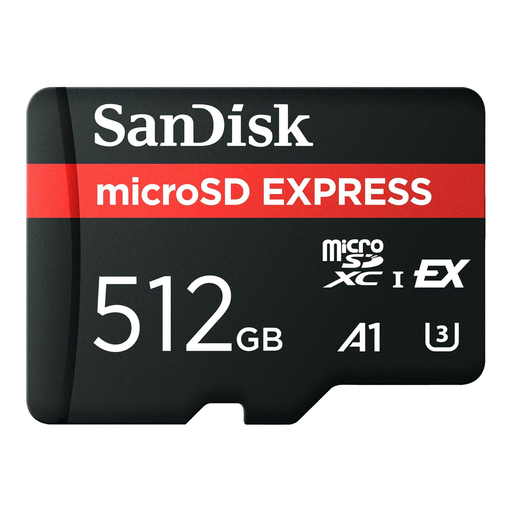
Why It Stands Out: This is a card built for the future. The SanDisk microSD Express card leverages a PCIe NVMe interface to deliver SSD-like speeds that are several times faster than traditional UHS-I cards. This technology dramatically reduces transfer times for massive files, a game-changer for professional workflows.
While it requires a microSD Express compatible device to unlock its full speed, it is fully backward-compatible and functions as a high-performance UHS-I card in current devices. With a massive 512GB capacity and advanced thermal management, it's ready for today's 4K and 5.3K video, as well as tomorrow's 8K formats.
These recommendations cover a range of uses, but every creator's needs are unique. If you're looking for different capacities, speeds or brands, there are many other excellent cards available.
For a wider selection of storage solutions, feel free to explore our full range of Mobile Phone SD Cards.
For smooth and reliable 4K video recording, a card with a Video Speed Class 30 (V30) or UHS Speed Class 3 (U3) rating is highly recommended. Both of these ratings guarantee a minimum sustained write speed of 30MB/s, which is sufficient for most 4K video streams from consumer cameras, drones and smartphones.
While many microSD cards will physically fit, it is not advisable to use just any card. Drones and action cameras write large amounts of data very quickly and often operate in demanding conditions. Using a slow or unreliable card can lead to lost footage or recording errors. Always choose a high speed microSD card with at least a U3/V30 rating and a durable build, like those designed to be waterproof and shockproof.
Functionally, for the end-user, there is very little difference. Both the U3 and V30 ratings signify a minimum sustained write speed of 30MB/s. The 'V' classification was introduced by the SD Association specifically to provide clearer guidance for video recording resolutions. If a card has a V30 rating, you can be confident it is suitable for 4K capture. Most modern cards designed for this purpose will carry both markings.