
24/7 Customer Support

Free returns

Same-day & Next-day Delivery

Quality Guaranteed
Download the APP
Categories
Navigating the world of digital storage can feel unnecessarily complex. With a sea of acronyms like U3, V30 and A2, choosing the right microSD card for your device is often a challenge. A card that works perfectly in a smartphone might fail in a dash cam, and the one designed for 4K video could be overkill for simply storing photos.
This guide is designed to cut through the technical jargon. As a Joybuy Product Recommendation Officer, my role is to help you understand the key differences and select a card that delivers the performance and reliability you need for your specific device, whether it's a dash cam, action camera, drone or Android phone.
Before we look at specific models, let's cover a few key factors that will help you make an informed decision.
The string of letters and numbers on a microSD card isn't just for show; they indicate its performance capabilities.
Not all cards are built for the same workload. A standard microSD card is designed for storing and accessing data, not for being constantly overwritten.
For devices like a memory card for a dash cam or a home security camera that records 24/7, a high endurance microSD card is essential. These cards are specifically engineered to withstand thousands of hours of continuous recording and rewriting, offering far greater longevity and reliability for critical footage capture.
While it can be tempting to go for the largest capacity available, it's more practical to match it to your usage. For a dash cam, 64GB or 128GB is often sufficient for loop recording. However, for shooting long 4K videos on a drone or storing a large library of games and apps on your phone, a 256GB memory card or larger will provide the space you need without constant file management.
Here are our recommendations, selected to meet the distinct needs of different users and devices.
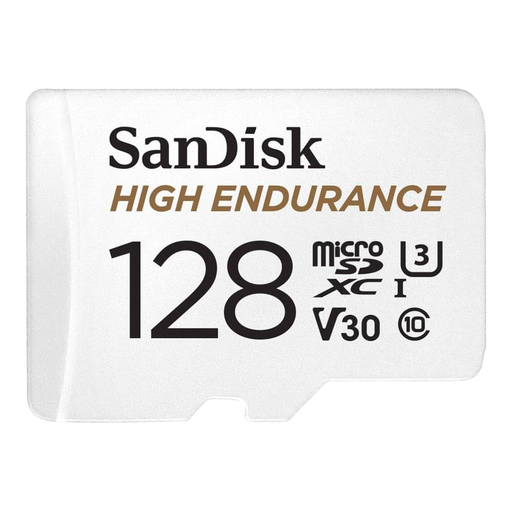
Why It Stands Out: This card is purpose-built for reliability under constant stress. Its primary function is to endure the continuous write/rewrite cycles of recording devices, ensuring crucial moments are captured without fail. It's also designed to operate in extreme temperatures, from a hot car interior to freezing winter conditions.
Pros:
Who is it for? This is the go-to choice for anyone needing a reliable memory card for their dash cam, home security camera or any other device that records footage continuously.
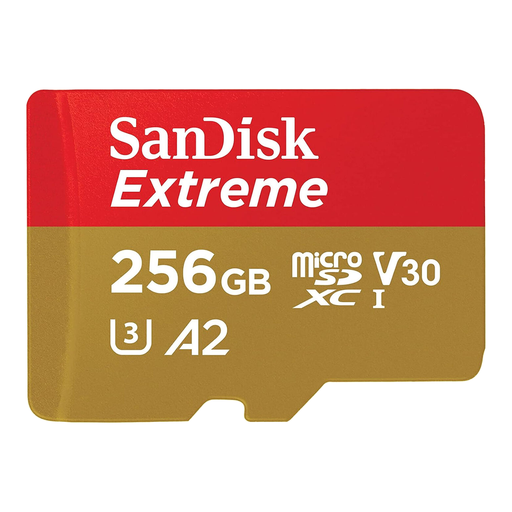
Why It Stands Out: The SanDisk Extreme is all about speed and performance. With write speeds of up to 130MB/s, it’s designed to capture fast-action shots and high-bitrate 4K UHD video without dropping frames. The A2 rating also ensures that it delivers a responsive experience when running demanding applications directly from the card on a compatible device.
Pros:
Who is it for? Content creators, drone pilots and action camera users who require maximum performance for capturing high-resolution media. It's also a great option for Android power users wanting a top-tier 256GB memory card.
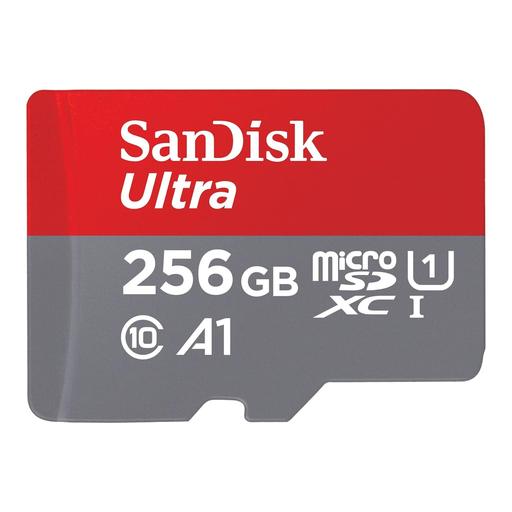
Why It Stands Out: The SanDisk Ultra series offers a fantastic balance of capacity, speed and value for everyday use. It provides a significant storage upgrade for Android devices, with an A1 rating that ensures apps run smoothly. While not as fast as the Extreme for write-intensive tasks, its read speeds of up to 150MB/s make it excellent for media consumption and quick file transfers.
Pros:
Who is it for? Android smartphone and tablet users looking for a cost-effective way to expand their device's storage for general media and app use.
All our recommended cards come with a handy adapter for use in cameras or laptops. If you need a replacement or are looking for other card reader solutions, you can explore our full range of SD adapter options to ensure you can connect your card to any device.
1. What is the main difference between a SanDisk Ultra and a SanDisk Extreme microSD card? The primary difference is performance. The SanDisk Ultra is an excellent all-rounder for general use, like expanding phone storage for photos and apps. The SanDisk Extreme is a high-performance card with significantly faster write speeds, making it better suited for demanding tasks like recording 4K video on an action camera or drone and running high-performance apps.
2. Can I use any microSD card in my dash cam? While any card might work temporarily, it is strongly advised to use a high endurance microSD card. Standard cards are not designed for the constant rewriting of loop recording and can wear out quickly, potentially failing when you need them most. High endurance cards are built specifically for this purpose.
3. What does the A1 and A2 rating on a microSD card mean? This is the Application Performance Class, which measures a card's suitability for running applications. An A2 microSD card has higher random read/write speeds than an A1 card. This translates to faster app launch times and smoother performance when you run apps directly from the memory card on your Android smartphone or tablet.