Family-portion reheaters
You serve custard, sauces or leftovers from a shared bowl or jug. The vessel needs room inside the microwave, including space for its handles and, on a turntable model, room to rotate.


For reheating custard and family-meal portions, start with a solo microwave that fits your usual serving bowl or jug and offers power settings and a timer you can use easily. A larger turntable or flatbed may matter more than grill or oven functions; sensor reheat is worth considering for frequent use, but it does not replace stirring and checking the food before serving.
You serve custard, sauces or leftovers from a shared bowl or jug. The vessel needs room inside the microwave, including space for its handles and, on a turntable model, room to rotate.
You regularly warm chilled food and want a choice of power settings or an automatic reheat programme. You are still prepared to follow stirring instructions and check the food before serving.
You also expect to grill or use an oven function, rather than buying a microwave solely to warm custard and leftovers.
Choose the microwave type for the jobs you will actually do, then check whether your serving vessel fits; rated capacity alone cannot settle that question.
Choose it when: Reheating is the main job and your bowl or jug fits the cavity and turntable.
Trade-off: A turntable restricts the footprint and shape of a dish that can rotate, and a solo model does not add grill or oven cooking.
Choose it when: You often warm family portions and would use an automatic reheat programme, as offered on Panasonic's NN-ST64QW.
Trade-off: The programme does not remove the need to stir and check food; a larger model also needs enough worktop space.
Choose it when: You want grill and oven cooking as well as reheating, or use dishes that do not work well on a turntable.
Trade-off: Those additional functions do not, by themselves, make reheating custard easier.
| Concern | What to check | Who this matters to |
|---|---|---|
| Serving-dish fit | Compare your widest microwave-safe vessel, including handles, with the internal dimensions and turntable diameter, or the usable flatbed space. | If I serve custard from a shared jug, it needs to fit and rotate without catching; around 40% of consumers put dish fit first. |
| Reheating control | Look at the available power settings, timer and any model-specific reheat programme. Plan to follow food instructions on stirring and standing. | When I warm custard or leftovers, I want control over the process and a chance to stir before serving; for roughly 40% of consumers, thorough, controlled reheating is the primary concern. |
| Additional cooking | Decide whether you will regularly use grill or oven functions, rather than choosing them for a reheating-only routine. | I would use the appliance for other family meals as well as custard, so extra cooking modes matter to me; about 20% of consumers put those functions first. |
A capacity figure does not tell you whether a handled jug will fit or whether a wide dish can rotate on the turntable.
Measure the vessel you use for family servings and compare it with the microwave's internal dimensions and turntable diameter before ordering.
An automatic programme is a convenience feature, not a guarantee that every part of a serving is hot. Panasonic's descriptions of its sensor and inverter features are manufacturer claims, not independent results for custard.
Follow any food-pack directions on stirring and standing. The Food Standards Agency's household guidance advises following those instructions when reheating food in a microwave.
A combination microwave adds grill or oven functions, but those functions are separate from the task of reheating custard.
Choose a combination model if you expect to use its other cooking modes; otherwise, concentrate on vessel fit and usable reheating controls.
A suitable microwave cannot make an unsuitable container appropriate, and a reheat programme does not replace checking the food.
Use a microwave-safe vessel; Panasonic advises checking plastic containers for a microwave-safe label. Follow applicable food instructions, and check that the serving is hot throughout.
Panasonic's NN-ST64QW is a 32 L solo microwave with a 34 cm turntable and automatic sensor reheat, according to Panasonic UK & Ireland. It is a model to consider if you want room for a larger serving vessel and would use the automatic programme.
The product information lists the K25MS24 as a 25 L, 900 W solo microwave with a 315 mm turntable. It illustrates the standard turntable route for family-meal reheating.
The product information describes the CASO Ceramic Chef MCG 25 as a 25 L flatbed combination microwave with 900 W microwave power. Its flatbed and additional cooking functions are relevant if reheating is only one of the jobs you have in mind.
These models offer solo-microwave options for straightforward reheating, plus a Hisense model labelled with a grill. Compare each one with the vessel you use for family servings; the stated litre capacity does not confirm that your dish will fit.
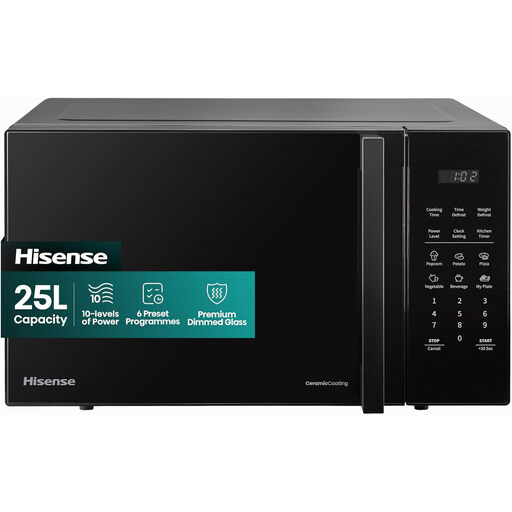 No image available
Consider this 900 W solo model if you mainly reheat food and want digital controls. Compare the dimensions of your serving bowl or jug with the usable cavity and turntable before choosing it.
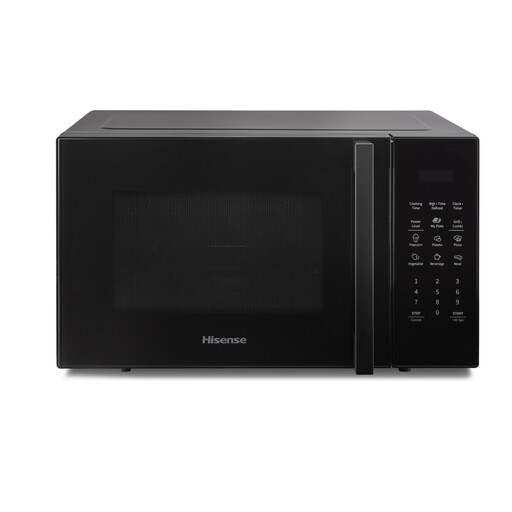 No image available
Consider the grill only if you expect to use it alongside reheating. The title specifies 900 W microwave power; check the exact cooking functions and usable cavity dimensions against your intended dishes.
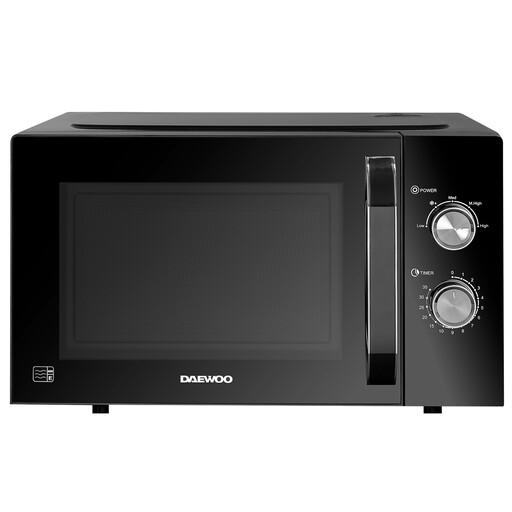 No image available
The manual controls and five power settings suit consumers who prefer to set reheating themselves. Its stated microwave power is 800 W; check that your family serving vessel fits on the glass turntable and inside the cavity.
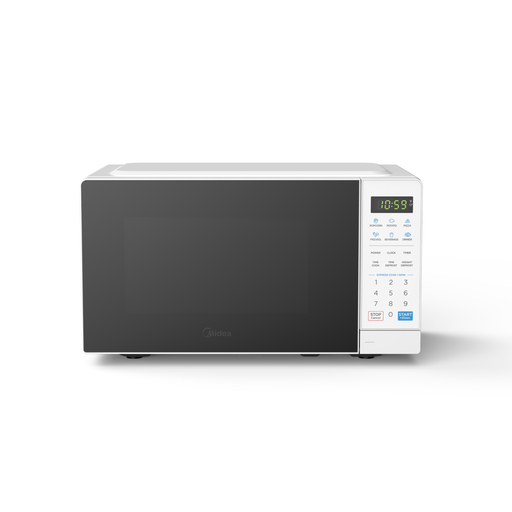 No image available
This 700 W model is an option when you want inverter technology in a smaller solo microwave. Its stated 245 mm turntable makes measuring a wide family bowl or handled jug particularly important.
 No image available
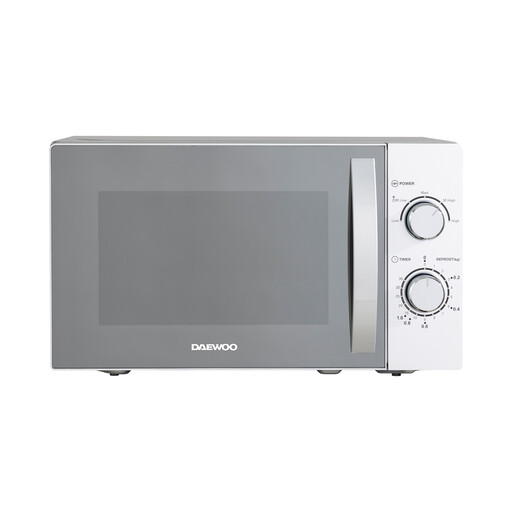
Consider this model if you prefer mechanical controls for a reheating-only routine. Check the exact variant's power settings and dimensions, and confirm that your family serving vessel fits before buying.
No. Sensor reheat is an optional programme, not a substitute for following any pack directions on stirring and standing or checking the food before serving. Panasonic describes the feature on its NN-ST64QW, but its presence alone does not establish how a particular serving of custard will heat.
Follow the food manufacturer's microwave instructions, including directions to stir or allow standing time, as the Food Standards Agency's household guidance advises. Check the food throughout before serving rather than relying on the end of a timer or automatic programme alone.
Choose a microwave-safe jug that fits the cavity and, if the microwave has a turntable, can rotate without its handle catching. Panasonic advises looking for a microwave-safe label on plastic containers; measure the jug at its widest point before comparing microwave dimensions.