For reheating cooked carrots and other family-meal leftovers, choose a microwave that fits your usual serving dish and makes it easy to pause, stir and adjust the time. A larger solo model suits frequent reheating in big dishes; a smaller solo model suits tighter worktops, while a combination model makes sense if you will also use its other cooking modes. Whatever the programme, check that reheated food is steaming hot throughout before serving.
Who each approach suits
Frequent family-leftover reheaters
If you regularly heat several portions or use a large serving dish, check cavity and turntable space before comparing reheating controls. Automatic settings may make timing easier, but you still need to check the food before serving.
Small-kitchen everyday users
If you mostly reheat vegetables, plates and smaller portions, compare the space your dishes need with the appliance’s worktop footprint. Straightforward controls and a removable turntable may matter more to you than a larger cavity.
One-appliance meal-prep households
If you also want to grill, brown or use convection cooking, a combination microwave is worth considering. Check that you have room for it and will regularly use those extra modes.
What matters when choosing
For consumers choosing a microwave primarily to reheat cooked carrots and other family-meal food, start with safe, controllable reheating; then check dish fit and the worktop space you can spare.
| Concern |
What to check |
Who this matters to |
| Controllable reheating |
Look for accessible time and power controls so you can pause, stir suitable foods and add time. An automatic programme does not replace checking that food is steaming hot throughout. |
If I am reheating leftovers for the family, I want to adjust the cycle rather than assume the centre is hot. Around 42% of consumers put controllable, safe reheating first. |
| Dish and portion space |
Measure your widest microwave-safe dish against the stated turntable and usable interior; check external width and depth against your worktop too. |
When several portions need heating, my serving dish must fit without awkward positioning. Room for family dishes comes first for around 33% of consumers. |
| Footprint and useful functions |
Decide whether you need solo reheating or will use additional cooking modes. Compare appliance dimensions and removable parts for cleaning. |
With limited counter space, I would rather have an appliance suited to everyday reheating than modes I rarely use. Around 25% of consumers prioritise space and simplicity. |
Mistakes to avoid
-
Assuming an automatic programme makes food safe to serve
Reheating settings can help with timing, but they cannot replace checking the food. GOV.UK advises checking that food is steaming hot; Food Standards Agency guidance also identifies stirring and standing as parts of microwave reheating.
Stir cooked carrots and other suitable foods where appropriate, follow any standing-time instructions, and check that the food is steaming hot throughout before serving.
-
Choosing by cavity capacity alone
The litre figure does not tell you whether your usual serving dish will fit or whether the microwave will fit on your worktop. Turntable size and external dimensions are separate checks.
Measure your dish and intended counter position, then compare both measurements with the manufacturer’s dimensions before ordering.
-
Relying on reheating to make poorly stored leftovers suitable
A microwave choice does not replace proper storage. GOV.UK advises eating leftovers within 48 hours or freezing them if that will not be possible.
Cool and refrigerate cooked carrots promptly, store them appropriately, and reheat the portion you intend to serve.
-
Choosing cooking modes you will not use
A combination microwave offers more ways to cook, but grill and convection functions do not, by themselves, improve a straightforward reheating task.
If reheating is your main job, compare solo models first. Consider a combination model when browning, grilling or oven-style cooking is a recurring need.
Relevant brands to consider
Panasonic
Panasonic’s solo microwave range includes a larger-capacity route for households reheating family portions.
- The NN-ST65QBBPQ is listed by Panasonic with a 32L cavity, 34cm turntable, 1000W microwave output and sensor reheat.
- Panasonic’s statements about inverter heating are manufacturer claims, not a substitute for checking the food. Compare the appliance’s dimensions with your worktop and dish.
Samsung
Samsung has larger-capacity solo microwaves relevant to households comparing dish space and interior finishes.
- Samsung lists a 32L cavity and Power Defrost for the MS32DG4504GGE3.
- Samsung’s claims about the model’s Ceramic Inside finish should not be treated as independent findings about cleaning performance or the brand’s whole range.
Russell Hobbs
Russell Hobbs offers both solo and combination models for households deciding how much cooking capability they need.
- The RHMT2512B is a 25L, 900W solo model with reheat and defrost functions; the RHM2574 adds grill and convection cooking.
- Check the dimensions of the particular model: extra cooking modes are useful only if they fit both your worktop and your routine.
Joybuy microwave choices
These choices include solo microwaves for everyday reheating and combination models to consider if you also want other cooking modes. Compare your serving dish and available worktop space with the dimensions of any model you are considering.
 No image available
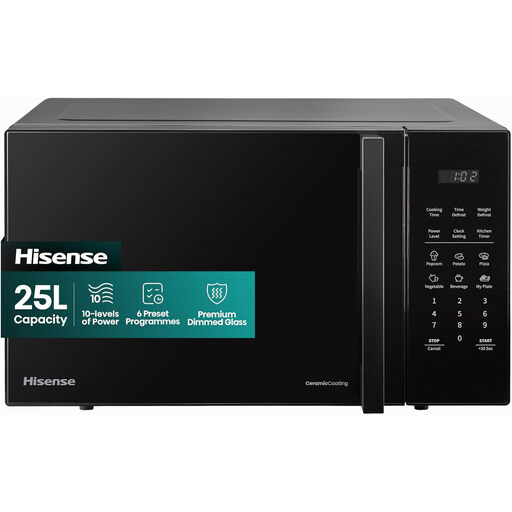
Hisense H25MOBS7HUK 25L solo microwave, 900W
A solo model to consider for routine family reheating when a 25L cavity suits your dishes.
Its title lists auto defrost. Check your serving dish against the usable interior and confirm that the appliance fits your worktop.
View on Joybuy
 No image available
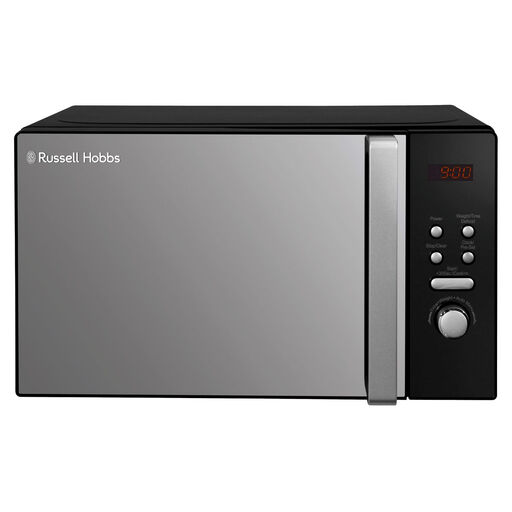
Russell Hobbs RHM2063-AH 20L digital microwave, 800W
Consider this 20L model if you usually reheat smaller portions rather than a large family serving dish.
The product title specifies five power levels. Check that your usual dish fits before choosing a smaller cavity.
View on Joybuy
 No image available
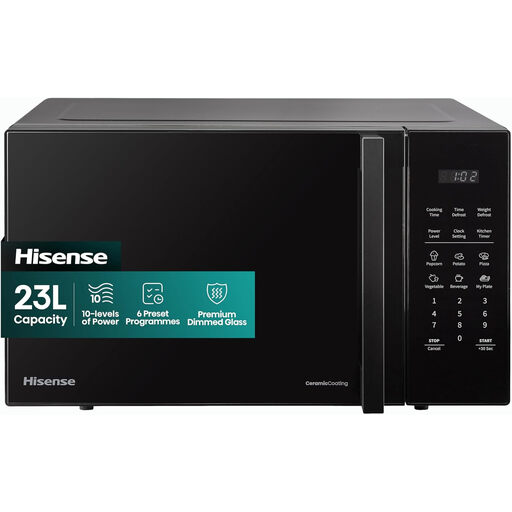
Hisense H23MOBS5HUK 23L solo microwave, 800W
This solo model is an option for reheating everyday portions if your dishes fit its 23L cavity.
Auto defrost is named in the product title. If the precise control layout matters to you, check it on the product page before ordering.
View on Joybuy
 No image available
Samsung MC28A5125AK/EU 28L combination microwave, 900W
Consider a combination model if you want to use the appliance for more than reheating family leftovers.
The product title lists convection cooking and a smart moisture sensor; neither removes the need to check that reheated food is hot throughout. Confirm dish fit and external dimensions before buying.
View on Joybuy
 No image available
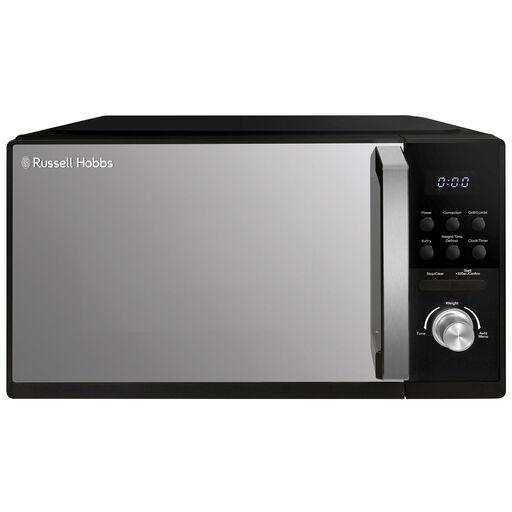
Russell Hobbs RHMAF2508B 25L 4-in-1 combination microwave
This combination model is worth comparing if reheating is only part of what you want one countertop appliance to do.
Check which additional modes you would use, and measure both your serving dish and the available worktop space before choosing it.
View on Joybuy
Frequently asked questions
What microwave capacity do I need for cooked carrots at a family meal?
Choose by the dish you will reheat them in, not by litres alone. Panasonic lists a 32L model with a 34cm turntable for a larger-dish route, while Russell Hobbs lists a 25L solo model with a 29cm turntable; measure your dish and worktop before choosing either size.
Does sensor reheat make cooked carrots safe to serve automatically?
No: a sensor programme does not replace checking the food. Panasonic describes sensor reheat as a timing aid, while GOV.UK advises checking that reheated food is steaming hot; stir where appropriate and check the centre before serving.
How should I store cooked carrots before reheating them?
Cool and refrigerate cooked carrots promptly rather than relying on reheating to address poor storage. GOV.UK advises eating leftovers within 48 hours or freezing them if that will not be possible.
Is a combination microwave worthwhile if I mostly reheat leftovers?
A solo microwave is the more direct choice if reheating is your main task. Consider a combination model if you will regularly use its additional cooking modes, and check its dimensions against your worktop and serving dishes.


