
24/7 Customer Support

Free returns

Same-day & Next-day Delivery

Quality Guaranteed

Unlock Your Welcome Offers: FREE Delivery | Up to 80% OFF | Free 30-day JoyPlus trial
Download the APP
As a Joybuy Product Recommendation Officer, my role is to help you navigate the crowded market of kitchen appliances. A microwave oven seems like a simple purchase, but with endless features and designs, it's easy to make a choice you'll later regret. Many shoppers fall into common traps, ending up with an appliance that's either over-specified for their needs or a poor fit for their kitchen.
Before you start browsing, let's look at the three most common pitfalls that UK buyers encounter:
combination microwave oven with ten cooking modes, only to ever use the "reheat" and "defrost" buttons. This adds unnecessary cost and complexity.built-in microwave without double-checking cabinet dimensions. A few millimetres can be the difference between a seamless fit and a costly installation headache.stainless steel microwave panels) while ignoring the cavity material. A cheap painted interior can chip, rust and become difficult to clean over time, significantly shortening the appliance's useful life.Understanding these issues is the first step. Now, let's break down the core parameters you must consider to find the right appliance for your home.
To make an informed decision, you need to understand what the specifications actually mean for your day-to-day use.
The functionality of a microwave oven is its most defining feature. Choosing the right type ensures you are not paying for features you will never use.
solo microwave is ideal if you primarily need an appliance for simple, quick tasks like warming leftovers, cooking ready meals, or defrosting ingredients.microwave with grill is great for browning and crisping the tops of dishes like lasagne, cheese on toast, or sausages, adding texture that a solo model cannot.combination microwave oven can bake, roast and grill, making it a suitable secondary oven or even a primary one in a compact kitchen.The internal capacity, measured in litres, determines how much you can fit inside.
small microwave oven is perfect for individuals, couples or kitchens with limited space. It will comfortably fit a standard dinner plate or a small bowl.25 litre microwave is a popular all-rounder, offering enough space for most families. It can accommodate larger plates and some casserole dishes.large capacity microwave is designed for bigger households or those who frequently cook for guests. These models can often fit oversized dishes and sometimes have a rectangular base instead of a turntable.This choice depends entirely on your kitchen design and available space.
built-in microwave or integrated microwave is designed to be installed within a kitchen cabinet, creating a seamless, high-end look. This is a popular choice for modern kitchen refurbishments, especially models with a stainless steel microwave finish that matches other appliances. Crucially, you must measure the intended cabinet housing (height, width and depth) precisely before purchasing.Based on these practical considerations, we've matched several models to common UK household profiles.

Why This Fits Their Persona: This user needs reliability and capacity, not complexity. The large 32-litre interior handles family-sized portions and its straightforward solo function is perfect for the daily routine of reheating meals and defrosting food quickly.
It avoids overpaying for unused combination features and focuses on a durable, easy-to-clean ceramic enamel interior, addressing the longevity pitfall.
Large 32L Capacity: Accommodates large dishes. Ceramic Enamel Interior: Scratch-resistant and simple to wipe clean.
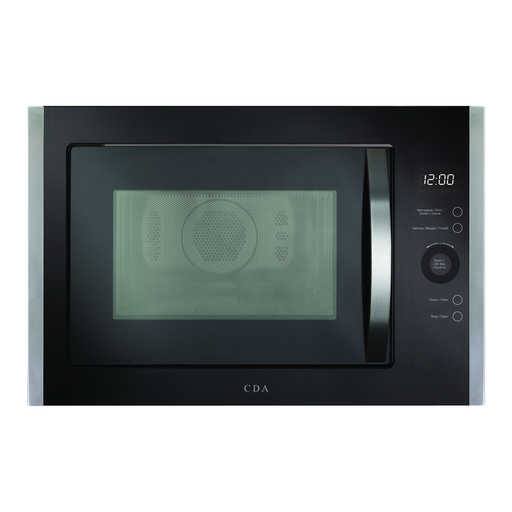
Why This Fits Their Persona: This user prioritises aesthetics and functionality for a new kitchen. The CDA model is a true 3-in-1 combination oven designed for seamless integration into a 60cm cabinet, offering microwave, grill and convection cooking in one stylish stainless steel unit.
As a built-in model, it directly addresses the integration goal, avoiding the mismatched appliance look. For a user undertaking a full renovation, the versatile functions are a genuine asset, not an unnecessary expense.
3-in-1 Cooking: Combines microwave, grill and convection oven. Integrated Design: Saves counter space and provides a sleek, custom look.
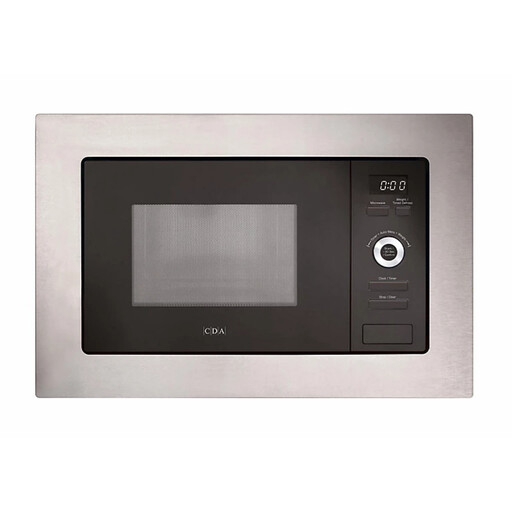
Why This Fits Their Persona: Ideal for small kitchens, flats or as a secondary appliance in a utility room. This compact 17-litre model is specifically designed for installation in a wall unit, freeing up precious countertop space without sacrificing a premium, integrated look.
It is a purpose-built solution for a common problem—lack of space. As a simple solo microwave, it avoids the cost of complex functions that are not needed in a compact or secondary appliance.
Wall Unit Design: Optimises kitchen layout by using cabinet space. Compact 17L Capacity: Perfectly sized for daily reheating tasks for one or two people.
We have compiled a complete, real-time list of products that fully satisfy these strict selection criteria and UK safety regulations.
This is a critical safety consideration. All built-in microwave models come with specific manufacturer guidelines for ventilation. Typically, they require a gap of several centimetres at the back, sides and top of the cabinet housing to allow air to circulate and prevent overheating. Never block the ventilation grilles on the appliance itself. Installation should always follow the provided manual.
The lifespan of a microwave can vary significantly based on usage and quality. A well-maintained model from a reputable brand can last from 7 to 10 years. Factors that contribute to a longer life include regular cleaning, avoiding slamming the door and not running the appliance while empty. The quality of the interior (e.g., ceramic or stainless steel vs. paint) also plays a major role in its long-term durability.
No. You should never place metal, including foil or containers with metallic trim, inside a microwave when it is operating in microwave mode. The metal reflects microwaves, which can cause sparking (arcing) and severely damage the appliance's internal components. However, some combination microwave oven models allow the use of metal racks or trays when operating in grill or convection mode only. Always check your user manual for specific instructions.