Leftover reheaters short on worktop space
If pasta leftovers and other everyday reheating are your main uses, the microwave's exterior width and depth may matter more than extra cooking modes.


For reheating cooked pasta, start with a freestanding solo microwave rather than paying for grill or oven-style functions you will not use. Measure the available worktop and check that your usual bowl can rotate inside the microwave; a larger model makes sense if dish size matters more to you than keeping the cabinet small.
If pasta leftovers and other everyday reheating are your main uses, the microwave's exterior width and depth may matter more than extra cooking modes.
You need room for your usual dish to sit and rotate, not just a microwave with a small exterior. Turntable and cavity measurements help you judge that fit.
If you use wider dishes or want more control over reheating, you may accept a larger cabinet. Panasonic describes even heating for its NN-SD37QSBPQ inverter model, but that is a manufacturer claim, not a measured result for your pasta.
For a small worktop, check exterior fit first, then make sure your pasta dish has room to rotate. Compare controls once those two requirements are met; extra cooking modes matter only if you plan to use them.
| Concern | What to check | Who this matters to |
|---|---|---|
| Worktop footprint | Measure the available width, depth and height; compare exterior dimensions and the exact model's ventilation requirements. | If I have little room beside the microwave for preparing food, the cabinet must fit without taking over the worktop. Around 38% of consumers put usable worktop space first. |
| Dish and portion fit | Compare your bowl's base and overall size with the turntable and cavity; allow room for it to rotate. | My usual pasta bowl needs to fit even if I choose a compact appliance. For around 31% of consumers, fitting their everyday dish is the primary concern. |
| Reheating control | Check the available power settings and how easily you can adjust the time for your usual portion. | When I reheat a larger or denser serving, I want to adjust the heating rather than rely on one preset. Control is the main priority for around 31% of consumers. |
A smaller capacity does not guarantee a smaller footprint. Russell Hobbs lists its 17L RHM1731B at 452 × 355mm across the worktop, while Panasonic Store UK lists its 20L NN-ST23QMBPQ at 440 × 324mm.
Compare exterior width and depth before using capacity or turntable diameter to judge whether your dish will fit.
A pasta bowl can have a different shape from a flat plate, and its rim needs room to rotate. The cited compact models have turntables ranging from 24.5cm to 25.5cm, according to Russell Hobbs, Panasonic Store UK and Sharp Consumer UK.
Measure the bowl you actually use and check both its base and overall width against the model's turntable and cavity.
Which? describes combination microwaves as adding grill and convection functions for tasks such as browning and roasting. Those functions do not establish whether your pasta bowl will fit or how much worktop the appliance needs.
Choose a solo microwave if reheating is the task; consider a combination model if you also want to crisp or brown dishes, such as a pasta bake.
Pasta that feels warm at the edges may still need further heating in the centre. The Food Standards Agency advises reheating food thoroughly until it reaches a safe temperature in the centre and reheating it only once.
Stir or redistribute the pasta as needed, then continue heating it thoroughly in line with the Food Standards Agency's guidance.
Panasonic offers both the 20L NN-ST23QMBPQ compact solo model and the larger 29L NN-SD37QSBPQ inverter solo model considered here.
The YC-MS01U-B is a 20L, 800W solo model for shoppers who prefer manual dial controls.
The RHM1731B offers a 17L, 700W manual-control option for people considering a smaller cavity.
The 23L MS23T5018AE/EU is a solo model to consider if digital controls and Auto Cook options, including pasta, interest you.
These solo microwaves cover compact 20L options as well as larger models for shoppers whose pasta dish needs more room. Check each model's exterior fit, bowl clearance and installation instructions before choosing.
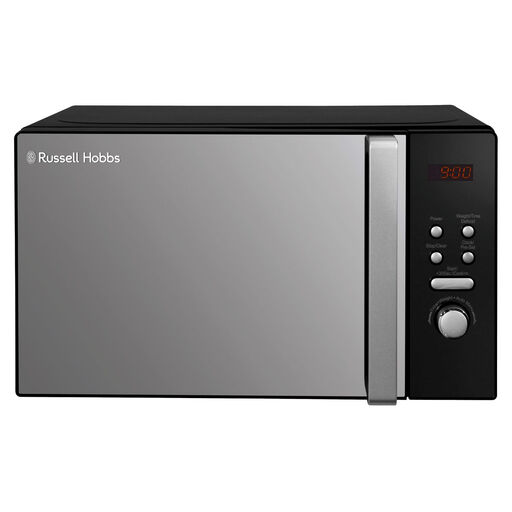 No image available
Consider this model if you want digital controls for routine pasta reheating. Its title specifies 20L capacity, 800W output and five power levels; check its exterior fit, the space needed around it and whether your bowl can rotate.
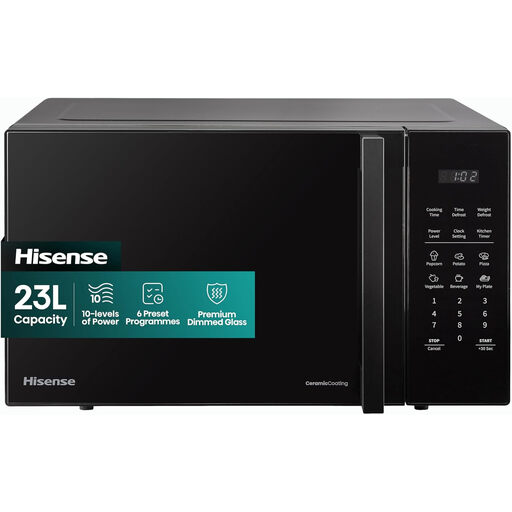 No image available
Consider this 23L, 800W model if dish room takes priority over keeping to a 20L option. Measure your worktop and bowl, and confirm the controls on the exact variant before buying.
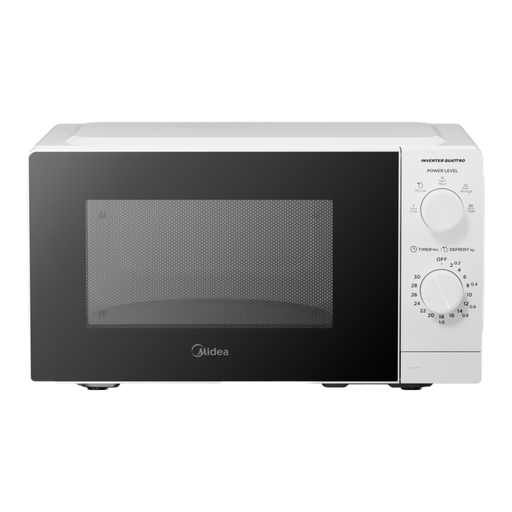 No image available
This is a manual-control option for straightforward reheating. Its title specifies 700W output and MET inverter technology; check the turntable size against your pasta bowl and allow for the model's installation clearances.
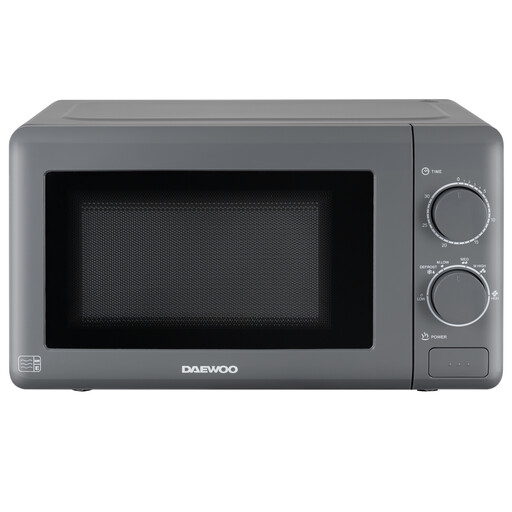 No image available
Consider this 800W model if you prefer manual time and power adjustment for leftovers. Confirm the number of power settings on the exact variant, and check the turntable and installation dimensions before choosing it for a small worktop.
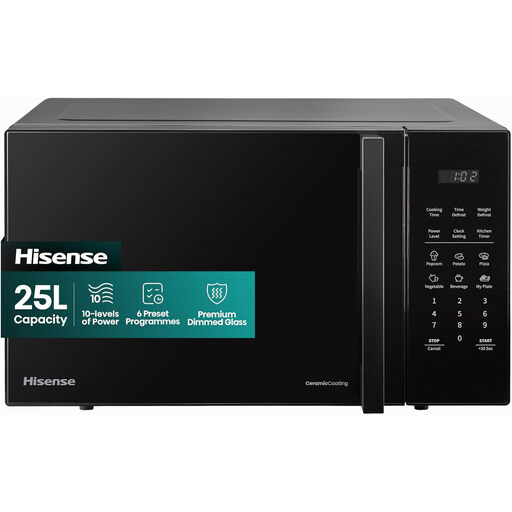 No image available
Consider this larger solo model if fitting a wider pasta dish matters more than minimising the cabinet. Its title specifies 25L capacity and 900W output; check that its exterior dimensions and required clearances leave enough usable worktop space.
Yes, if reheating is your main task: The product information describes solo microwaves as suitable for reheating food. Consider a grill or combination model if you also want functions such as crisping or browning, which Which? identifies with those other microwave types.
Measure the available width, depth and height, then compare them with the microwave's exterior dimensions and its installation instructions. Measure your usual pasta bowl as well, so you can check the turntable and cavity rather than relying on the litre figure.
No. Russell Hobbs lists its 17L RHM1731B at 452 × 355mm across the worktop, while Panasonic Store UK lists its 20L NN-ST23QMBPQ at 440 × 324mm. Compare the dimensions of the specific models you are considering and check that your dish fits.
Reheat it thoroughly until it reaches a safe temperature in the centre, rather than stopping when the edges feel warm. The Food Standards Agency also advises reheating food only once.