Small-kitchen home bakers
You need to soften butter for cakes, biscuits or pastry, but the microwave must share limited worktop space and still handle everyday reheating.


Choose a compact solo microwave if softening butter is the main task and worktop space is tight: look for a lower power setting, a timer you can use for brief bursts and external dimensions that fit with the required ventilation space. An inverter model is worth considering if you also use the microwave regularly for defrosting or reheating; grill or combination modes make sense only if you will use those cooking functions too. Whatever the model, check the butter between bursts rather than relying on a power setting alone.
You need to soften butter for cakes, biscuits or pastry, but the microwave must share limited worktop space and still handle everyday reheating.
You would rather avoid accidentally melting butter than gain extra cooking modes. Lower power options and a timer that is easy to set for brief bursts matter most.
You also want to defrost or reheat food regularly, or use a grill. Those tasks may justify considering functions beyond those needed for butter.
For softening butter in a small kitchen, start with controllable short heating and a workable location for the appliance. Consider extra cooking functions only after those needs are covered.
| Concern | What to check | Who this matters to |
|---|---|---|
| Gentle control | Check for selectable lower microwave power and a timer you can set for brief bursts. Pause to check the butter between bursts. | If I am softening a small amount of butter, I want to stop before it melts rather than rely on full power. Roughly 46% of consumers put that control first. |
| Worktop fit | Compare external dimensions with your available space and allow for the placement and ventilation requirements in the model’s manual. | My worktop is shallow, but I still need room for everyday reheating. For around 36% of consumers, fitting the appliance is the primary concern. |
| Other cooking tasks | Decide whether you will regularly use defrosting, grilling or combination modes; check the full appliance dimensions before choosing additional functions. | I would use the same microwave for food beyond baking prep, so extra modes would need to earn their space. About 18% of consumers chiefly want that wider versatility. |
Maximum output does not tell you how easy it will be to select a lower setting or time a very short burst. The cited models offer different numbers of power levels and different controls.
Compare the exact model’s lower power options and timer interface, then plan to check the butter as it softens.
Cavity capacity is not an external measurement. Depth can be the limiting dimension on a shallow worktop, and the appliance also needs the ventilation space specified in its manual.
Measure the intended position in millimetres and compare it with the model’s full dimensions and placement instructions.
Grill and combination settings serve other cooking tasks; softening butter still calls for controlled microwave heating and checks between bursts.
Choose those additional modes if you expect to use them for grilling, browning or combination cooking, not as a substitute for usable low-power controls.
Electrical Safety First advises keeping microwave vents clear to prevent overheating. Greater Manchester Fire and Rescue Service advises against leaving cooking unattended.
Follow the model’s placement instructions, keep vents unobstructed and stay nearby while using short bursts. Use a microwave-safe, non-metal container.
Sharp’s cited 20L freestanding solo models offer a choice of manual or digital controls for buyers comparing compact appliances.
The cited RHM1731B is a 17L manual model for buyers considering dial controls and a smaller cavity.
Panasonic’s cited inverter and grill models are relevant if the microwave will do more than soften butter.
These solo and inverter microwave options offer different controls and capacities for butter-softening and everyday use. Compare the exact appliance’s placement requirements with your kitchen before choosing; a larger capacity alone does not establish whether it will fit.
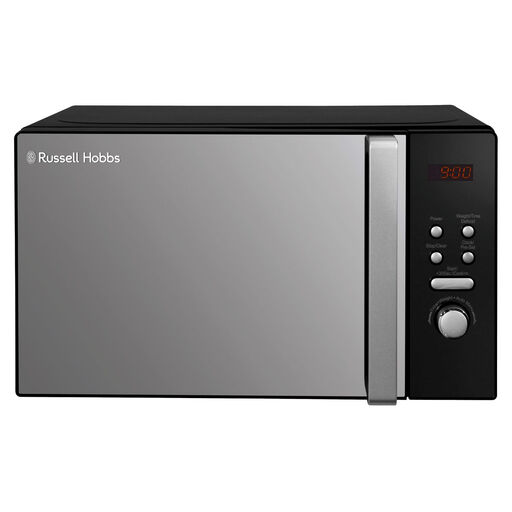 No image available
Consider this model if you prefer digital controls for short, checked heating intervals when softening butter.
The listed variant is black, with 800W output and five power levels. Check the model’s ventilation requirements against your available worktop space.
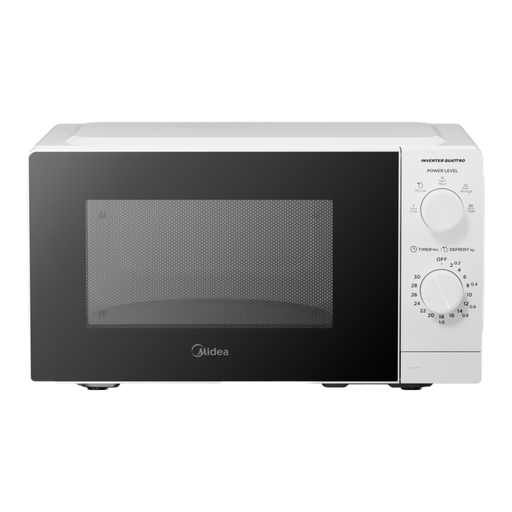 No image available
Consider this model if you want a manual solo microwave with inverter technology for baking prep and other microwave tasks; the technology alone does not establish a particular butter-softening result.
The listed white variant has 700W output and MET Inverter technology. Confirm its full dimensions and the manual’s ventilation requirements before allocating worktop space.
 No image available
Manual controls may suit you if you prefer setting short bursts with a dial and checking the butter between them.
This silver 700W model lists six power levels and a defrost function. Allow for the ventilation space required by its manual as well as the appliance itself.
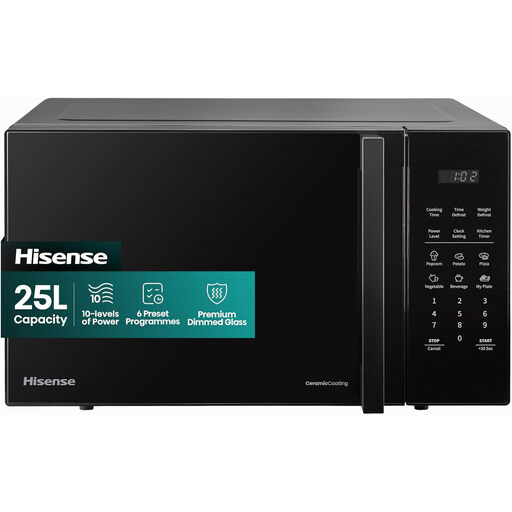 No image available
This model is worth considering if you also want capacity for everyday microwave use, but measure carefully before placing it on a limited worktop.
The black variant lists 900W output and auto defrost. Its 25L capacity is an internal measurement, not a guide to its external footprint or required ventilation space.
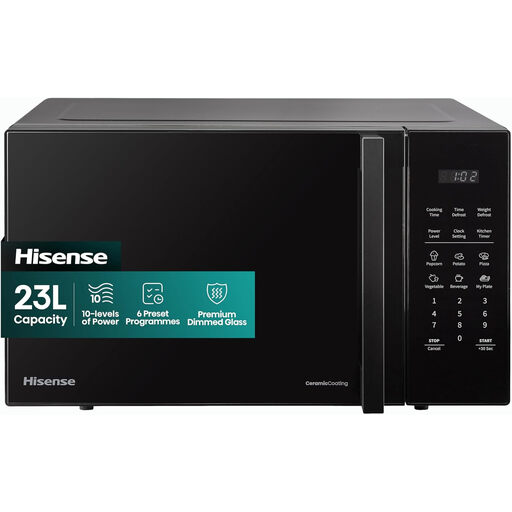 No image available
Consider this option if you want a solo microwave for baking prep and defrosting, while leaving enough space for its full body and ventilation.
The black model lists 800W output and auto defrost. Confirm whether this exact variant uses touch controls or rotary dials before buying, as the control descriptions conflict.
Look for a lower microwave power setting and controls that make brief bursts easy to set. Check the butter between bursts: the number of power levels cannot guarantee that it will soften without melting.
Measure the available width, height and depth, then compare them with the exact model’s external dimensions and manual-specified ventilation space. Litre capacity describes the cavity, not the space the appliance needs on your worktop.
Stay nearby and check it between short bursts rather than leaving the microwave unattended. Electrical Safety First advises keeping microwave vents clear, while Greater Manchester Fire and Rescue Service advises against leaving cooking unattended and putting metal items inside a microwave.
Check the appliance’s product details and seller information before purchasing. GOV.UK advises looking for appropriate marking and the manufacturer’s name and address on electrical goods; you can also check current product-safety alerts and recalls for the model.