For Yorkshire puddings, choose the milk specified by the recipe: M&S uses whole milk, while Waitrose uses semi-skimmed milk, so whole milk is not essential. If reducing milk fat matters, a semi-skimmed recipe offers a documented route; check that your chosen recipe accepts skimmed milk before substituting it.
Who is choosing?
Roast cooks reducing milk fat
If Yorkshire puddings are on the menu, a recipe written for semi-skimmed milk lets you follow its instructions rather than substitute milk in a whole-milk recipe. Waitrose specifies semi-skimmed milk in its Yorkshire pudding recipe.
Cooks following a whole-milk recipe
If you want to follow the stated ingredients, buy whole milk for a recipe that calls for it. M&S specifies whole milk in its Yorkshire pudding recipe.
Households using milk across several meals
If you may not finish a bottle soon after the roast, check its pack size and storage instructions. Waitrose filtered whole milk states a longer storage period under its specified conditions; that does not establish a cooking advantage.
What matters when choosing milk?
Start with the Yorkshire pudding recipe you intend to use, then compare the milk labels for fat content, pack size and storage instructions.
Whole milk
Choose it when: Your recipe specifies whole milk, as the M&S Yorkshire pudding recipe does.
Trade-off: The Waitrose whole-milk example lists more fat per 100ml than its semi-skimmed example.
Semi-skimmed milk
Choose it when: You want a lower-fat option and are following a recipe written for semi-skimmed milk, such as Waitrose’s.
Trade-off: Follow the recipe’s method rather than assuming a substitution will produce the same result.
Skimmed milk
Choose it when: Lower milk fat is your priority and the recipe you plan to make accepts skimmed milk.
Trade-off: The cited M&S and Waitrose Yorkshire pudding recipes specify whole and semi-skimmed milk respectively, not skimmed.
| Priority | What to check | Your needs |
|---|
| Fat content |
Compare the exact products per 100ml. Waitrose lists 3.7g fat for its whole-milk example, 1.8g for semi-skimmed and less than 0.5g for filtered skimmed milk. |
I want to reduce the fat contributed by milk, so I’ll compare the labels on the bottles I’m considering. |
| Recipe fit |
Check which milk the recipe specifies and follow its cooking method. M&S specifies whole milk; Waitrose specifies semi-skimmed milk. |
Yorkshire puddings matter to my roast, and I’d rather use a recipe written for my chosen milk than make an untested substitution. |
| Cooking method |
Follow the recipe’s batter and oven instructions. M&S calls for resting the batter and leaving the puddings undisturbed; BBC Good Food emphasises sizzling-hot fat and keeping the oven door closed. |
I don’t want to focus on milk fat while overlooking the recipe’s cooking steps. |
| Milk allergens |
Check packaged ingredients and allergen information when cooking for someone else. Cambridge University Hospitals distinguishes cow’s-milk protein allergy from lactose intolerance; changing the fat level does not remove milk proteins. |
If a guest has a milk-related restriction, I need to establish what it is before choosing ingredients. |
| Storage |
Check the bottle’s use-by date and opened-storage instructions. Waitrose filtered whole milk states up to one month unopened and seven days opened, provided it is refrigerated below 5°C and used by its use-by date. |
I may use the remaining milk after Sunday, so a bottle’s storage instructions and size matter to me. |
What should you avoid?
-
Assuming Yorkshire puddings require whole milk
Waitrose specifies semi-skimmed milk in its Yorkshire pudding recipe, while M&S specifies whole milk in its own.
Choose a recipe first and buy the milk it calls for. If reducing milk fat is important, consider a recipe written for semi-skimmed milk.
-
Using cap colour as the whole nutrition comparison
Fat values differ between the milk types in Waitrose’s product examples, but the relevant figures for a purchase are those on the exact pack.
Compare fat per 100ml on the bottles you are considering.
-
Treating lower-fat dairy milk as allergy-safe
Reducing milk fat does not remove cow’s-milk proteins. Cambridge University Hospitals explains that cow’s-milk allergy and lactose intolerance concern different milk components.
Clarify a guest’s requirement and check packaged allergen information before preparing the meal.
-
Choosing filtered milk for an assumed cooking advantage
Waitrose filtered whole milk makes a product-specific storage claim; that claim does not show that it makes better Yorkshire puddings.
Choose it if its pack size and stated storage conditions suit how you will use the milk, and follow its use-by instructions.
Relevant brand references
These examples help identify products and recipes to compare; a brand’s inclusion does not establish how its milk will perform in another recipe.
Tesco
Tesco Groceries lists standard and filtered whole milk in its whole-milk category, alongside branded options.
- The listing offers pack sizes and milk types to compare.
- A product listing does not establish which milk works better in a Yorkshire pudding recipe.
Waitrose
Waitrose provides product nutrition examples for whole, semi-skimmed and skimmed milk, and a Yorkshire pudding recipe specifying semi-skimmed milk.
- Its product pages allow a per-100ml comparison of the named milks.
- The longer storage period stated for its filtered whole milk applies to that product under its pack instructions, not to every filtered milk.
Sainsbury’s
Sainsbury’s describes its SO Organic British whole milk as organic pasteurised homogenised whole milk from British free-range dairy farms.
- That named product lists 4.0g fat per 100ml.
- Its product information does not establish Yorkshire pudding performance.
Cravendale
Tesco Groceries lists Cravendale Filtered Fresh Whole Milk in 1L and 2L formats.
- The listing provides a branded filtered whole-milk option to compare by pack size.
- The listing alone does not establish a nutrition comparison or cooking advantage.
M&S
The M&S Yorkshire pudding recipe specifies 100ml M&S whole milk for 12 puddings.
- The recipe gives a specific whole-milk use and calls for resting the batter.
- It does not show that M&S milk outperforms other whole milks.
Joybuy skimmed-milk options
These UHT skimmed-milk options suit a choice centred on lower milk fat and unopened storage. For Yorkshire puddings, check that your chosen recipe accepts skimmed milk.
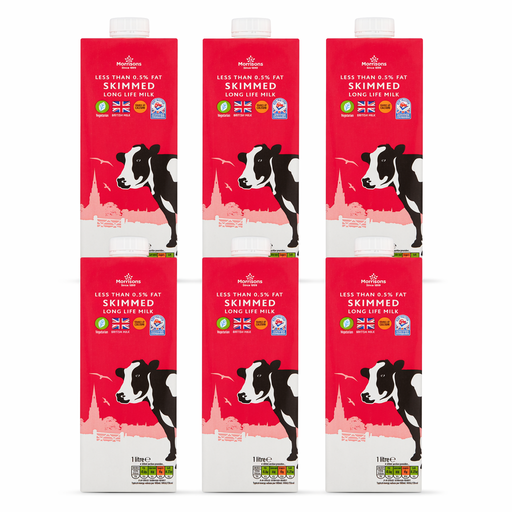 Image unavailable
Morrisons British UHT Skimmed Milk, 1 litre × 6
A six-pack to consider when you want UHT skimmed milk for more than one use. Check that your Yorkshire pudding recipe accepts skimmed milk. The product information calls for refrigeration after opening and use within three days, and states that this milk is not suitable for children under 5.
View on Joybuy
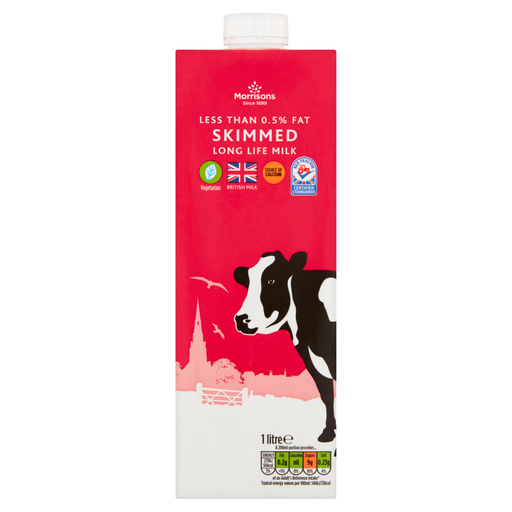 Image unavailable
Morrisons British UHT Skimmed Milk, 1 litre
A single 1 litre pack to consider if that size suits your plans for the roast and other meals. Check that your Yorkshire pudding recipe accepts skimmed milk. The product information calls for refrigeration after opening and use within three days, and states that this milk is not suitable for children under 5.
View on Joybuy
Common questions
Do Yorkshire puddings need whole milk?
No. M&S specifies whole milk in its Yorkshire pudding recipe, but Waitrose specifies semi-skimmed milk in another. Follow the milk type and method in the recipe you choose.
Which of whole, semi-skimmed and skimmed milk has less fat?
In the named Waitrose examples, whole milk lists 3.7g fat per 100ml, semi-skimmed lists 1.8g and filtered skimmed milk lists less than 0.5g. Check the label of the product you intend to buy rather than applying those figures to every brand.
Will changing milk fat alone determine how Yorkshire puddings turn out?
No cooking result follows from the milk’s fat figure alone. M&S instructs cooks to rest the batter and leave the puddings undisturbed; BBC Good Food emphasises sizzling-hot fat and keeping the oven door closed. Follow the method for your chosen recipe.
Is lactose-free dairy milk suitable for someone with a cow’s-milk allergy?
Do not assume it is. Cambridge University Hospitals explains that cow’s-milk allergy concerns milk proteins, whereas lactose intolerance concerns digestion of milk sugar. Establish the person’s requirement and check the ingredients and allergen information before cooking.
How long can filtered milk be kept?
Follow the instructions for the particular bottle. Waitrose filtered whole milk states up to one month unopened and seven days opened, with refrigeration below 5°C and use by its use-by date. That period should not be assumed for other filtered milks.


