
24/7 Customer Support

Free returns

Same-day & Next-day Delivery

Quality Guaranteed

Unlock Your Welcome Offers: FREE Delivery | Up to 80% OFF | Free 30-day JoyPlus trial
Download the APP
A mini fridge seems like a simple purchase, but choosing the wrong one can lead to disappointment. Whether you need a compact fridge for your university halls, a quiet addition to your home office or a portable solution for your car, navigating the options can be tricky. Many find themselves with a unit that is too noisy for a bedroom, not cold enough for milk or simply stops working after a few months due to poor design.
As the Joybuy Product Recommendation Officer, my role is to help you sidestep these common issues. We will look past the marketing hype and focus on the practical details that ensure you get a reliable appliance that fits your needs. Let's examine the three most common pitfalls to avoid.
To make an informed choice, focus on a few core parameters that determine performance, suitability and long-term running costs.
Understanding the cooling technology is the single most important factor.
A fridge's capacity is measured in litres, but this figure can be misleading. Pay close attention to the internal dimensions and layout. A 46-litre compact fridge might sound small, but it can be surprisingly spacious if it has adjustable shelves and well-designed door storage. Before buying, measure your intended space carefully, remembering to leave adequate room for ventilation—typically at least 5cm at the back and sides.
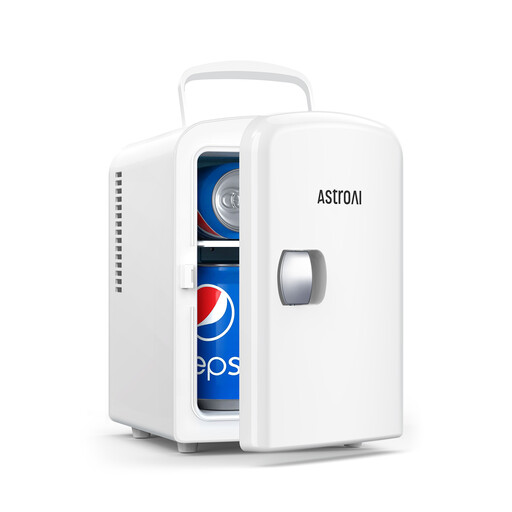
Why This Fits Their Persona: This model is built for portability. Its tiny footprint is perfect for a dressing table to store skincare, and the included 12V DC car adapter makes it ideal for keeping drinks and snacks cool on a commute or road trip.
It embraces its identity as a thermoelectric cooler. The product information is clear that it cools relative to ambient temperature and cannot freeze, managing expectations perfectly and preventing the "not-so-cold" pitfall.
Includes both AC (home) and DC (car) power cords for maximum versatility. It also features a warming function, useful for items like heat packs or keeping a takeaway warm.

Why This Fits Their Persona: This is a proper compressor fridge in a compact form. The 46-litre capacity is ample for a week's worth of snacks, drinks and lunch items, while its table-top design fits neatly in a university room or under an office desk.
Its specified 41 dB noise level directly addresses the "noisy fridge" problem, making it a suitable choice for quiet environments. The compressor ensures reliable cooling for perishables, avoiding the thermoelectric trap.
Features a reversible door, allowing you to change the hinge side for a perfect fit in any room layout. The adjustable thermostat provides precise temperature control.
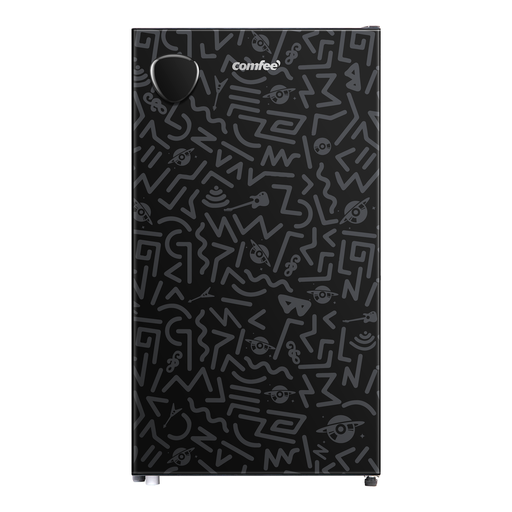
Why This Fits Their Persona: For those needing serious overflow storage in a small flat or a dedicated drinks fridge for a home bar, this 88-litre model offers substantial capacity. Its dimensions are designed to fit neatly under a standard kitchen worktop.
It provides a dedicated crisper drawer to maintain humidity for fruit and vegetables and a separate cooler zone for drinks. This thoughtful internal design prevents the issue of simply having one big, disorganised cold box.
The combination of removable glass shelves, a reversible door and adjustable feet offers excellent installation flexibility. The removable handle also allows for a sleeker, integrated look.
We have compiled a complete, real-time list of products that fully satisfy these strict selection criteria and UK safety regulations.
The running cost depends on the fridge's energy rating and your electricity tariff. An E-rated, 46-litre mini fridge running efficiently might consume around 100-110 kWh per year. Based on current average electricity prices, this would translate to a very modest annual cost, often less than a cup of coffee per month.
Yes, provided you choose the right type. A quiet mini fridge with a compressor and a noise rating of 41 dB or less is ideal. Always ensure it is placed on a hard, level surface (not thick carpet) and has adequate ventilation space around it to prevent overheating and excess noise.
A compressor mini fridge works just like a full-size one, using a refrigerant to maintain a consistently cold temperature suitable for all food types. A thermoelectric cooler is generally smaller, more portable and cools relative to the room's temperature, making it better suited for drinks, snacks or skincare rather than perishable groceries.