
24/7 Customer Support

Free returns

Same-day & Next-day Delivery

Quality Guaranteed
Download the APP
Categories
Finding an effective and enjoyable way to stay active at home can be a challenge, especially when space is limited. A mini trampoline, also known as a rebounder, offers a compact and engaging solution for low-impact cardio equipment. Whether you're an adult looking to add variety to your fitness routine or a parent seeking a safe indoor trampoline for your children, the market is filled with options.
This guide is designed to help you navigate the key features of an exercise trampoline. We'll break down what to look for and provide our recommendations to help you find a model that suits your home and fitness goals.
Before jumping into a purchase, it's helpful to understand the main differences between models. Considering these factors will ensure you select a rebounder that is safe, effective and right for your needs.
The bounce of a fitness trampoline is determined by its rebound system. There are two primary types:
Safety is paramount, whether the trampoline is for adults or children. Look for a sturdy steel frame with a powder-coated finish to resist corrosion. The legs should be equipped with non-slip rubber or plastic feet to prevent movement during use and protect your floors.
For those new to rebounding, or for a mini trampoline for kids, a rebounder with a handle provides essential stability. An adjustable T-bar handle allows users of different heights to maintain their balance, offering extra confidence as they exercise or play.
Consider the space you have available. Measure the area where you plan to use the trampoline, ensuring there is adequate overhead clearance. Many models are a foldable mini trampoline, which is a practical feature for easy storage under a bed or in a cupboard.
Finally, always check the maximum user weight capacity. This is a critical safety specification. Models designed for children will have a much lower weight limit than a mini trampoline for adults. Exceeding this limit can damage the equipment and poses a significant safety risk.
Here are our recommendations, selected to suit different users and home environments.
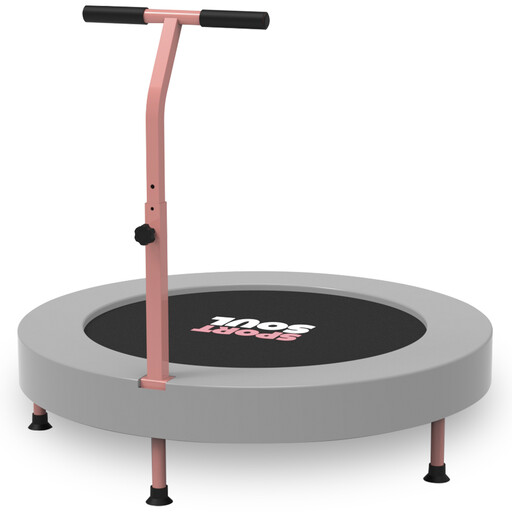
Why It Stands Out: This model is specifically designed with younger users in mind. Its springless system, which uses 24 elastic resistance bands, provides a quiet and low-impact bounce. The inclusion of an adjustable T-shaped handle offers crucial support for children as they build coordination and balance.
Pros:
Who is it for? This is a suitable choice for parents looking for a safe and fun piece of indoor fitness equipment for young children, with a maximum user weight of 25 kg (55 lbs).
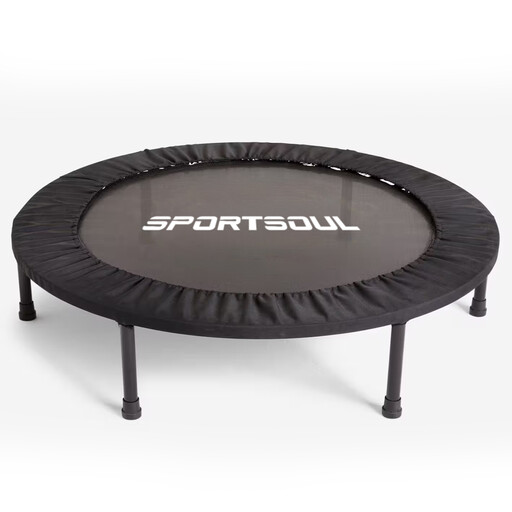
Why It Stands Out: This model features a classic and robust design, built around a 36-spring system. It delivers the firm, responsive rebound that many users prefer for energetic cardio workouts. Its durable steel frame and non-slip feet provide a stable foundation for home exercise.
Pros:
Who is it for? A great option for adults seeking a reliable and effective fitness trampoline for low-impact cardio and general home workouts.
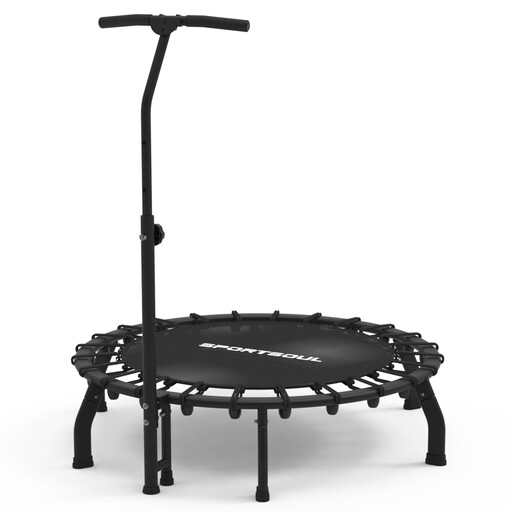
Why It Stands Out: This rebounder combines a larger jumping surface with a high weight capacity, making it a versatile choice for a wide range of users. Its rebound system uses elastic ropes, providing a smooth and quiet bounce that is easy on the joints while still being effective for a solid workout.
Pros:
Who is it for? This model is well-suited for adults who want a springless rebounder with a higher weight limit and a more spacious jumping area for their home fitness routines.
If these models aren't quite what you're looking for, or if you're interested in exploring other types of home fitness solutions, feel free to browse our complete collection of Gym Exercise Equipment.
Rebounding is a form of cardiovascular exercise that burns calories. When incorporated into a consistent fitness routine and combined with a balanced diet, it can contribute to achieving a calorie deficit, which is necessary for weight loss. As a form of low-impact cardio equipment, it's also a sustainable way to stay active.
Even short bursts of activity can be beneficial. A 10-minute session on a rebounder can help boost circulation, improve energy levels and contribute to your daily activity goals. It's an excellent starting point for beginners, who can gradually increase the duration and intensity of their workouts over time.
Neither system is inherently "better"; the ideal choice depends on your personal preferences and goals. Spring-based models offer a firmer, quicker bounce that some people prefer for high-intensity training. Springless rebounders with elastic bands provide a quieter, deeper and lower-impact bounce, which is often favoured for joint health and use in shared spaces.