
24/7 Customer Support

Free returns

Same-day & Next-day Delivery

Quality Guaranteed

Unlock Your Welcome Offers: FREE Delivery | Up to 80% OFF | Free 30-day JoyPlus trial
Download the APP
Stepping up from your smartphone to a dedicated camera is a significant move for any aspiring vlogger or content creator. While phones are incredibly convenient, a purpose-built camera offers a leap in quality, control and professionalism that can truly make your content stand out. However, the market is filled with technical jargon and countless models, making it difficult to know where to start.
As a Joybuy Product Recommendation Officer, my role is to help you navigate these choices. This guide cuts through the clutter, focusing on the practical features that matter for creating high-quality vlogs. We will explore what makes a great vlogging camera and present a few carefully selected options to suit different needs and budgets.
Before diving into specific models, it helps to understand the key features that will have the biggest impact on your videos. Focusing on these three areas will ensure you choose a camera that serves you well.
The heart of any camera is its sensor. For vlogging, a larger sensor, such as an APS-C model, captures more light and detail, resulting in cleaner, more professional-looking footage, especially in low-light conditions. Paired with 4K video resolution, you get sharp, vibrant images with the flexibility to crop in post-production without losing quality. This combination helps to future-proof your content as viewing standards continue to improve.
Practicality is paramount when you are both the director and the star. A camera with a flip screen for selfies is non-negotiable for framing your shots perfectly while talking to the camera. Equally important is a 4k camera with a mic input. The built-in microphones on most cameras are adequate, but a dedicated external microphone will elevate your audio from amateur to professional and a 3.5mm jack is the standard for this.
When you are moving, presenting or unboxing, the last thing you want is for your camera to lose focus. A fast autofocus camera for video is essential. Look for systems with reliable subject tracking and eye-detection (Eye AF), which automatically lock onto your eyes and keep you sharp, allowing you to focus on your delivery instead of the camera settings.
Based on the criteria above, here are our recommendations for creators looking to enhance their vlogging setup this year.

Why It Stands Out The Sony A6100 has long been a go-to for content creators and for good reason. It packs some of Sony's most acclaimed autofocus technology into a compact, user-friendly body. Its performance makes it a leading contender for the best APS-C camera for creators who need reliability and exceptional image quality without the bulk of a professional setup. Many a positive Sony a6100 review has centred on its powerful features in an accessible package.
Pros
Who is it for? This is an ideal entry-level mirrorless camera for serious vloggers and content creators who want to produce polished, professional-looking videos. If you need a camera that just works, letting you focus on your content, the A6100 is a fantastic choice.
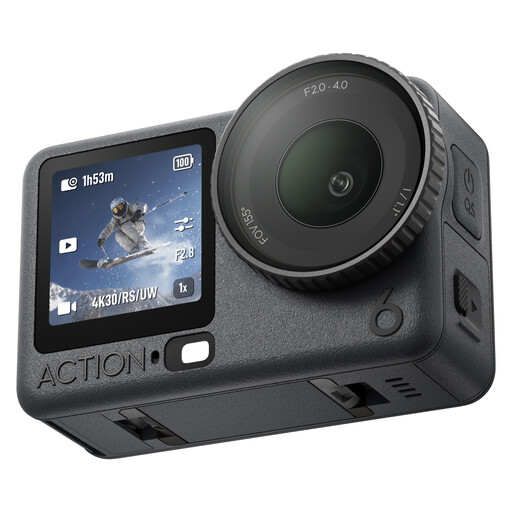
Why It Stands Out While technically an action camera, the DJI Osmo Action 6 offers a unique set of features that make it a powerful vlogging tool, especially for creators on the move. Its standout feature is the 1/1.1-inch square sensor combined with a variable aperture (f/2.0–f/4.0), giving you impressive image quality and creative control in a tiny, rugged package.
Pros
Who is it for? Perfect for travel vloggers, sports enthusiasts or anyone whose content takes them outdoors. If durability, portability and quick, hands-free operation are your top priorities, the Osmo Action 6 is an incredibly versatile companion.
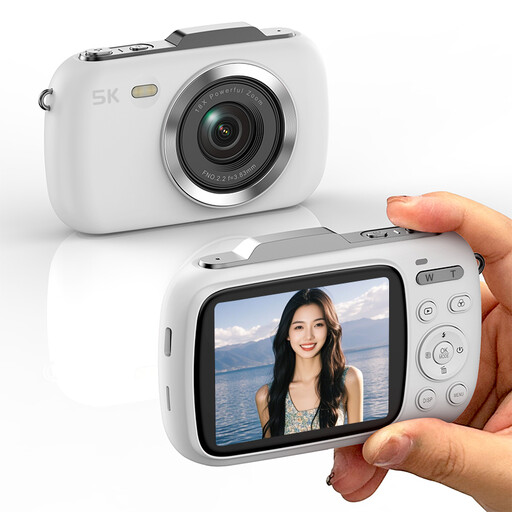
Why It Stands Out The Komery G7 proves that you do not need to spend a fortune to get started with high-resolution video. It offers impressive specifications, including 5K video and 80MP photo capabilities, in a simple point-and-shoot body. It is a straightforward and accessible option for those just beginning their creative journey.
Pros
Who is it for? This camera is aimed at beginners, teens or anyone looking for a significant step up from their smartphone on a tight budget. If you want to experiment with vlogging without a heavy financial or technical commitment, the Komery G7 is an excellent starting point.
These three cameras offer fantastic value for different types of creators but they are just a starting point. Your perfect camera depends on your unique style, subject matter and budget. If you are still exploring your options, we invite you to browse our complete collection.
Explore our full range of cameras to find the ideal model for your creative journey. Browse our Camera & Photo collection for more options.
What makes a mirrorless camera good for vlogging? Mirrorless cameras are generally preferred for vlogging due to their compact and lightweight bodies, excellent video quality and the flexibility of interchangeable lenses. Key features to look for are a fully articulating or flip-up screen, reliable autofocus and an external microphone input.
Do I need 4K for vlogging in 2026? While 1080p is still acceptable, shooting in 4K is highly recommended. It provides significantly more detail, giving your videos a more professional and high-quality feel. It also offers practical benefits, such as the ability to crop or reframe your shots in editing without losing sharpness and it future-proofs your content as 4K displays become standard.
Is an action camera a good choice for vlogging? Yes, for certain vlogging styles. Action cameras are unbeatable for their durability, portability and wide-angle perspective, making them ideal for travel, sports and adventure content. However, they may offer less creative control over depth of field and focal length compared to a traditional mirrorless camera with interchangeable lenses.