
24/7 Customer Support

Free returns

Same-day & Next-day Delivery

Quality Guaranteed

Unlock Your Welcome Offers: FREE Delivery | Up to 80% OFF | Free 30-day JoyPlus trial
Download the APP
Navigating overhead illumination across British homes requires balancing everyday energy conservation with functional illumination in utility areas, hallways, and bathrooms. When entering a cloakroom, larder, or corridor with armfuls of washing or shopping, hands-free illumination activated by an integrated sensor eliminates fumbling for wall switches in the dark. Conversely, living areas and bedrooms frequently benefit from steady, uninterrupted mains fittings designed with diffused optics to minimise glare during quiet evening hours.
Choosing between specialised automated luminaires and traditional switched ceiling fittings hinges primarily on location, humidity exposure, and foot-traffic frequency. In modern flats and terraced properties, moisture resistance is paramount for shower suites and compact kitchens where steam accumulates rapidly. This practical guide highlights key structural differences across three dedicated Philips flush ceiling lights, helping you identify the right blend of automated sensing, moisture durability, and optical comfort for each room in your property.
Ceiling luminaires in British residences face vastly different environmental demands depending on whether they are fitted in dry living spaces or damp utility zones. Selecting an enclosure manufactured specifically to resist water ingress prevents premature degradation of internal electronic components and avoids safety issues caused by condensation build-up.
Automated presence detection transforms heavily trafficked transit areas by triggering instant light upon arrival and extinguishing after departure, cutting wasted electricity. However, steady fittings remain preferable where occupants linger quietly without wanting unexpected shut-offs.
Direct light from bare diodes can produce harsh glare and harsh shadows on ceilings and worktops. Modern domestic fittings integrate textured diffusers and specialised lenses that soften output, delivering consistent warm white illumination that feels gentle on the eyes during early mornings and dark winter afternoons.
Here is a direct comparison of three distinct Philips ceiling fittings tailored to diverse household requirements.
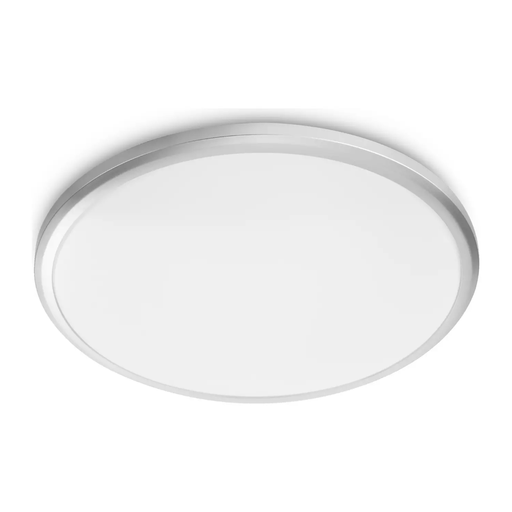
Why It Stands Out: The Philips Spray luminaire stands out by combining an integrated motion sensor with moisture-resistant engineering tailored for bathrooms and kitchens. Its 28.7cm diameter metal construction provides solid domestic durability, while the 12W output produces gentle warm white illumination rated for up to 15,000 hours of operating life. By automatically triggering light when movement is detected, it offers hands-free convenience for night visits to the cloakroom or quick trips into utility areas.
Pros:
Who is it for? Ideal for busy households needing hands-free illumination in family bathrooms, guest cloakrooms, or utility rooms where moisture resistance is essential.
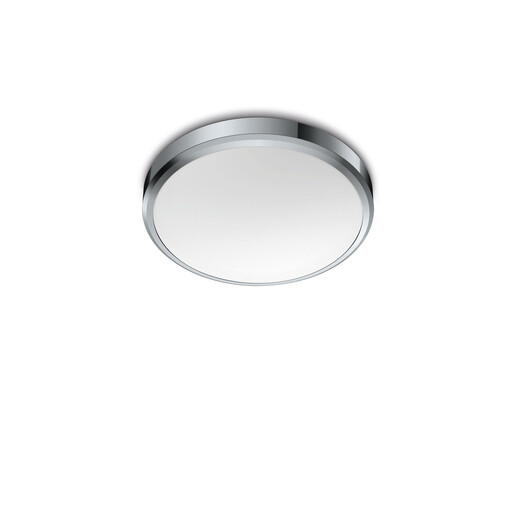
Why It Stands Out: The Philips Doris ceiling light brings a refined decorative finish to moist domestic environments with its 31.3cm diameter chrome outer ring. Engineered with EyeComfort design principles, this 17W unit distributes uniform warm white light that minimises visual fatigue in morning grooming routines. Its resilient plastic casing resists moisture build-up effectively and features an easy-to-clean exterior that wipes down effortlessly to keep bathroom ceilings looking immaculate.
Pros:
Who is it for? Suited to homeowners seeking a stylish, easy-to-maintain warm white fitting for family bathrooms and en-suite shower rooms.
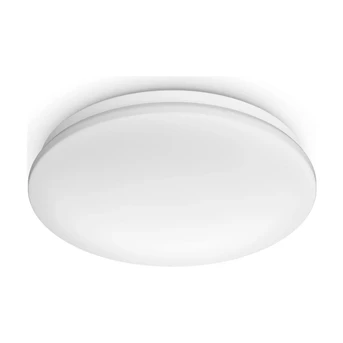
Why It Stands Out: Designed specifically for dry interior rooms, the Philips Moire ceiling light utilises proprietary Interlaced Optics to disperse warm white illumination smoothly across living spaces. Built from a combination of metal and plastic, this compact 320x320x50mm square-profile fitting sits close to the ceiling to maximise overhead clearance in rooms with modest ceiling heights. Its 17W configuration provides balanced coverage without hotspot clustering, creating an inviting ambience in bedrooms, hallways, or home offices.
Pros:
Who is it for? Perfect for dry spaces such as bedrooms, dining alcoves, hallways, and home studies where slim mounting depth and even light diffusion are needed.
A motion-activated ceiling light provides instant, hands-free lighting the moment someone steps into the room, which is particularly beneficial during late-night visits or when your hands are wet from washing. It also eliminates the need to pull ceiling cords or touch wall switches, while ensuring the light switches off automatically to prevent electricity waste when the room is empty.
Fittings designed strictly for dry rooms lack the internal sealing required to protect against elevated humidity and condensation. Installing non-moisture-resistant units in shower rooms or steamy bathrooms risks short circuits, internal corrosion of electrical contacts, and degraded operational life. Always select a dedicated moisture-resistant luminaire for rooms exposed to persistent steam.
Diffused optics and EyeComfort engineering disperse the raw brightness of individual light-emitting diodes evenly across a frosted or micro-structured lens. This wide spread prevents glaring bright spots in your peripheral vision, softening shadows on walls and mirrors. The resulting warm white tone creates an inviting, balanced environment that reduces ocular fatigue during sustained reading, food preparation, or morning routines.