
24/7 Customer Support

Free returns

Same-day & Next-day Delivery

Quality Guaranteed

Unlock Your Welcome Offers: FREE Delivery | Up to 80% OFF | Free 30-day JoyPlus trial
Download the APP
Navigating your home after dark can be a challenge. Whether it's a late-night trip to the kitchen, checking on a child or simply avoiding that stray toy on the landing, a sudden, bright overhead light can be jarring. For parents with young children or for those concerned about trip hazards on stairs, finding a safe and subtle lighting solution is a priority.
A motion sensor night light offers a practical and energy-efficient way to illuminate your path without disturbing the household. This guide is designed to help you understand the key features to look for and to present some carefully selected options that suit various needs across UK homes.
Before you buy, considering a few key factors will ensure you find the perfect fit for your space.
Your first decision is how the light will be powered. A plug in night light is a convenient, 'set-and-forget' option. Once installed in a socket, it requires no further attention, making it ideal for high-traffic areas like hallways and landings.
On the other hand, a battery powered night light offers unmatched flexibility. You can place them anywhere, regardless of socket availability. This makes them perfect for illuminating the inside of wardrobes, under cabinets or for creating dedicated stair lights on each step where wiring would be impractical.
The colour and intensity of the light are crucial for creating the right atmosphere. A warm white night light, typically in the 2700K to 3200K range, emits a soft, yellowish glow. This colour temperature is less disruptive to your natural sleep cycle than the harsh blue tones of cooler lights, making it an excellent choice for bedrooms and as a nursery night light.
For even greater control, consider a dimmable night light. This feature allows you to adjust the brightness to your exact preference, providing just enough light to see by without being intrusive.
Most modern automatic lights use one of two sensor types or a combination of both. A dusk to dawn sensor light contains a photocell that detects ambient light, turning the light on when the room gets dark and off again at sunrise.
A motion sensor night light uses a Passive Infrared (PIR) sensor to detect movement. It only activates when someone passes by, making it highly energy-efficient. The most effective models combine both technologies, ensuring the light only activates from motion when it is already dark.
Here are a few recommendations that address common household lighting needs.
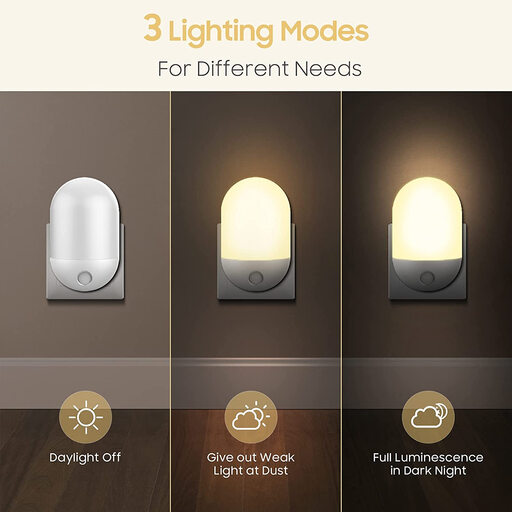
Why It Stands Out: This light is the definition of simplicity and effectiveness. It provides a classic, comforting warm white glow that’s ideal for creating a calm environment. Its straightforward plug-and-play design means it gets to work straight out of the box with no setup required.
Pros:
Who is it for? Anyone seeking a reliable, no-fuss plug in night light for a bedroom, nursery or hallway. It's a great choice for those who prefer a consistently warm and gentle illumination.
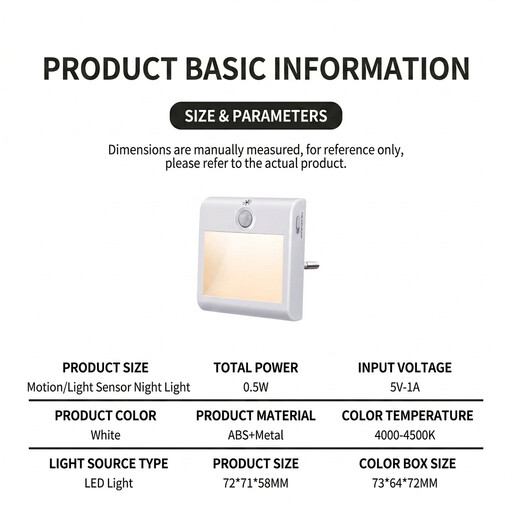
Why It Stands Out: This two-pack offers advanced features for those who want more control. The stepless touch dimming allows you to fine-tune the brightness precisely, and the built-in memory function remembers your last setting—a thoughtful touch for middle-of-the-night wake-ups.
Pros:
Who is it for? Users who want customisable brightness and need to equip more than one space, such as a landing and a bathroom. The memory function is particularly useful for those who have found their perfect light level and want to keep it.
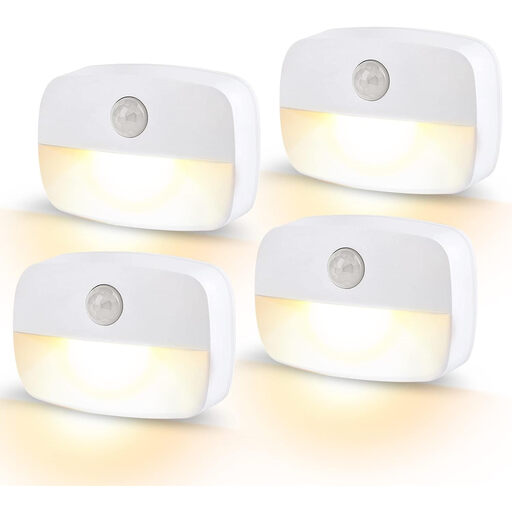
Why It Stands Out: This four-pack of battery powered night light units provides ultimate placement freedom. Installation is effortless thanks to the included double-sided adhesive tape, requiring no tools or drilling. This makes them an excellent solution for renters or for tricky spots without power sockets.
Pros:
Who is it for? Renters, homeowners who want to avoid wiring or anyone needing to illuminate areas without sockets. They are perfect for stairways, dark cupboards or long corridors where flexibility is key.
If our recommendations don't quite match what you're looking for or if you'd like to browse a wider selection of lighting solutions, we have more to see. Explore our full collection for different styles and features to find the perfect fit for your home.
Discover more in our warm white lights category.
Where is the best place to put a motion sensor night light? Ideal locations include hallway lights, stairways, bathrooms and landings. For a nursery night light, place it where it illuminates the floor without shining directly on the cot. The key is to light the path you walk, not the entire room.
Do motion sensor lights use a lot of electricity? No, they are very energy-efficient. Modern LED night light models, especially those with motion sensors, consume very little power (often less than 1W). They only activate when needed, which significantly reduces electricity usage compared to a light that stays on all night.
Can I adjust the brightness of a night light? Some models are designed with this feature. Look for a dimmable night light if you want to control the light intensity. This is particularly useful for bedrooms or nurseries where you might want a softer, more customised glow.