Spreadsheet and report navigators
If you move repeatedly between bird-count tables, charts and long reports, scrolling behaviour and controls you can assign to familiar actions may matter more than the mouse’s shape alone.


Choose the mouse around the part of bird-survey analysis that slows you down: a quiet wireless mouse covers routine pointing and scrolling, while configurable controls or a faster scroll wheel are more relevant when you regularly navigate long tables and reports. If hand position or desk space is the main concern, consider a vertical mouse that fits your hand or a stationary trackball. Check the connection, device compatibility and any adjustment to a different shape before buying.
If you move repeatedly between bird-count tables, charts and long reports, scrolling behaviour and controls you can assign to familiar actions may matter more than the mouse’s shape alone.
If someone studies or sleeps nearby, you may value quieter clicks and a straightforward connection more than extra buttons.
If long sessions make hand position a priority, or the desk leaves little room to move a mouse, a suitably sized vertical model or a stationary trackball is worth assessing alongside your workstation layout.
Start with the task that most affects your study sessions, then check that the mouse fits your hand, desk and laptop. A quiet conventional mouse, a productivity model, a vertical mouse and a trackball solve different problems; their shapes alone do not establish which will feel right to you.
| Concern | What to check | Who this matters to |
|---|---|---|
| Navigating results | For long spreadsheets and reports, compare line-by-line and fast-scrolling controls; consider configurable buttons only for actions you would use. | If I keep moving between survey records, charts and written results, I want scrolling I can control without repeated wheel turns. Around 40% of consumers put data navigation first. |
| Quiet study | Look for a stated quiet-click design, then check whether the mouse uses Bluetooth, a USB receiver or both. | Working near a roommate makes click noise and a simple setup more important to me than extra controls; around 30% of consumers prioritise quiet study. |
| Hand fit and desk space | Check the exact model’s hand-size and handedness guidance. A stationary trackball avoids moving the device across the desk; a vertical mouse still needs to fit your hand. | When my desk is cramped or my hand position is the deciding issue, I need a shape I can use without reaching awkwardly. Around 20% of consumers place comfort or desk space first. |
| Laptop compatibility | Match the connection and operating-system requirements to your laptop; check receiver contents and ports where relevant. | If I carry my laptop between study spaces, I do not want the mouse connection to depend on a port or wireless feature I cannot use. Around 10% of consumers make compatibility and portability their primary concern. |
A different grip does not remove the need for a suitable hand fit and workstation layout. The Health and Safety Executive advises keeping the mouse in line with the elbow as part of good display-screen posture.
Check the model’s size and handedness guidance, and make sure you can place it close enough to use without reaching forward.
A compatible mouse can still be awkward to connect if its USB receiver does not fit an available laptop port.
Check whether the exact model uses Bluetooth, a USB receiver or both, and whether the receiver is included.
A laptop without USB-A may also need a suitable adapter for a USB-A receiver.
A stationary trackball saves desk movement, but its control style takes getting used to and the ball needs occasional cleaning. Hand-size and operating-system limits vary by model.
Check the cleaning method, hand-fit guidance and software requirements. Kensington states that its TB450 does not currently support Windows ARM-based computers.
An unwanted mouse is electrical waste. GOV.UK says waste electrical products can be taken to a household waste recycling centre.
Check local collection arrangements for the mouse and use an appropriate battery collection point for removable batteries.
Its mouse range spans quieter conventional models, vertical designs and models with document-navigation controls.
Its trackballs are relevant when the mouse needs to stay in one place on a small desk.
Its Bluetooth Mouse is a compact option for basic navigation with a compatible Windows laptop.
Pro Click V2 is aimed at users who want configurable controls and different scroll modes alongside study work.
These mice offer different approaches to bird-survey work, from quiet wireless pointing to vertical grips and Multi-Touch navigation. Compare each model’s controls, connection and fit against the work you do most often.
 No image available
Consider this model if frequent navigation through survey tables and reports is your main concern. Check whether this variant includes a receiver if you need one, and whether its shape suits your hand.
 No image available
For shared-room study, this is a quiet-click option with a choice of 2.4G and Bluetooth connection stated in its name. It also lists adjustable multi-level DPI and a 1xAA battery arrangement; check hand dimensions and wheel behaviour if either matters to you.
 No image available
If you are considering a different hand position for long study sessions, assess how this mouse and its detachable wrist rest fit your desk setup. Confirm the model’s hand-size and handedness guidance before relying on its shape for comfort.
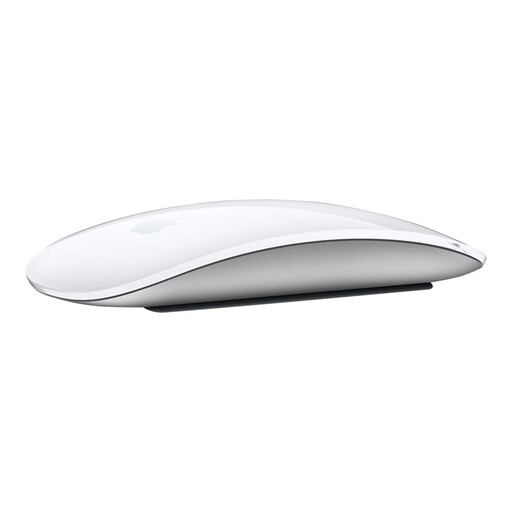 No image available
If you prefer touch-surface gestures to a conventional scroll wheel, consider this model for document navigation. Check that your study device meets its stated macOS X 10.11 or later or iPadOS 13.4 or later requirement, and that the gesture controls suit your workflow.
 No image available
For a study setup where an upright grip is the priority, this vertical model lists six buttons and an adjustable 1600 DPI sensor. Check its hand and handedness fit, and confirm compatibility with your device before buying.
Choose one if its size, handedness and grip suit you, not simply because you study for long periods. The Health and Safety Executive also advises keeping the mouse in line with the elbow and considering the wider workstation layout.
Bluetooth avoids occupying a USB port if your laptop supports the mouse’s connection requirements; a receiver needs a compatible port. Check the exact model and included accessories: Logitech M330 uses a USB receiver, while Microsoft specifies Bluetooth 5.0 LE for its Bluetooth Mouse with supported Windows laptops.
A stationary trackball can help when there is little room to move a mouse, provided its control style and hand fit suit you. Kensington positions TB450 for average-to-larger hands and states that Windows ARM-based computers are not currently supported; check its cleaning arrangement too.
The Health and Safety Executive’s display-screen equipment guidance addresses employers whose workers regularly use screens as a significant part of their normal work; it does not prescribe a mouse model for a student’s room. For your own setup, focus on hand fit, mouse placement and the tasks you need to do.
Take an unwanted mouse to an appropriate electrical-waste collection point rather than putting it in general waste. GOV.UK says waste electrical products can be taken to a household waste recycling centre; check local arrangements for removable batteries.