Precision-focused form builders
If you repeatedly position fields, labels and buttons in a browser-based design tool, controllable pointer speed, scrolling and accessible shortcuts may shape your choice.


Choose a conventional mouse with adjustable tracking and useful controls if placing form elements, scrolling and using shortcuts drive your choice. Consider a vertical mouse if a more upright hand position matters more during long sessions, but check the exact model’s hand-size range and handedness. Whichever shape you prefer, confirm its connection, software and desk-surface requirements; a mouse alone does not address the whole workstation setup.
If you repeatedly position fields, labels and buttons in a browser-based design tool, controllable pointer speed, scrolling and accessible shortcuts may shape your choice.
If form work is part of your daily computer use, consider the mouse’s shape and fit alongside your hand position and wider desk setup.
If you move between devices or work near other people, connection options, device switching and click noise may matter more than extra editing controls.
For contact-form layout, decide whether editing controls or a more upright hand position should lead your choice, then check fit, connections and software for the exact mouse.
| Concern | What to check | Who this matters to |
|---|---|---|
| Pointer control and editing | Check adjustable sensitivity and whether the buttons and configuration software suit your usual editing actions. A high maximum DPI alone does not establish better layout results. | When I place and adjust small form elements, I want control over pointer speed without giving up convenient scrolling or shortcuts; around 40% of consumers would put this need first. |
| Comfort over long sessions | Compare the stated hand-size range and shape. Consider the mouse alongside your desk layout and work routine, not as a standalone answer to discomfort. | If form editing fills much of my working day, I want a hand position I can sustain comfortably; this would be the leading concern for around 30% of consumers. |
| Connections and quiet use | Confirm Bluetooth or receiver requirements, the switching method and whether quiet clicks are explicitly stated. | Moving between home-office devices or working near others makes simple switching and less distracting clicks important to me; around 20% of consumers would prioritise this. |
| Handedness and fit | Check the exact variant’s dominant-hand design, fit guidance and computer compatibility before choosing its other features. | If a mouse does not suit my dominant hand or hand size, its extra controls are beside the point; for around 10% of consumers, fit and access would come first. |
Logitech describes Lift as suited to small to medium hands, while Kensington describes its Pro Fit Ergo Vertical model as suited to average to larger hands. Kensington also has a distinct left-handed Pro Fit model.
Read the fit guidance for the exact variant and choose a design intended for your dominant hand.
The Health and Safety Executive’s home-working guidance addresses comfortable, sustainable posture and individual display screen equipment assessments where the rules apply. Mouse shape is only one part of that picture.
Consider your desk, chair, screen position and work routine together. Raise recurring work-related discomfort through the appropriate workplace process.
Rapoo states that the M660 Silent offers Bluetooth and 2.4 GHz wireless connections. Logitech’s glass-tracking claim for the MX Master 3S specifies glass at least 4 mm thick; it does not establish the same result for other mice or surfaces.
Check the connection your computer can use and the surface conditions stated for the mouse you intend to buy.
Logitech offers MX customisation through Logi Options+ on supported Windows and macOS systems. Kensington states that its left-handed Pro Fit model does not currently support Windows ARM-based computers.
Confirm your operating system and computer platform before making software-based controls a deciding feature.
Relevant when comparing a vertical shape with a conventional mouse offering more configurable controls.
Relevant when a vertical mouse’s hand-size range or a purpose-built left-handed option is central to the choice.
Relevant when quiet clicking and movement between compatible devices take priority over a larger control layout.
These mice offer different starting points for contact-form work: an upright shape, adjustable controls or quieter wireless use. Check the exact variant against your hand, computer and preferred way of working.
 No image available
Consider this model if you want an upright mouse for sustained form work while retaining navigation controls.
The title specifies dual-mode Bluetooth and 2.4 GHz wireless, six buttons and an adjustable sensor up to 1600 DPI. Check its hand-size and handedness fit, and confirm computer compatibility before ordering.
 No image available
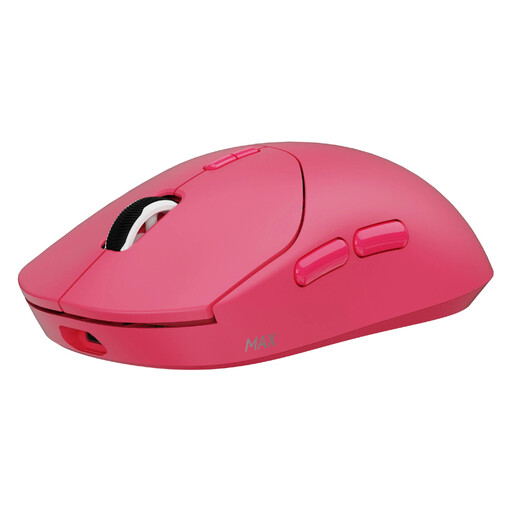
This gaming-oriented mouse may interest form builders who want adjustable tracking and are prepared to check how its controls fit their editing software.
Its title states a PAW3311 sensor rated up to 24000 DPI and Bluetooth and 2.4G modes. Confirm the exact connector and variant details before relying on a particular wired setup.
 No image available
Consider the MT760L-LG if adjustable controls and scrolling options are important to your form-editing routine.
Confirm the exact variant’s shape and controls before deciding: the accompanying model descriptions use different MT760 names. If cross-computer switching matters, check its driver and network setup requirements.
 No image available
This gaming-oriented option is worth considering if you want configurable controls for repeated editing actions and can use its driver.
The title specifies 10 programmable buttons, a stated 53g weight and 8K wireless polling. Check driver compatibility, connection method and hand fit rather than treating gaming specifications as a measure of office-work suitability.
 No image available
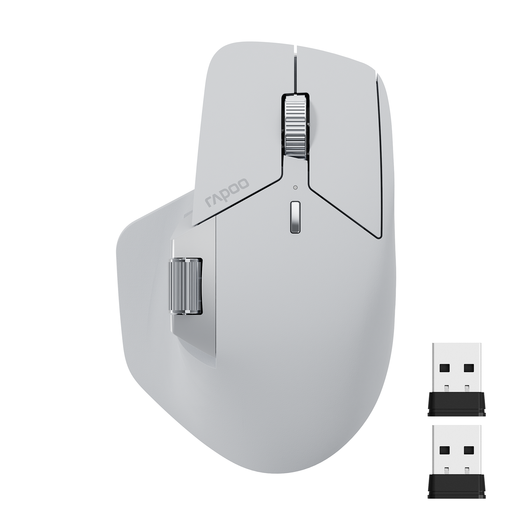
Consider this mouse if quieter clicking and wireless connection options matter more to you than a large set of dedicated editing controls.
The title specifies 2.4G and Bluetooth modes, adjustable DPI and one AA battery. Check hand fit and how device switching works if you plan to alternate between computers.
Choose a conventional mouse if adjustable pointer speed, scrolling and shortcuts matter most; consider a vertical mouse if you prefer a more upright hand position during long sessions. Check hand-size and handedness guidance for the exact model, because a vertical shape alone does not establish a suitable fit.
Check the exact mouse’s surface requirements rather than assuming it will. Logitech states that the MX Master 3S tracks on glass at least 4 mm thick; that condition does not apply automatically to other models.
Optional button mapping may require compatible manufacturer software even when basic mouse operation does not. Logitech provides Logi Options+ customisation on supported Windows and macOS systems, so check your computer and the exact controls you want to change.
Check whether the exact model uses replaceable batteries or charging, as well as any conditions attached to its battery-life claim. Rapoo states that the M660 Silent can last up to nine months under its stated energy-saving design; your choice should also account for how you prefer to maintain the mouse.