Weekly stew meal-preppers
You cook several portions for later and want enough pot capacity to combine chickpeas, vegetables and liquid, with a sauté function for the stew base.


Choose a multicooker with sauté and a cooking method that fits your routine, then size it for the portions of chickpea stew you will actually store. A 5.7L pressure model can suit household meal prep, while 7.1L to 8L models offer more rated capacity for larger batches; in either case, check the pressure-cooking fill line rather than assuming the whole bowl is usable.
You cook several portions for later and want enough pot capacity to combine chickpeas, vegetables and liquid, with a sauté function for the stew base.
You want the option of pressure-cooking chickpea stew rather than relying solely on a longer slow-cook programme, and are prepared to follow the cooker’s liquid and release instructions.
You need to make stew but would also use functions such as steaming, rice cooking, guided recipes or air frying. Those extras matter less if stew is the appliance’s main job.
Start with the amount of stew you want to cook in one batch and the exact model’s fill limit. Then decide whether pressure cooking, easier clean-up or additional programmes would change how you use the appliance.
| Concern | What to check | Who this matters to |
|---|---|---|
| Batch capacity | Compare rated litres and dimensions, then check the exact model’s pressure-cooking maximum-fill line. | If I want to freeze several portions, I need the chickpeas, vegetables and liquid to fit in one safe batch. Around 36% of consumers would put batch headroom first. |
| Cooking method | Confirm pressure-cook and sauté settings if you want that route; follow the model’s liquid and pressure-release instructions. | When a long slow cook does not fit my routine, I want to sauté the stew base and then pressure-cook in the same pot. Roughly 29% of consumers would prioritise that cooking route. |
| Clean-up and handling | Check which pot and lid components are removable or dishwasher-safe, and whether the pot shape is practical for stirring. | If I make stew regularly, washing and handling the pot needs to feel manageable after each batch. About 21% of consumers would make everyday usability their main concern. |
| Extra functions | Consider guided cooking or an air-frying lid only if you expect to use those functions for other meals. | I would accept additional controls or a separate lid if they replace cooking tasks I already do. Around 14% of consumers would put those extra functions first. |
The bowl’s stated capacity is not necessarily its usable pressure-cooking volume. The Instant Pot Plus 5.7L instructions, for example, require contents to stay below the PC Max – 2/3 line.
Estimate your batch with its chickpeas, vegetables and liquid included, then check the fill marking in the exact cooker’s manual.
Pressure cooking requires model- and recipe-appropriate liquid and a safe release procedure. The Instant Pot Plus guidance calls for water-based liquid and says to wait until the float valve drops before opening.
Follow the exact cooker’s instructions and a suitable recipe; never force open a pressurised lid.
Air-frying lids and guided screens serve other cooking preferences, but sautéing and a suitable pressure or slow-cook setting address the core stew workflow.
Decide which other meals you would make with the extra functions before choosing a more complex model.
A separate air-frying lid also needs somewhere to be stored.
Batch cooking also involves handling the portions you will keep. GOV.UK’s food-business guidance recommends a fridge setting of 5°C or below, while Food Standards Agency guidance calls for thorough reheating and reheating only once.
Divide the stew into portions for chilling or freezing, and reheat only what you plan to eat.
Instant Pot UK lists 5.7L meal-prep multicookers alongside 7.1L and 8L options for larger batches.
Tefal UK lists multicookers ranging from a 4.8L Turbo Cuisine to a 6L guided Cook4me+ and a 7.6L Turbo Cuisine & Fry.
Ninja UK presents its Foodi multicookers as multi-function appliances with pressure-cook and slow-cook options.
These choices include 5.7L multicookers to consider for a pressure-cooked stew and a 6.5L option for a slower cooking routine. Decide whether pressure cooking is essential before comparing their other features.
 No image available
Consider this for a 5.7L batch when you want to sauté the stew base and use a pressure or slow-cook function.
The named variant has a ceramic non-stick coating and includes a recipe book. Check its own pressure-cooking fill and liquid instructions before preparing chickpeas.
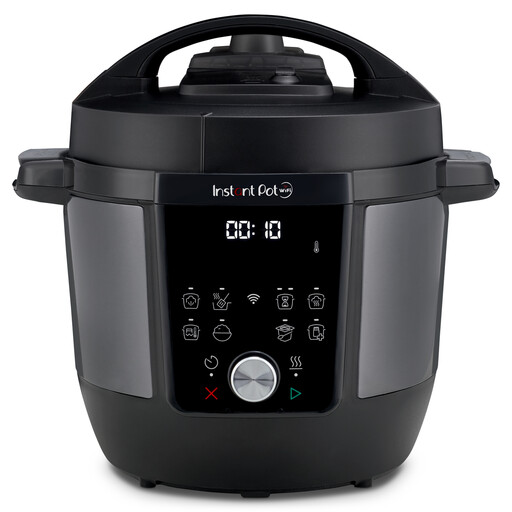 No image available
This is a 5.7L option for preparing a sautéed stew base before pressure or slow cooking. Instant Pot UK describes this model as suitable for meal prep.
Its manufacturer instructions require pressure-cooked contents to stay below the PC Max – 2/3 line. Check which parts of the exact model can be washed in the way you prefer.
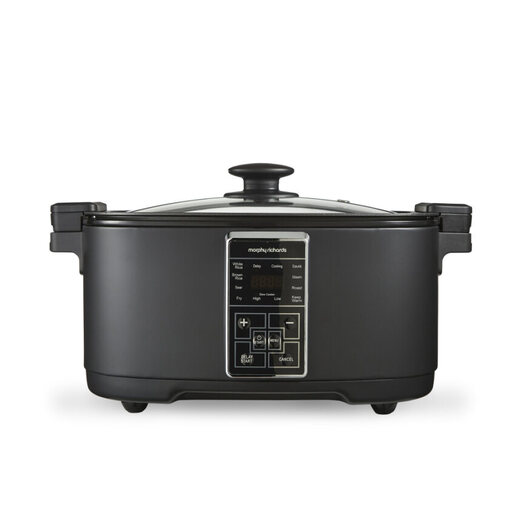 No image available
Consider this model if a longer, slow-cooked stew fits your routine; check its sear and slow-cook settings against the recipe you intend to use.
The named variant is rated at 1350W and has 10 preset functions, with a dishwasher-safe pot and accessories. If pressure cooking matters to you, confirm that capability before choosing it.
Choose by the portions you intend to store, not rated litres alone. Instant Pot UK describes its 5.7L Plus as suitable for meal prep and lists larger 7.1L and 8L batch-cooking models; for pressure cooking, the exact model’s maximum-fill line determines how much stew can go in the pot.
Pressure cooking is worth considering if a shorter cooking route matters and you are comfortable following liquid and release instructions; slow cooking may suit a routine that allows a longer cook. For either route, a sauté or sear function lets you prepare the stew base in the same appliance.
Read the exact model’s instructions for assembly, liquid requirements, fill limits and pressure release before cooking stew. The Instant Pot Plus guide, for example, says not to exceed its PC Max – 2/3 line and to wait until the float valve drops before opening.
Divide leftover stew into portions for chilling or freezing, then reheat only the portion you intend to eat. GOV.UK’s food-business guidance recommends setting a fridge to 5°C or below, and Food Standards Agency guidance advises reheating food thoroughly and only once.