
24/7 Customer Support

Free returns

Same-day & Next-day Delivery

Quality Guaranteed

Unlock Your Welcome Offers: FREE Delivery | Up to 80% OFF | Free 30-day JoyPlus trial
Download the APP
With the arrival of the Nintendo Switch 2, the demands on storage have never been greater. Larger game files, higher-resolution textures and faster loading expectations mean that the console's internal memory will fill up quickly. Choosing the right memory card is no longer just about capacity; it's about ensuring your gaming experience is smooth, fast and free from frustrating loading screens.
This guide is designed to help you navigate the new landscape of high-speed storage. We'll break down the essential technology, explain what to look for and present our top recommendations to help you make an informed decision for your new console and other high-performance devices.
Before diving into specific products, it's important to understand the key factors that will influence your purchase. The technology has evolved, and knowing what the specifications mean will ensure you get the performance you're paying for.
The most significant development in portable storage is the microSD Express standard. Unlike traditional UHS-I cards, which have been the go-to for years, microSD Express cards use a PCIe/NVMe interface—the same technology found in high-speed solid-state drives (SSDs). This allows for a monumental leap in read/write speeds, drastically cutting down game installation and loading times. For a device like the Nintendo Switch 2, which is built for next-generation performance, a microSD Express card is the key to unlocking its full potential.
For modern gaming, a 512GB memory card for gaming is a practical starting point. Digital game libraries grow quickly, with major titles and their downloadable content often exceeding 100GB. A 512GB card provides ample room for a healthy collection of games without constant management. However, your needs might extend beyond gaming. If you're also a content creator, you'll need a card that can handle demanding tasks. Look for specifications that support use as a 4K video microSD card or for high speed storage for drones, as these indicate a card built for sustained performance.
Pushing data at high speeds generates heat. Advanced memory cards now incorporate thermal management systems to maintain optimal temperatures and prevent performance throttling during intense gaming sessions or large file transfers. Furthermore, a memory card is a portable device that will likely be handled frequently. Look for cards with robust durability ratings, offering protection against water, drops and extreme temperatures to safeguard your valuable game library and data.
Here are our recommendations for high-performance memory cards that are well-suited for the Nintendo Switch 2 and other demanding devices.
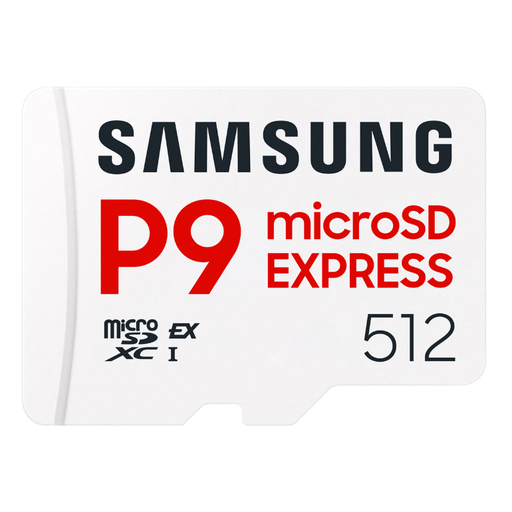
Why It Stands Out: The Samsung P9 Express is engineered specifically for the demands of next-generation gaming. It leverages the PCIe interface to deliver sequential read speeds of up to 800 MB/s, significantly reducing load times. Its Dynamic Thermal Guard technology actively manages heat to ensure performance remains stable during long gaming sessions.
Pros:
Who is it for? This card is ideal for dedicated Nintendo Switch 2 gamers who prioritise speed above all else. If you want to minimise loading screens and ensure your console is performing at its peak, the P9 Express is a formidable choice.
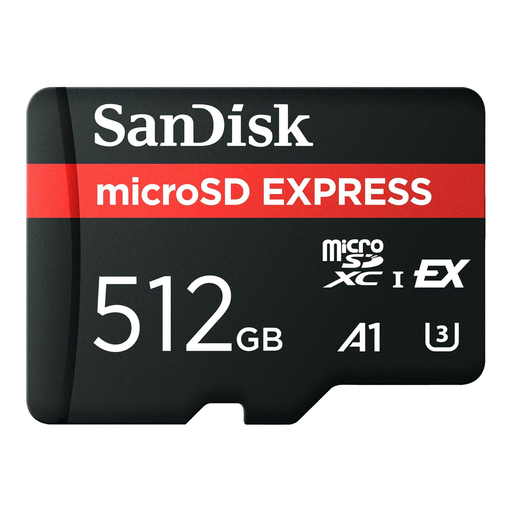
Why It Stands Out: The SanDisk Express microSD card brings SSD-level performance to the microSD form factor. Using a PCIe NVMe interface, it achieves speeds that, according to SanDisk, are up to 4.4 times faster than their fastest UHS-I cards. It also features SanDisk's proprietary ThermAdapt technology, which uses a special enclosure and controller to manage heat during intensive tasks like 8K video recording or bulk file transfers.
Pros:
Who is it for? This is a card for the tech-savvy user who wants to be on the cutting edge. It's perfect for hardcore gamers, professional videographers and drone pilots who need the absolute fastest microSD card available for both current and future workflows.
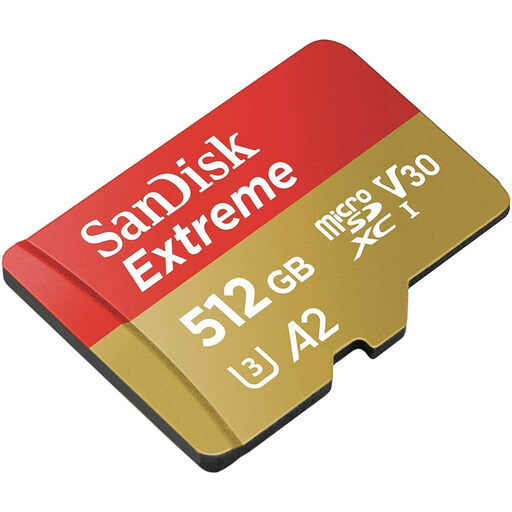
Why It Stands Out: While not a microSD Express card, the SanDisk Extreme remains a highly capable and versatile option. It offers excellent performance within the UHS-I standard, with read speeds up to 190MB/s and write speeds up to 130MB/s. Its A2 rating ensures faster app performance on compatible devices, and its V30 and U3 speed classes make it a reliable choice for smooth 4K UHD video recording.
Pros:
Who is it for? This card is a practical choice for users who need a high-performance, reliable card for a variety of current devices—like action cameras, drones and Android phones—and also want a solid storage upgrade for their Nintendo Switch 2. It offers a great balance of speed, capacity and value, even if it doesn't reach microSD Express speeds.
If our top recommendations don't quite fit your specific needs, or if you're interested in exploring different capacities and brands, there is a wider selection available.
Browse our full range of memory cards to find the perfect match for your devices.Explore All USB & SD Cards
1. Do I really need a microSD Express card for the Nintendo Switch 2? While older UHS-I cards will likely be compatible with the Nintendo Switch 2, you will need a microSD Express card to take full advantage of the console's next-generation architecture. An Express card is designed to minimise loading times and handle the larger, more complex game assets smoothly, providing a significantly better user experience.
2. What is the main difference between microSD Express and microSD UHS-I? The primary difference is the underlying technology and speed. MicroSD UHS-I cards use an older, slower interface with a maximum theoretical speed of around 104 MB/s (or slightly higher with proprietary tech). MicroSD Express cards use the much faster PCIe/NVMe interface, the same used in modern computer SSDs, allowing for speeds approaching 1,000 MB/s. This results in dramatically faster game loading and file transfer times.
3. Is a 512GB memory card large enough for the Nintendo Switch 2? For most players, a 512GB card is an excellent starting point. It provides enough space to store a substantial library of digital games, updates and DLC without needing to constantly delete and re-download titles. However, if you plan to go almost entirely digital or download a vast number of large games, you may want to consider a 1TB card as they become more widely available.