
24/7 Customer Support

Free returns

Same-day & Next-day Delivery

Quality Guaranteed

Unlock Your Welcome Offers: FREE Delivery | Up to 80% OFF | Free 30-day JoyPlus trial
Download the APP
With the arrival of the Nintendo Switch 2, the excitement for next-generation portable gaming is palpable. However, as game file sizes continue to grow, the console's internal storage can fill up surprisingly quickly. If you primarily purchase games from the eShop, a reliable memory card isn't just a convenience—it's an essential accessory.
Navigating the world of memory cards can be confusing, with various speeds, capacities and new technologies to consider. This guide is designed to help you understand your options for a Nintendo Switch 2 memory card, ensuring you find a suitable solution for your gaming habits and budget. We will look at the key factors to consider and provide some recommendations to help you make an informed choice.
Before choosing a card, it’s helpful to understand a few key details. Making the right choice comes down to balancing speed, capacity and compatibility.
The Nintendo Switch 2 introduces support for the microSD Express standard. This is a significant upgrade from the previous generation's UHS-I technology. In simple terms, a microSD Express card uses a different, much faster interface (PCIe/NVMe, similar to modern computer SSDs) to deliver dramatically quicker read and write speeds. For gamers, this translates to potentially faster game loading times, quicker installations and smoother data management. While the Switch 2 is backwards-compatible with older UHS-I cards, using a microSD Express card for Switch 2 is the only way to unlock the console's full storage performance potential.
How much storage do you need? A 256GB Switch 2 microSD card is a popular starting point, offering a good balance of space and value. It can typically hold between 5 to 15 large, AAA-quality digital games, plus numerous smaller indie titles and downloadable content. If you are a dedicated digital collector, you might consider 512GB or larger, but for most players, 256GB provides ample room for an active library without constant management.
You will often see an officially licensed Switch 2 card available. These cards are developed in partnership with Nintendo and are tested to meet their specific performance and reliability standards for the console. While other cards can work perfectly well, an officially licensed product offers an extra layer of assurance that it will integrate seamlessly with your system, making it a straightforward choice for those who prioritise guaranteed compatibility.
Here are a few recommended options that cater to different types of Nintendo Switch 2 owners.
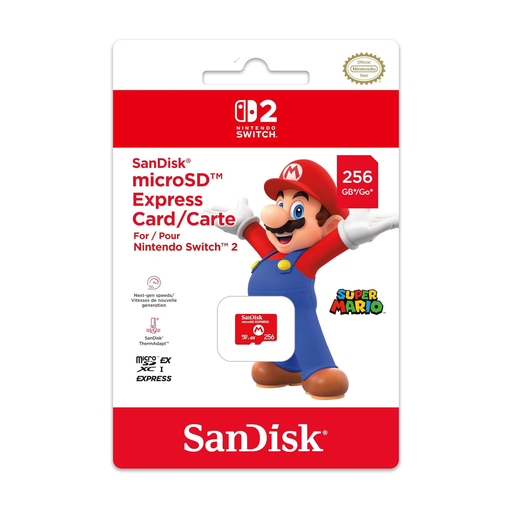
Why It Stands Out: As an officially licensed product, this card is the definition of a plug-and-play solution. It’s designed specifically for the Nintendo Switch 2, ensuring optimal compatibility and performance straight out of the box without any guesswork. It leverages the new microSD Express technology to provide the speed needed for next-generation games.
Pros:
Who is it for? This card is ideal for any Switch 2 owner who wants a simple, reliable and effective storage upgrade. If you value peace of mind and want a product guaranteed to perform as intended, this is the most direct choice.
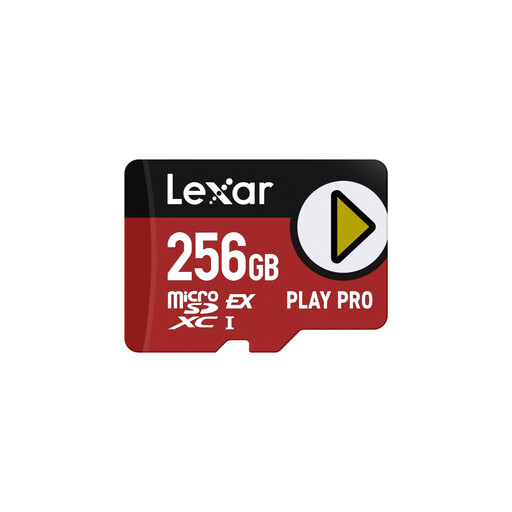
Why It Stands Out: For the performance enthusiast, the Lexar PLAY PRO is engineered to be one of the fastest memory cards for the Switch 2. It boasts impressive theoretical speeds of up to 900MB/s read and 600MB/s write, thanks to its use of PCIe and NVMe technology. It is also built to be exceptionally durable, with resistance to water, temperature and shock.
Pros:
Who is it for? This card is for the gamer who wants to maximise their hardware's performance. If you are sensitive to loading screens and want the fastest possible experience for your digital games, the Lexar PLAY PRO is a compelling option.
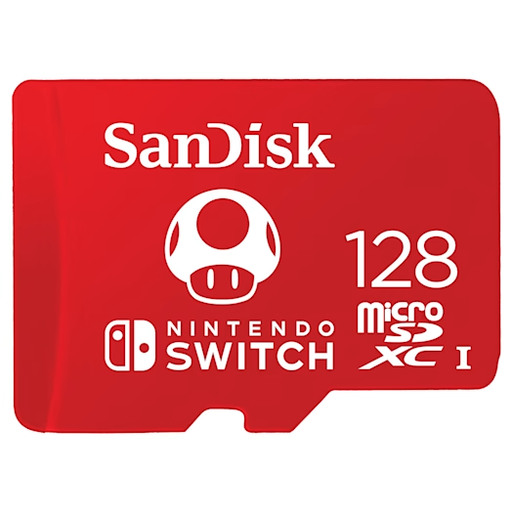
Why It Stands Out: While not a microSD Express card, this officially licensed UHS-I card remains a relevant and practical choice. It offers proven reliability and solid performance at a more accessible price point. It is fully compatible with the Nintendo Switch 2, as well as the original Switch, Switch Lite and OLED models.
Pros:
Who is it for? This card is perfect for budget-conscious gamers, those with smaller digital libraries, or players who primarily buy physical games and only need extra space for updates and DLC. It's also a great option if you plan to use the card across both a Switch 2 and an older Switch console.
The recommendations above focus on the new capabilities of the Switch 2. However, a wide range of standard memory cards offer excellent value and reliability. If you are looking for different capacities or more affordable solutions, you can explore our full selection.
? Browse our complete collection of UHS-I Card options here.
Yes, the Nintendo Switch 2 is backwards-compatible with older microSD cards, including microSDHC and microSDXC UHS-I cards. You can simply move your old card to the new console. However, keep in mind that it will operate at UHS-I speeds and you will not benefit from the faster performance offered by the new microSD Express slot.
The primary advantage is speed. A microSD Express card can significantly reduce the time it takes for games to load from the card. For large, graphically intensive games, this can mean getting into the action noticeably faster compared to a standard UHS-I card.
For most players, 256GB is a very capable capacity. It provides enough space to keep a healthy rotation of large digital titles and dozens of smaller ones installed simultaneously. If you plan to go almost entirely digital and rarely delete games, you might consider a 512GB or 1TB card, but 256GB is an excellent and balanced starting point for Switch 2 storage expansion.