
24/7 全天候客户支持

免费退货

当日/次日达

品质保障

开启新人专享福利: 全场免邮 | 低至 2 折 | 免费试用 30 天 JoyPlus 会员
下载 Joybuy
Whether you're a healthcare professional, a chef, a tattoo artist or simply tackling the washing up, the right pair of gloves is a non-negotiable part of your toolkit. Yet, the market is flooded with options that often fail to deliver on their promises. Choosing incorrectly can lead to torn gloves at critical moments, skin irritation or simply a waste of money. As your Joybuy Product Recommendation Officer, my role is to help you navigate the choices and find a product that genuinely meets your needs.
Many UK shoppers fall into a few common traps. First is the "one-size-fits-all" fallacy, which often results in gloves that are too loose, slip down and compromise dexterity, or are too tight and tear when you put them on. Second is the vague "heavy-duty" claim on packaging, which means little without specific standards; many of these gloves split the moment they come into contact with common cleaning agents or slight pressure. Finally, there's the hidden discomfort from powdered interiors that dry out skin or, for many, unexpected reactions to latex.
To avoid these pitfalls, it's crucial to understand a few core parameters. Focusing on these details will ensure you get the protection and performance you expect.
The material is the most important factor, as it determines durability, flexibility and safety.
Beyond the base material, several features dramatically impact a glove's usability.
Your intended use dictates whether you need single-use or durable gloves.
Based on these practical criteria, we've matched some standout options to different user needs.
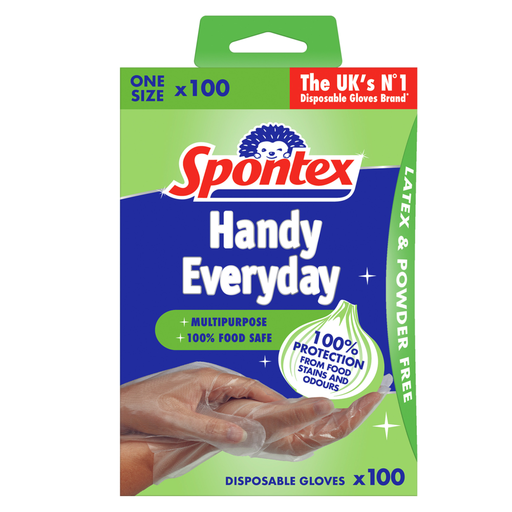
Why This Fits Their Persona: Perfect for the UK home where you need a quick, hygienic barrier for various jobs—from chopping vegetables and handling raw meat to light cleaning or DIY projects. The dispenser box makes them easy to grab on the go.
It is explicitly latex-free and powder-free, addressing common skin sensitivity issues. As a food-contact approved product, it removes the guesswork for kitchen use.
Versatile for multiple domestic tasks and approved for food contact. The universal fit and dispenser box offer great convenience.
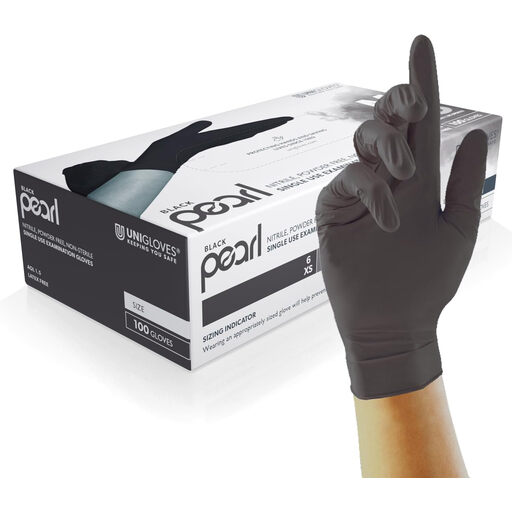
Why This Fits Their Persona: For healthcare workers, tattoo artists and food industry staff who need reliable, certified protection. The black nitrile gloves offer a professional look while providing high-level performance and dexterity for intricate tasks.
This glove moves beyond vague "heavy-duty" claims by being a certified medical grade glove with an AQL 1.5 rating. This provides a verifiable standard of barrier protection against pinhole defects.
It is chemical resistant, food safe and touchscreen compatible for enhanced efficiency. The nitrile formulation conforms to the hand for a comfortable fit during extended use.
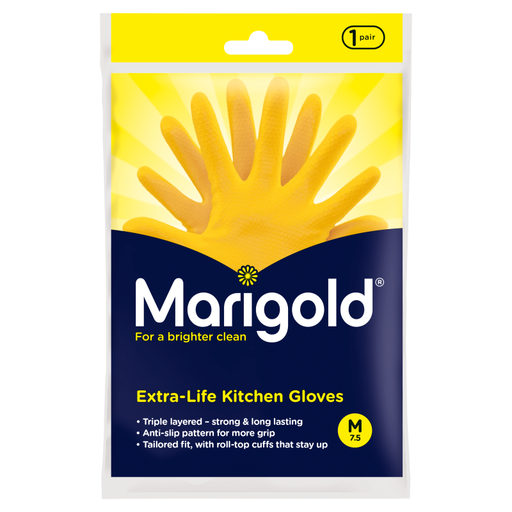
Why This Fits Their Persona: For those who spend significant time washing up or deep cleaning the house. This reusable glove is built for durability and comfort during prolonged contact with warm water and detergents.
Instead of being a flimsy disposable, its triple-layer structure and nitrile coating provide genuine durability. The cotton lining prevents the clammy, uncomfortable feeling of cheap, unlined gloves.
Superior durability for long-term use. The "safe hold" anti-slip pattern and roll-top cuffs that prevent water ingress make cleaning tasks safer and more comfortable.
We have compiled a complete, real-time list of products that fully satisfy these strict selection criteria and UK safety regulations.
AQL stands for Acceptable Quality Level. It is a statistical quality control standard used to determine the maximum number of defective units acceptable in a batch of gloves. For medical gloves, a common standard is AQL 1.5, which means that a batch will pass inspection if fewer than 1.5% of the gloves sampled have pinhole defects. A lower AQL number indicates a higher quality, more reliable glove.
It is not recommended. Disposable gloves are designed for single use to ensure maximum hygiene and prevent cross-contamination. Reusing them can trap bacteria and compromise their structural integrity, as they are not designed to withstand repeated exposure to cleaning chemicals or physical stress. For tasks like washing up, it is safer and more economical to use a dedicated pair of reusable cleaning gloves.
A proper fit is essential for both comfort and safety. To find your size, lay your dominant hand flat and measure the circumference around your palm, just below the knuckles (excluding the thumb). Compare this measurement to the manufacturer's sizing chart, which is usually available on the product packaging or online. For example, a palm circumference of 7-8 inches typically corresponds to a size Small, 8-9 inches to a Medium and 9-10 inches to a Large, but always check the specific brand's guide.