
24/7 Customer Support

Free returns

Same-day & Next-day Delivery

Quality Guaranteed

Unlock Your Welcome Offers: FREE Delivery | Up to 80% OFF | Free 30-day JoyPlus trial
Download the APP
Your sleek induction hob is the heart of a modern kitchen, promising speed, efficiency and precise control. Yet, finding a non-stick frying pan that performs as well as the hob itself can be a frustrating exercise. Many of us have bought pans that warp, lose their non-stick surface after a few months, or simply fail to heat evenly, turning a simple breakfast into a chore.
As the Joybuy Product Recommendation Officer, my role is to help you navigate the market and avoid common purchasing mistakes. Before you invest in new cookware, be aware of these frequent pitfalls:
To ensure your next pan is a lasting and effective kitchen tool, focus on these core parameters. They are the true indicators of quality and performance, especially for a pan for an induction cooker.
The single most important feature of a non-stick frying pan for an induction hob is its base. Induction cooking works by creating a magnetic field that directly heats the pan. For this to happen efficiently, the pan must have a ferromagnetic base.
Look for pans with a thick, flat and fully encapsulated stainless steel base. A multi-layer or "clad" construction, which often sandwiches a layer of highly conductive aluminium between layers of stainless steel, is even better. This design ensures the heat generated by the induction element spreads rapidly and evenly across the entire cooking surface, eliminating the frustrating hot spots common in pans with thin, stamped-metal bases.
The quality of the non-stick coating determines both the pan's performance and its lifespan. While traditional PTFE coatings are effective, many home cooks are now seeking alternatives.
A modern ceramic frying pan offers an excellent solution. These coatings are typically derived from sand and provide a hard, slick surface that requires minimal oil. Crucially, when choosing any non-stick pan, you should look for clear statements that it is a PFOA free frying pan. Reputable manufacturers will also state that their products are free from other substances of concern, such as PFAS, lead and cadmium, offering peace of mind for health-conscious families.
Consider how you plan to use your pan. Do you like to sear a steak on the hob and then finish it in the oven? If so, an oven safe frying pan is essential. Check the maximum safe temperature, paying close attention to the handle material—metal handles are generally more heat-resistant than bakelite or silicone.
For convenience, a dishwasher safe pan can be a significant time-saver. However, to prolong the life of any non-stick coating, hand washing is often recommended. Finally, think about size. A small 20cm pan is perfect for a solo breakfast or a quick omelette pan, while a larger 28cm frying pan is better suited to family meals.
To help you make a confident choice, we have matched a few standout options from our collection to different types of home cooks.
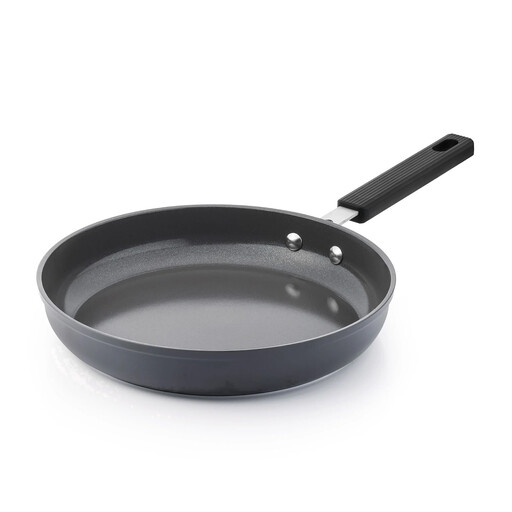
Why This Fits Their Persona: This 24cm pan is the ideal size for everyday tasks, from frying eggs to sautéing vegetables for one or two people. It is designed for practicality and reliability in a busy kitchen.
Its PFAS-free ceramic coating directly addresses the concern of short-lived, low-quality surfaces. The induction-compatible base is designed for good heat transfer, avoiding the poor performance of "compatible-only" pans.
Extremely easy to clean—often just a wipe or rinse is needed. The coating is certified free from PFAS, lead and cadmium for safe, healthy cooking.
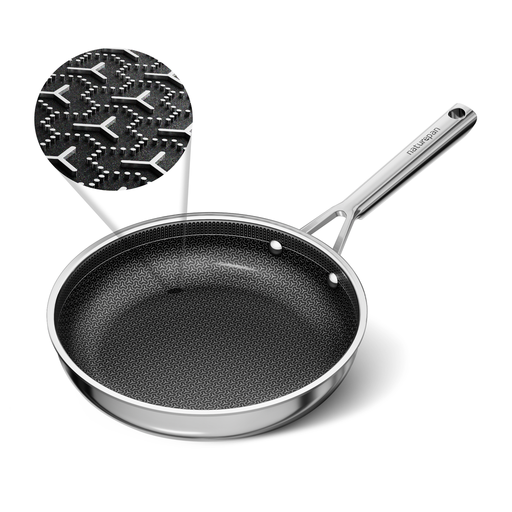
Why This Fits Their Persona: For the cook who demands performance, durability and versatility. This pan is built for searing meats, stir-frying and moving directly from the hob to a hot oven.
The 5-layer hybrid construction with a tri-ply core provides truly optimised induction performance, ensuring no heat is wasted. Its diamond-titanium reinforced coating is designed for longevity, avoiding the quick-peeling trap of lesser pans.
The laser-etched hexagon surface combines stainless steel searing power with non-stick ease. It is oven-safe to a high temperature of 260°C and is fully dishwasher safe.
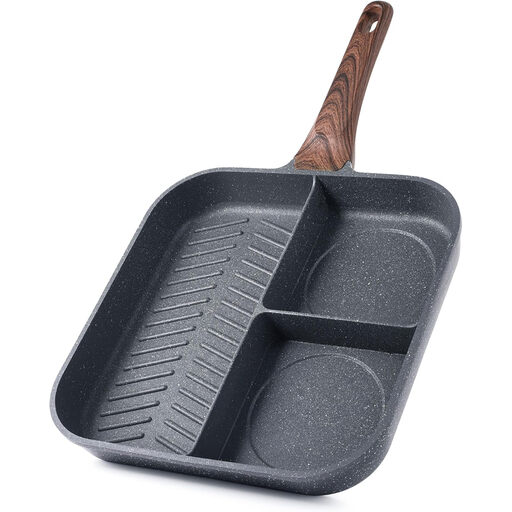
Why This Fits Their Persona: Perfect for anyone who loves a full English breakfast but dislikes using multiple pans. This pan streamlines the process, allowing you to cook bacon, eggs and sausages all at once.
This is a purpose-built tool, not a generic pan. It solves a specific problem, making it a worthwhile addition that won't gather dust. Its heavy-duty aluminium body and thick induction base ensure it heats evenly across all three sections.
The 3-in-1 design prevents flavours from mixing and reduces washing up. The Swiss non-stick coating is PFOA-free and allows for low-oil cooking and simple cleaning.
We have compiled a complete, real-time list of products that fully satisfy these strict selection criteria and UK safety regulations.
The easiest way is the magnet test. If a standard refrigerator magnet sticks firmly to the bottom of the pan, it is ferromagnetic and will work on an induction hob. If the magnet doesn't stick or the pull is very weak, it will not work.
To maximise its lifespan, always allow the pan to cool down before washing. Use non-abrasive sponges and avoid metal utensils, which can scratch the surface—silicone or wooden tools are ideal. While many are dishwasher safe, gentle hand washing will always help preserve the coating for longer. Finally, avoid using extreme high heat; most non-stick cooking is best done on low to medium settings.
Often, yes. A higher price typically reflects superior materials and construction, such as a multi-layer clad base for better heat distribution and a thicker, more durable non-stick coating. While a budget pan might seem like a good deal, you may find yourself replacing it annually. A well-made, slightly more expensive pan can provide better cooking results and last for many years with proper care, offering better value in the long run.