
24/7 Customer Support

Free returns

Same-day & Next-day Delivery

Quality Guaranteed

Unlock Your Welcome Offers: FREE Delivery | Up to 80% OFF | Free 30-day JoyPlus trial
Download the APP
In a world of digital reminders and endless notifications, the simple act of putting pen to paper remains a powerful tool for organisation, creativity and focus. Whether you are a student preparing for exams, a professional managing complex projects, or a creative spirit capturing ideas, the right notebook can be a game-changer.
But with a vast array of sizes, paper types and bindings available, choosing the perfect one can feel overwhelming. This guide is designed to help you navigate the options and find the ideal notebooks and journals to suit your specific needs, from detailed project planning to everyday note-taking.
Before you make a choice, consider these key features. Understanding them will help you select a notebook that not only looks good but also performs exactly as you need it to.
Paper weight, measured in grams per square metre (GSM), is a crucial indicator of quality.
The way a notebook is bound affects how it opens and how durable it is.
The size of your notebook should align with its intended use.
Here are a few standout options that cater to different needs, from creative journaling to structured organisation.
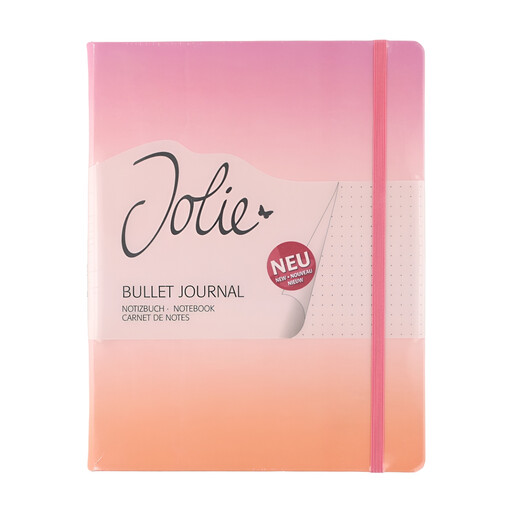
Why It Stands Out: This journal is built for creativity. Its special binding allows it to open a full 180°, providing a completely flat surface that is perfect for writing or drawing across the centrefold. The premium paper quality is another significant advantage.
Pros:
Who is it for? This is an excellent choice for bullet journal enthusiasts, artists and anyone who appreciates a high-quality writing experience and wants their creative tools to be both functional and beautiful.
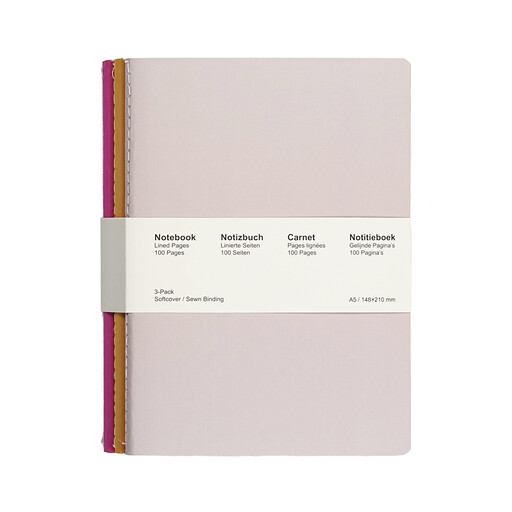
Why It Stands Out: This softcover notebook pack offers great value and practicality. The lightweight, stitched design makes these notebooks easy to carry, while the pastel notebooks covers add a touch of modern style.
Pros:
Who is it for? Ideal for students needing separate notebooks for school subjects, professionals who attend frequent meetings or anyone who prefers a minimalist, portable solution for daily notes and lists.
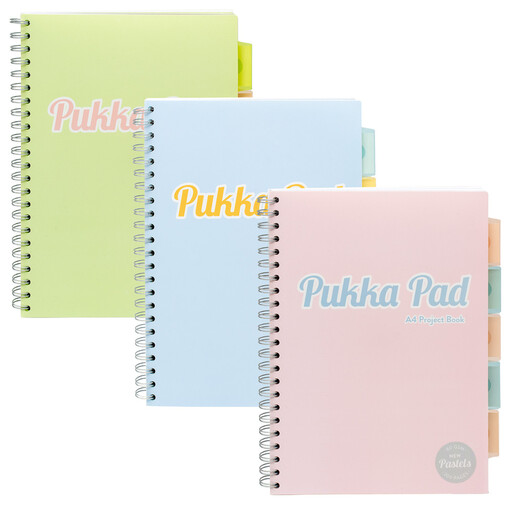
Why It Stands Out: This A4 project book is an organisational powerhouse. Its key feature is the set of five repositionable dividers, each with a storage pocket, allowing you to customise your sections as projects evolve.
Pros:
Who is it for? A perfect match for students juggling multiple modules, project managers tracking different workstreams and anyone who needs to keep their notes meticulously separated and organised in one place.
If these recommendations are not quite what you are looking for or if you would like to explore a wider range of colours and styles, there are many other choices available.
Discover our full collection of MultiColoured Lined Notebooks to find the perfect fit for your desk, bag or next big project.
1. What is the main difference between a notebook and a journal? While the terms are often used interchangeably, notebooks are typically used for structured note-taking, such as in meetings or lectures. Journals are often used for more personal writing, like daily reflections, goal tracking or creative expression. However, the best tool is the one that fits your personal system.
2. Are hardcover or softcover notebooks better? This depends on your needs. A hardcover journal offers superior durability and a firm, flat surface for writing anywhere. A softcover notebook pack is more lightweight, flexible and easier to pack, making it a great choice for portability.
3. What paper weight should I choose to avoid ink bleeding through? For standard pens and pencils, 80 GSM paper is sufficient. If you use fountain pens, gel pens or markers, it is advisable to choose paper that is 100 GSM or higher. The 120 g/m? paper in the Sigel Jolie journal, for example, is specifically designed to handle a variety of inks without bleeding or ghosting.