
24/7 全天候客户支持

免费退货

当日/次日达

品质保障

开启新人专享福利: 全场免邮 | 低至 2 折 | 免费试用 30 天 JoyPlus 会员
下载 Joybuy
Choosing a new notebook should be a simple task. Yet, anyone who has ended up with a drawer full of half-used pads knows the frustration of picking the wrong one. From students organising lecture notes to professionals capturing meeting actions, the right notebook can make all the difference. The market is filled with options, but many fall short, leading to wasted money and disorganised thoughts.
Before you buy your next set of notebooks for school or office stationery, it is important to recognise a few common purchasing pitfalls.
lined journal can crack after a few weeks in a rucksack, and a weak spiral notebook can snag and unravel, scattering your pages.By understanding a few core features, you can easily sidestep these issues and find a notebook that genuinely meets your needs.
To avoid disappointment, focus on these three non-negotiable specifications. They determine a notebook's quality, durability and suitability for your intended use.
Paper quality is measured in Grams per Square Metre (GSM). This single number tells you a lot about how the paper will perform.
writing pads and student notebooks. It is perfectly adequate for everyday pencil or ballpoint pen use. However, heavier inks from fountain pens or markers are likely to show through or bleed.The way a notebook is held together impacts its durability and how it handles.
hardcover journals and designer notebooks, a sewn binding is highly durable. Sections of paper (signatures) are stitched together before being attached to the cover. This method allows the notebook to lay relatively flat once broken in and is built to last.The right size depends entirely on your lifestyle.
A4 project book provides ample space for complex diagrams, mind maps and comprehensive meeting minutes. It is less portable but offers maximum writing area.A5 notebooks are large enough for meaningful notes but small enough to fit in most bags, making them perfect for journaling, daily planning and general notepads for work.Instead of a one-size-fits-all approach, we have matched a few standout options to specific user needs, ensuring they address the common pitfalls.
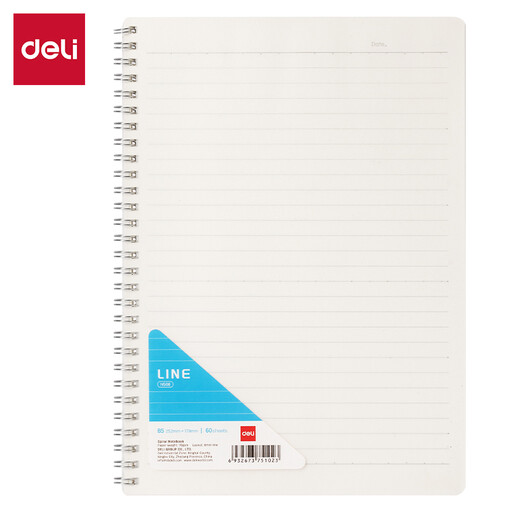
Why This Fits Their Persona: This `notebook multipack` is ideal for students juggling multiple subjects. The B5 size is a practical compromise, fitting easily into a backpack, while the spiral binding is perfect for taking notes in a crowded lecture hall.
The durable polypropylene (PP) cover resists scuffs and spills, avoiding the flimsy cover issue. The spiral binding is built for frequent use, preventing the book from falling apart mid-term.
Excellent value as a 4-pack, providing a separate notebook for different modules. The 70gsm paper is well-suited for standard note-taking with ballpoint pens.
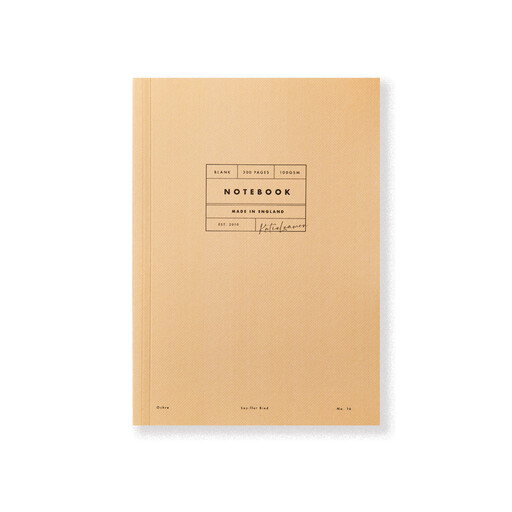
Why This Fits Their Persona: For artists, designers or writers who value freedom and quality. The blank pages offer an unrestricted canvas for sketching and brainstorming, while the elegant design makes a professional impression.
The premium 100gsm paper directly counters the ink bleed-through trap. It is specifically noted as being `fountain pen friendly`, ensuring both sides of every page are usable.
A generous 300 blank pages provide extensive space for creativity. The high-quality paper offers a smooth, enjoyable writing and drawing experience with a variety of tools.
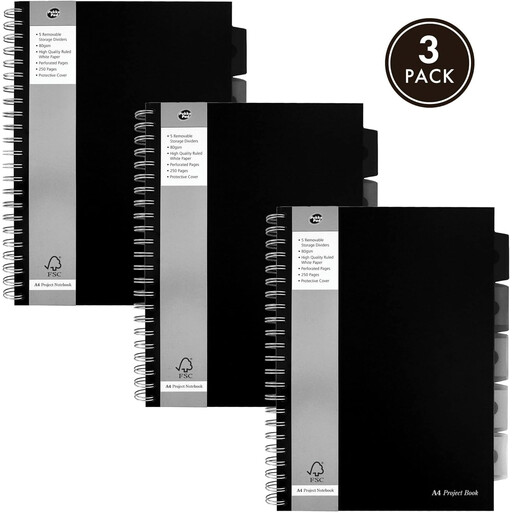
Why This Fits Their Persona: This `A4 project book` is built for serious organisation. It is ideal for professionals managing multiple clients, projects or modules who need to keep all their information structured, separate and secure.
The robust, wipe-clean polypropylene cover and strong wire binding are designed for heavy-duty use, easily avoiding the durability traps of flimsy covers and weak bindings.
Five repositionable, colour-coded dividers with storage pockets allow for unparalleled organisation. The 80gsm paper is responsibly sourced and perforated for easy filing.
We have compiled a complete, real-time list of products that fully satisfy these strict selection criteria and UK safety regulations.
GSM stands for 'Grams per Square Metre' and is a measure of paper density, which relates to its thickness and quality. A higher GSM number, such as 100gsm, means the paper is thicker, heavier and more resistant to ink showing through compared to a lower GSM, like 70gsm.
The most effective way is to choose a notebook with higher-quality paper. Look for a paper weight of at least 90 GSM, especially if you use fountain pens, gel pens or markers. Products specifically marketed as having fountain pen friendly paper are designed to handle heavier ink without bleeding or feathering.
This depends on study habits. Spiral notebooks are often preferred by student notebooks users because they can be folded back on themselves to save desk space and typically have perforated pages for handing in work. However, a well-made hardcover journal with a sewn binding can be more durable over the course of an entire academic year, as its spine is less likely to get damaged in a full bag.