Portion-conscious breakfast eaters
If you want a repeatable breakfast serving, plain bulk oats let you measure dry portions while sachets remove that measuring step. The finished bowl still changes with the milk, toppings and sweeteners you choose.


Choose plain bulk oats if measuring a dry serving suits your routine and you want control over the liquid and additions. Choose plain sachets when a pre-measured portion makes breakfast easier to repeat; compare nutrition on the same preparation basis, as prepared servings can include milk. Higher-protein sachets may suit a specific breakfast plan, but protein labelling alone does not make them a lower-energy choice.
If you want a repeatable breakfast serving, plain bulk oats let you measure dry portions while sachets remove that measuring step. The finished bowl still changes with the milk, toppings and sweeteners you choose.
Microwave-ready options can be useful when time is the main barrier to making porridge. Quaker sachets are microwaveable, while Flahavan’s says its Quick Oats are ready in two minutes.
Choose by the label on the exact pack rather than assuming all oats have the same dietary suitability. Gluten-free claims, ingredients and precautionary allergen statements can differ between formats.
| Priority | What to check | Your needs |
|---|---|---|
| Prepared bowl energy | Check whether nutrition is shown for dry oats or for porridge made with milk. Compare the grams of oats, liquid and toppings on the same basis. | I want to see the whole bowl, not only one headline calorie figure. A larger scoop, milk, sweeteners and toppings all change the final serving. |
| Plain oat base | Look at the ingredient list, declared serving size and fibre shown on the pack. Compare similar formats per stated serving or per 100g. | I prefer a plain wholegrain oat base so that I can decide what, if anything, to add to it. |
| Portioning and preparation | Compare sachet count, dry portion size, pack weight and cooking method. For bulk packs, check whether you are happy to weigh or measure each serving. | A fixed sachet may make mornings simpler, while a bulk pack works when I am comfortable measuring my own dry portion. |
| Allergen suitability | Read the exact pack’s gluten-free claim, ingredients and may-contain statement. Check milk, soya, wheat, barley, nut and peanut information where relevant. | I need the product label to match my dietary requirements, rather than relying on the general idea that plain oats will be suitable. |
Tesco Groceries lists 139kcal for 40g of dry oats, while Quaker UK lists prepared-serving values for its reviewed sachets with semi-skimmed milk. These are different comparison bases.
Compare the dry oat quantity first, then add the liquid and toppings you actually plan to use.
Quaker Oat So Simple Protein Original lists 15g protein and 238kcal per prepared serving, while the reviewed Quaker Original sachet lists 180kcal per prepared serving with milk.
Choose a protein option only when its ingredients and serving fit your breakfast plan, then compare energy on the same preparation basis.
A container may make storage or measuring easier, but it does not change the nutrition of the oats or the amount used in a bowl.
Choose the oat format and portioning method first. If transferring oats to a tin or jar, follow the pack instructions and keep the original label for allergen, best-before and preparation details.
Product statements differ: M&S reviewed oat products state that they are not suitable for coeliacs, while Quaker Protein Original contains soya and may contain wheat and barley. The Food Standards Agency notes that gluten-free status does not remove oat-allergy considerations.
Read the current pack’s gluten-free claim, ingredients and precautionary allergen information every time you buy, especially after a format or recipe change.
Relevant for larger-format own-label plain porridge oats and a bulk-format comparison point.
Relevant for plain sachets, protein sachets, pots, traditional oats and gluten-free-labelled oat products.
Relevant for wholegrain quick oats, traditional oats and oat sachet or pot formats.
Relevant for traditional bulk oats, portioned porridge sachets and gluten-free-labelled alternatives.
These Joybuy options cover plain instant sachets, self-measured bulk oats and fast-cooking plain oats for the same portioning and preparation decisions discussed above.
 No image available
A plain sachet option for a repeatable breakfast portion when avoiding the measuring step helps your morning routine.
Each sachet contains 38.5g of oats and is microwaveable in 2½ minutes. The stated 254kcal figure includes 245ml semi-skimmed milk, so other liquids and toppings change the final bowl.
This is a six-sachet pack rather than a bulk oat format.
 No image available
A self-measured bulk option for buyers who want to use a consistent dry oat portion.
The 1kg pack states 25 portions of 40g, with 145kcal, 3.4g fibre and 0.4g sugars per declared portion. Check the pack instructions before buying if cooking time or liquid quantity matters.
Oats remain an allergen even where a product is labelled gluten-free; check the exact pack if oat allergy is relevant.
 No image available
A plain bulk route for buyers comfortable measuring oats and cooking porridge at home.
One stated serving is 40g oats with 200ml water or milk. Microwave preparation is listed as 2–3 minutes, with 4–5 minutes on the hob; the product is not a pre-portioned instant option.
The supplied listing states that it may contain wheat and barley and does not present it as gluten-free.
 No image available
A larger plain-oat option for repeated self-measured breakfasts and cupboard storage.
The pack contains two 1kg bags of 100% organic wholegrain oat flakes. It lists 148kcal, 3.3g fibre and 0.4g sugars per declared 40g serving before additions.
Check pack directions for cooking method and suitability information where coeliac disease or wheat-related requirements apply.
 No image available
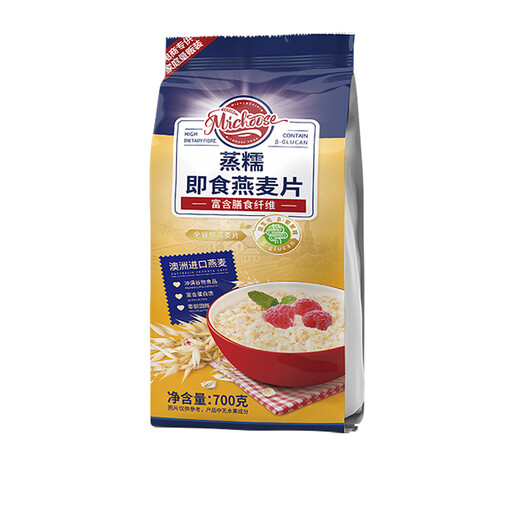
A larger-format plain instant-oat option for mornings when hot-water preparation is the priority.
The supplied description identifies 100% oatmeal in a 700g bag and states one-minute preparation with hot water.
Check the exact pack label for serving size, energy, sugars, allergen information and gluten status before comparing it with other prepared bowls.
They can fit a weight-management eating pattern, but the pack format does not determine the result. Use a consistent amount of dry oats and include the milk, sweeteners, nut butters, dried fruit and other toppings when considering the finished bowl. The NHS Eatwell Guide frames food choices across the day or week and advises choosing lower-fat and lower-sugar dairy products where possible.
Choose bulk plain oats if you will reliably measure the dry serving and want control over the ingredients. Choose sachets if a pre-measured serving and simpler preparation make breakfast easier to manage. Compare the actual serving, preparation liquid and additions rather than assuming one format is inherently better.
No. Consider protein alongside energy, ingredients, allergens and the rest of your eating pattern. Quaker UK lists 15g protein and 238kcal per prepared serving for its reviewed Protein Original sachet, compared with 180kcal per prepared serving with semi-skimmed milk for the reviewed Original sachet.
No. The Food Standards Agency states that a food may be labelled gluten-free only when it contains no more than 20mg/kg gluten as sold. Oats are also an allergen in their own right, so a gluten-free oat product is not automatically suitable for someone with an oat allergy. Check the exact pack claim and allergen statement.
Follow the storage instructions for that product. The reviewed M&S oat product says to store it in a cool, dry place and, once opened, in an airtight container. This is useful if you transfer oats from a bag into a tin or storage jar.