
24/7 Customer Support

Free returns

Same-day & Next-day Delivery

Quality Guaranteed
Download the APP
Categories
That persistent check engine light can be a source of real frustration. Is it a minor issue, or something that requires immediate attention? While a basic car code reader can pull engine fault codes, modern vehicles are complex networks of electronic systems. To truly understand what's happening under the bonnet, you need a tool that can communicate with everything from the ABS and airbags to the transmission and body control modules. This is where an OBD2 scanner all systems becomes an indispensable part of your toolkit.
Whether you're a dedicated DIY mechanic looking to perform your own maintenance or a professional technician needing a reliable automotive scanner, navigating the options can be challenging. This guide is designed to help you understand the key features to look for and to highlight a few standout models that offer comprehensive diagnostic capabilities.
Selecting the right tool goes beyond just price. Consider these factors to ensure you get a scanner that meets your specific needs.
A true "all systems" scanner should be able to access and diagnose every electronic control unit (ECU) in your vehicle. This includes the engine, transmission, Anti-lock Braking System (ABS), Supplemental Restraint System (SRS/Airbag), climate control and more. Before purchasing, always verify the tool's compatibility with your specific car make, model and year, and confirm the extent of its system access.
For more advanced work, look for a bi-directional scan tool. This feature allows the scanner to send commands to the vehicle's systems to test the functionality of specific components, such as turning on a fan, cycling an ABS solenoid, or opening an EGR valve. An ECU coding tool offers even greater capability, allowing you to re-programme adaptive data for components after a replacement or even unlock hidden features in certain vehicles.
The automotive world evolves quickly, so ongoing software support is crucial. Check the manufacturer's update policy: are updates free, and for how long? Many modern scanners also come with a suite of service functions, such as an oil reset tool, electronic parking brake (EPB) retraction and battery registration. These features can save you significant time and money on routine maintenance.
Here are a few recommendations that cater to a range of needs, from home mechanics to professional workshops.
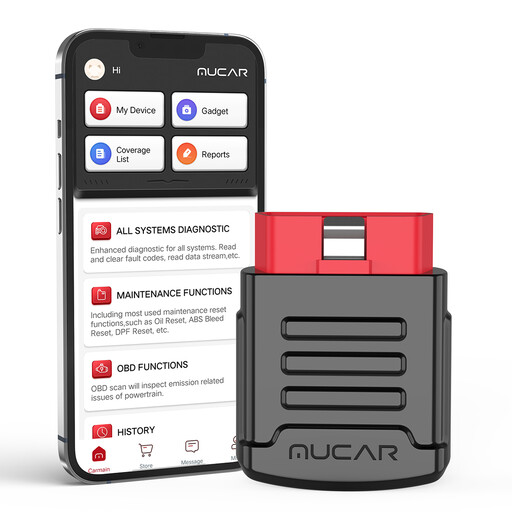
Why It Stands Out: The MUCAR BT200 Pro offers exceptional value by providing lifetime free full-system diagnostics. It's a compact, Bluetooth-enabled dongle that pairs with your smartphone, making it a highly portable and convenient solution for comprehensive vehicle health checks without ongoing subscription fees for core diagnostic functions.
Pros:
Who is it for? This is an excellent choice for car enthusiasts and DIY mechanics who want to move beyond basic code reading and perform in-depth diagnostics on multiple vehicles without a large initial investment or subscription costs.
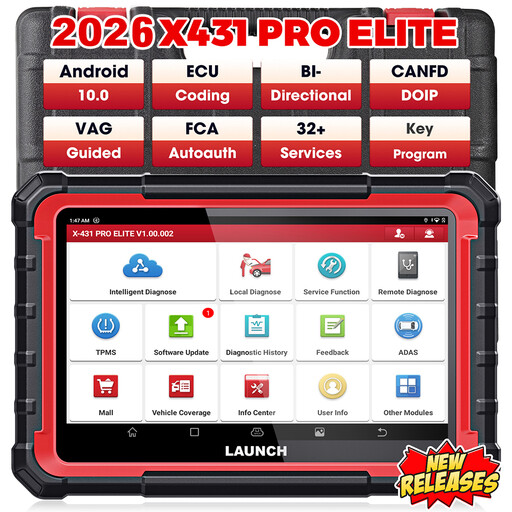
Why It Stands Out: The LAUNCH X431 PRO ELITE is a professional automotive scan tool that brings workshop-level capabilities into a single, robust tablet. With full bi-directional control, advanced ECU coding and support for modern protocols like CAN FD and DoIP, it's built for serious diagnostic work.
Pros:
Who is it for? This tool is aimed at professional technicians, small-to-medium garages and highly advanced home mechanics who require a powerful, all-in-one diagnostic solution with extensive vehicle coverage and advanced control functions.
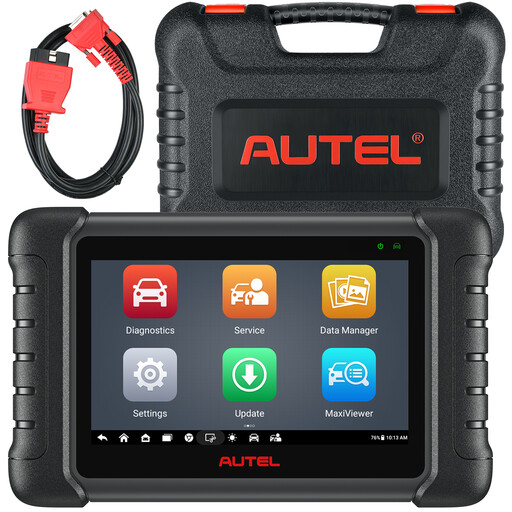
Why It Stands Out: The Autel MX808S strikes a strong balance between comprehensive diagnostics, powerful service functions and user-friendly operation. Its key strength lies in its robust bi-directional control capabilities, allowing users to perform active tests typically found on more expensive devices.
Pros:
Who is it for? Ideal for advanced DIYers and mechanics who need reliable, in-depth system diagnostics and, crucially, strong bi-directional control for active testing, all packaged in a user-friendly tablet.
The three tools highlighted here represent a fraction of the available options, each with unique strengths. Your ideal car diagnostic tool will depend on the vehicles you work on, the complexity of the jobs you undertake and your budget.
To find the perfect match for your garage, we invite you to explore our full range of OBD2 Scanners.
A standard OBD2 scanner, often called a check engine light scanner, is limited by law to communicating only with the powertrain control module (PCM). It can read and clear engine and emissions-related fault codes. An all-systems scanner goes much further, accessing and diagnosing all other electronic modules in the car, such as the ABS, SRS (airbag), transmission, climate control and body control systems.
When used correctly, a bi-directional scan tool is a safe and powerful diagnostic aid. These tools are designed to activate components within the manufacturer's specified parameters. However, it is important to understand the function you are activating and to follow the on-screen instructions carefully. Forcing a component to operate outside its normal range or under the wrong conditions could potentially cause damage, so it's always best to proceed with caution and a clear understanding of the test being performed.
This varies by manufacturer and model. Some tools, like the MUCAR BT200 Pro, offer lifetime free updates for core diagnostic functions. More advanced professional tools, such as those from LAUNCH and Autel, typically include a period of free updates (e.g., one or two years), after which an annual subscription may be required to continue receiving the latest software and vehicle coverage. The tool will usually continue to function with the last updated software even if the subscription lapses.