
24/7 Customer Support

Free returns

Same-day & Next-day Delivery

Quality Guaranteed

Unlock Your Welcome Offers: FREE Delivery | Up to 80% OFF | Free 30-day JoyPlus trial
Download the APP
That warning light on your dashboard can be a source of considerable stress, often signalling an expensive trip to the garage. An OBD2 scanner, or car diagnostic tool, puts the power back in your hands, allowing you to understand the problem and, in many cases, fix it yourself. However, the market is flooded with options, and choosing the wrong one can be a costly mistake.
As the Joybuy Product Recommendation Officer, my role is to help you navigate the marketing clutter. Many UK drivers invest in a scanner only to find it's incompatible with their car or locks essential features behind an unexpected paywall. Let's look at the common pitfalls to avoid.
To ensure you get a tool that meets your needs now and in the future, focus on these key specifications.
A basic check engine light reader simply tells you the fault code. A truly useful car diagnostic tool goes much further. Look for a device that offers all system diagnostics, giving you access to the Engine (ECM), Transmission (TCM), Anti-lock Brakes (ABS) and Airbag (SRS) modules.
Furthermore, the ability to perform maintenance tasks is what saves you money. Check the list of available service or reset functions. Essential ones for a DIY enthusiast include:
The more functions included, the more independent you can be from the garage.
For the more ambitious home mechanic or small workshop, two features are transformative:
Your choice here depends on your preference. A Bluetooth OBD2 scanner offers great flexibility, turning your smartphone into a powerful diagnostic device. These are often compact and easy to use with a dedicated car code reader for iPhone and Android app. Alternatively, dedicated tablet scanners offer a larger screen and often more robust, self-contained software.
Crucially, scrutinise the software update policy. Does "lifetime free" apply to all functions, including advanced diagnostics and resets or just the basic OBD2 modes? A tool with a clear, one-time payment for all features can offer far better long-term value than one with a low initial price but hidden annual fees.
Based on these criteria, we've matched several OBD2 scanners to different user needs.
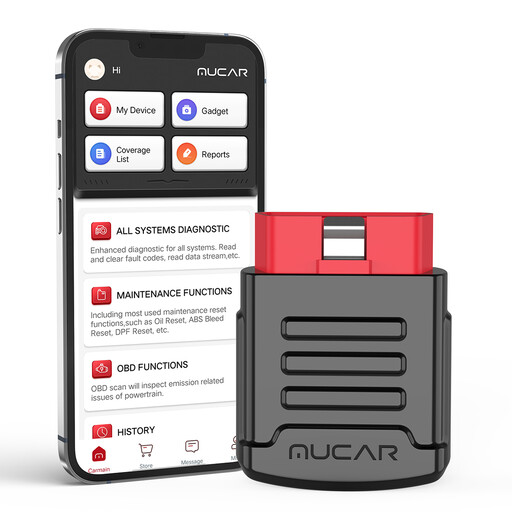
Why This Fits Their Persona: This compact Bluetooth dongle is ideal for those starting their DIY journey. It turns your smartphone into a diagnostic tool, offering deep system access without a large upfront cost. It's perfect for diagnosing family cars and handling common maintenance tasks.
It provides lifetime free full-system diagnostics, not just basic engine codes. While the 15 reset services are free for the first year, the core ability to scan all vehicle modules remains, avoiding the main subscription trap.
Excellent value for money. It offers comprehensive diagnostic access across 128+ brands and a portable, cable-free design that's convenient for quick checks.
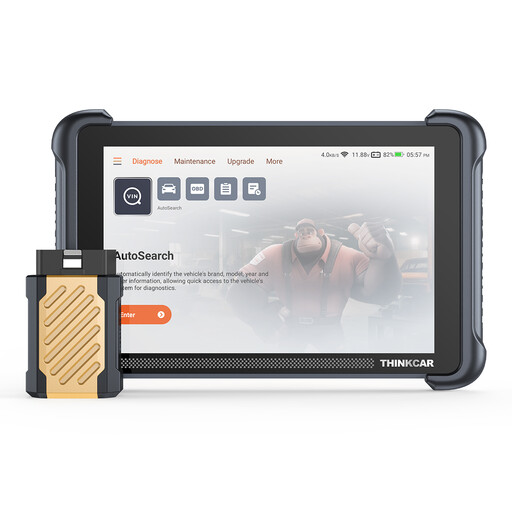
Why This Fits Their Persona: For the enthusiast who wants to tackle more complex jobs, this all-in-one tablet provides near-professional capabilities. It's a significant step up from basic dongles, offering advanced functions for maintenance and troubleshooting on a wide range of vehicles.
This tool's main selling point is its lifetime free update policy for all functions, including its 34+ resets, bi-directional control and ECU coding. It also supports CAN FD and DoIP, avoiding the protocol trap for years to come.
A true one-time investment for a huge range of capabilities. The combination of a dedicated tablet, advanced functions and a lifetime free update policy is exceptional for the price.
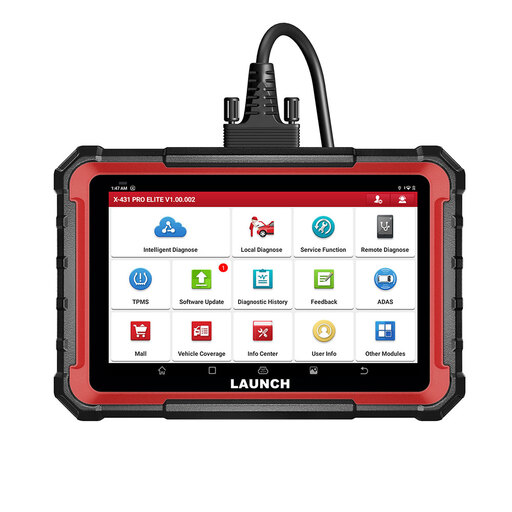
Why This Fits Their Persona: This is a robust, workshop-grade tool from a well-regarded brand. It's designed for daily professional use, offering speed, extensive vehicle coverage and the depth of diagnostics needed to handle a wide variety of jobs efficiently.
It avoids the trap of over-promising and under-delivering. While it has a subscription model (2 years free), it is transparent and provides the OE-level depth, V.A.G guided functions and expandability that professionals expect and require.
Professional-grade reliability and speed. Features like CAN FD/DoIP support, advanced ECU coding and compatibility with other tools (e.g., oscilloscopes, TPMS programmers) make it a versatile workshop asset.
We have compiled a complete, real-time list of products that fully satisfy these strict selection criteria and UK safety regulations.
As a rule of thumb, most petrol cars sold in the UK from 2001 and diesel cars from 2004 are OBD2 compliant. However, this only guarantees basic engine diagnostics. For full system access and special functions, you must check the manufacturer's specific compatibility list for your vehicle's make, model and year. This is especially critical for cars made after 2020, which may require newer protocols like CAN FD.
This varies greatly. Some models, like the THINKCAR ThinkScan 689BT mentioned above, offer lifetime free updates for all functions as a one-time purchase. Others provide a free period (typically one or two years) for advanced functions, after which an annual subscription is required. If you don't renew, you usually lose access to resets, coding and new vehicle data, though basic OBD2 reading often remains. Always read the fine print on update policies.
For reading and clearing fault codes, the risk is extremely low. These are read-only operations. However, when using advanced functions like a bi-directional scan tool to activate components or an ECU coding tool to modify software, it is crucial to proceed with caution. Always ensure your car has a stable power supply (e.g., connect a battery maintainer) and follow the on-screen instructions precisely to prevent any potential issues.