Occasional shortbread bakers
If you usually bake one tray and also use the oven for everyday meals, concentrate on the cooking mode, temperature controls, timer and fit rather than specialist baking features.


For one tray of shortbread at a time, start with a single oven that fits your kitchen and has the cooking mode and controls your recipe calls for. If you regularly bake several trays, consider a model with manufacturer-specified multi-level hot-air cooking; a double oven is more relevant when another dish needs a separate cavity at a different temperature. Check the exact model’s dimensions, connection requirements and cleaning arrangements before ordering.
If you usually bake one tray and also use the oven for everyday meals, concentrate on the cooking mode, temperature controls, timer and fit rather than specialist baking features.
If you regularly fill more than one shelf, compare the exact models’ multi-level cooking guidance and usable space for trays.
If the oven must go into new or existing cabinetry, settle the cabinet dimensions and connection arrangements before weighing up cleaning and convenience features.
Start with the recipe and the number of trays you normally bake, then check that the oven fits and can be connected as its instructions require. Cleaning features are a separate choice about upkeep, not a substitute for suitable cooking controls.
| Concern | What to check | Who this matters to |
|---|---|---|
| Recipe settings | Check for the cooking mode, temperature control and timer you need. Good Food’s shortbread recipe gives 170°C conventional or 150°C fan, with a 15–20 minute bake; follow the settings in your chosen recipe. | If I mostly make one tray, I want to set the mode and temperature my recipe specifies and keep track of the bake. Around 36% of consumers put recipe settings first. |
| Several trays | Check the exact model’s multi-level cooking guidance and the space available for trays. Bosch and NEFF describe cooking on up to three levels for specific models; that does not establish identical results on every shelf for every recipe. | When I bake several trays of biscuits, I need to know how the oven is intended to cook across its shelves. Roughly 29% of consumers make batch capacity their primary concern. |
| Fit and connection | Compare the cabinet opening with the model’s installation diagram, then check its plug or fixed-connection instructions. Do not use the appliance’s front width as the cabinet cut-out measurement. | If I am replacing a built-in oven, it has to fit the housing and suit the available connection before its features matter. About 21% of consumers prioritise fit and installation. |
| Cleaning | Compare the exact model’s cavity finish or cleaning programme and read its instructions for handling accessories. | Because I also use the oven for messier meals, I want to know what cleaning it will require. Around 14% of consumers put upkeep ahead of the other concerns. |
Oven formats and installation spaces differ, and the dimensions of an appliance are not necessarily its required cabinet cut-out.
Measure the opening and depth, then compare them with the installation diagram for the exact model before ordering.
A mismatch could mean changing the housing or arranging additional installation work.
A manufacturer’s multi-level feature is relevant to batch baking, but it does not make a second or third shelf necessary for one tray of shortbread.
Decide how often you will fill several shelves. If you seldom do, give fit and the controls required by your recipe more attention.
A headline class does not show every difference between the exact models and cavities you are considering.
Compare their energy labels and product information sheets on the same basis. GOV.UK lists domestic ovens among products covered by UK energy-information rules.
Connection arrangements differ by model: NEFF specifies no plug and electrician connection for its B1GCC0AN0B, for example.
Read the selected oven’s installation instructions and arrange a competent installer where the required connection calls for one.
A different connection arrangement may involve additional installation work.
These brands illustrate features to compare on individual built-in ovens; a feature described for one model should not be assumed across a whole range.
A reference point for built-in single ovens with model-specific hot-air features.
Useful to compare when choosing between multi-level cooking and different built-in oven formats.
A reference for comparing multi-level cooking with cleaning and timing features on a specific model.
Relevant when the oven’s position in the kitchen and its cleaning system are important choices.
These single ovens include electric models with named pyrolytic options and a gas fan model. Compare each one with your usual tray count, recipe settings, cabinet and available connection.
 No image available
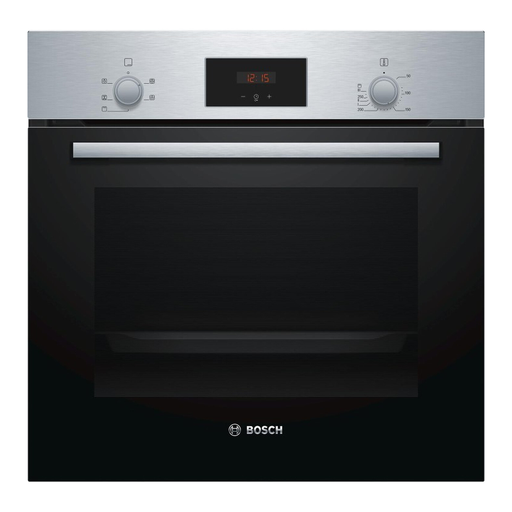
For baking more than one tray, Bosch describes this model’s 3D Hotair as suitable for up to three levels. Confirm the electrical connection and required cabinet opening in the model’s installation instructions before ordering.
 No image available
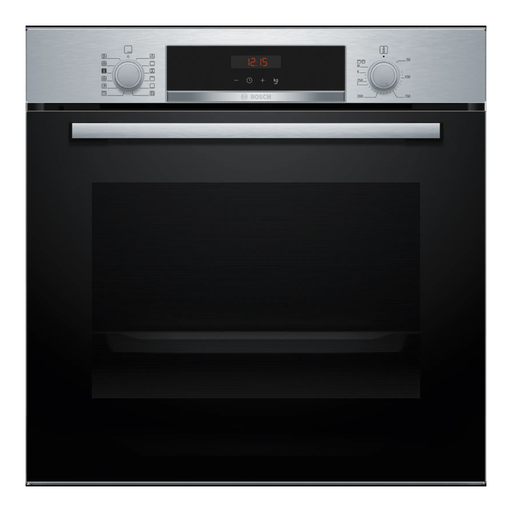
Consider this named pyrolytic variant if cleaning matters alongside your baking routine. If you plan to use several shelves, check the model’s cooking guidance; also confirm its timer, temperature controls and cabinet requirements.
 No image available
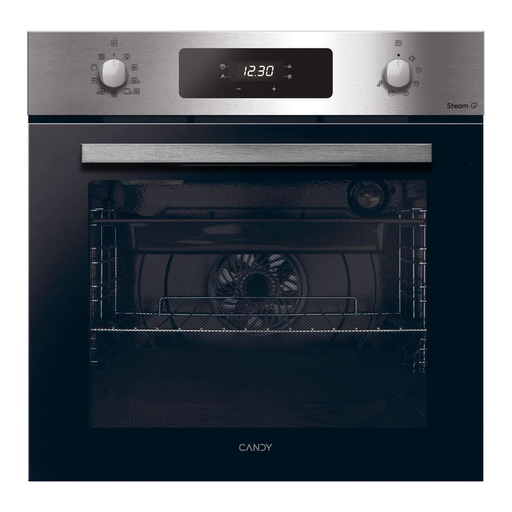
If you want a single oven with a named pyrolytic cleaning function, check that its cooking modes suit your shortbread recipe. Confirm multi-shelf guidance, the electrical connection and the cabinet cut-out for this model.
 No image available
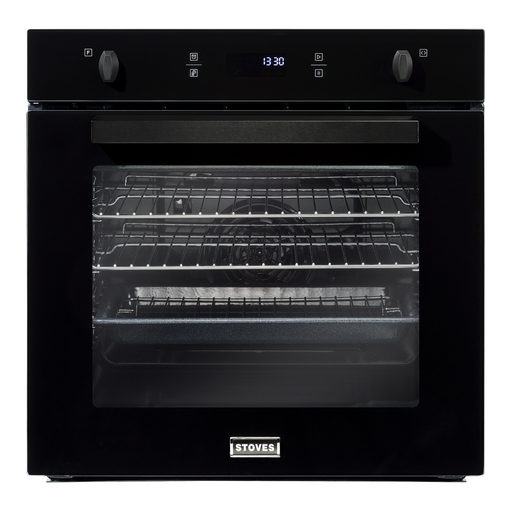
For a single-cavity oven with a named pyrolytic function, check the fan-mode and timer instructions against your baking routine. Confirm the exact cabinet dimensions and manufacturer identity in the model documentation.
 No image available
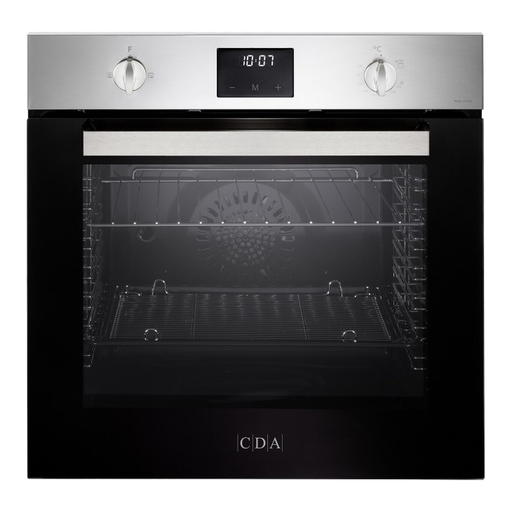
If considering a gas fan oven for shortbread, check its temperature controls and cooking instructions against your recipe. Confirm the gas configuration, installation requirements and cabinet cut-out before choosing this 70 L model.
Yes—use the fan setting and temperature given by your chosen recipe. Good Food’s shortbread recipe specifies 150°C fan or 170°C conventional and a 15–20 minute bake until golden; other recipes may give different instructions.
A single oven is a sensible starting point if you normally bake one tray and use one cavity at a time. Consider a double oven when you regularly need a second dish cooking at another temperature; NEFF describes its separate cavities as allowing different temperatures simultaneously. Check that the required housing fits your kitchen.
No; check the connection instructions for the exact model before arranging installation. NEFF specifies no plug and electrician connection for its B1GCC0AN0B, but that arrangement should not be assumed for another oven.
Compare the energy label and product information sheet for each exact model and cavity, alongside the cooking features you will use. GOV.UK lists domestic ovens among products covered by UK energy-information rules; a headline class alone is not a full comparison.
Check current recall information using the oven’s exact model identification before purchase and periodically after installation. Electrical Safety First directs consumers to recall information provided by the Office for Product Safety and Standards.